

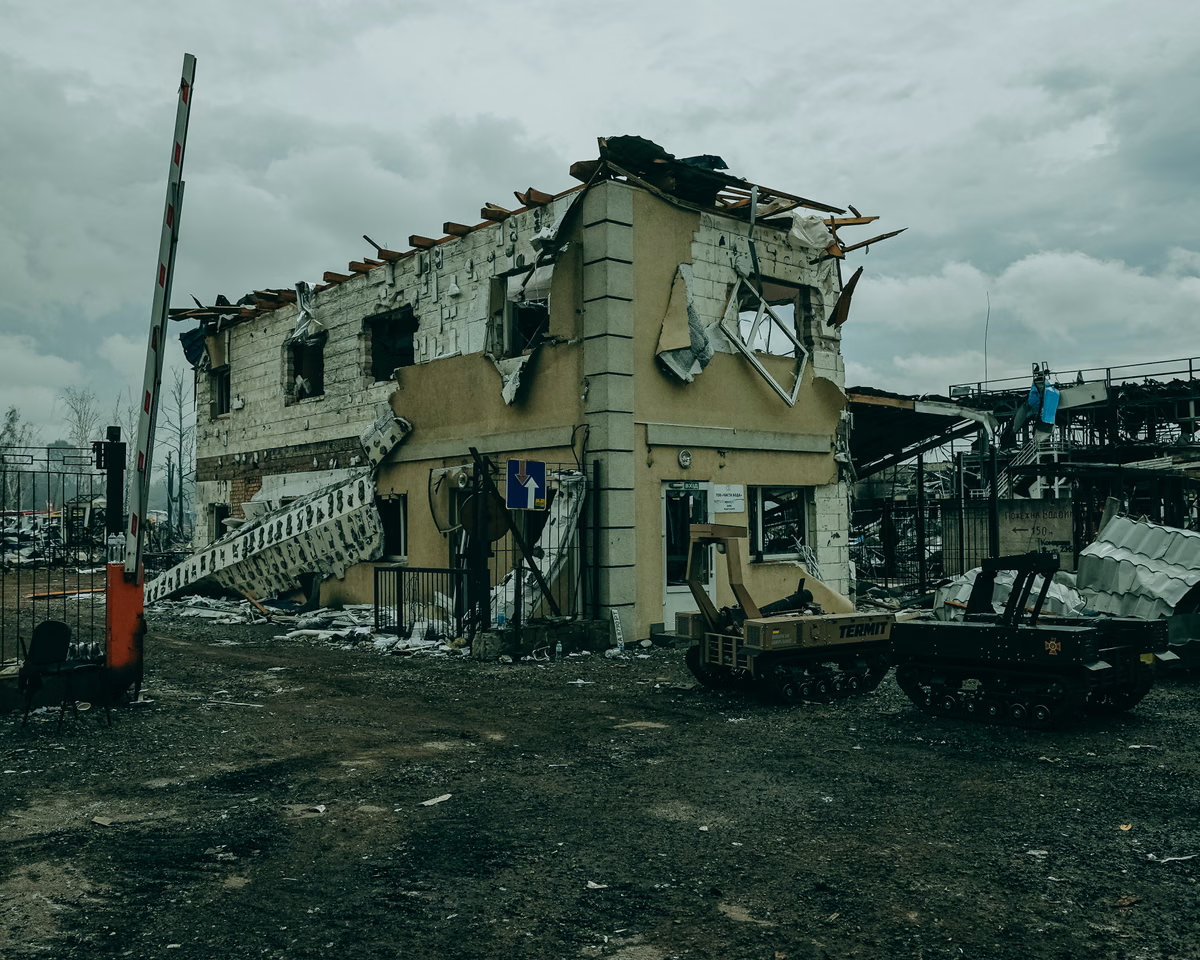
A Russian jet-powered drone strike on an ammunition depot in Myla, a village located 15 miles outside central Kyiv, has left a trail of destruction and ignited public anger. The attack, which occurred on Thursday night, resulted in at least 38 deaths, with four individuals still reported missing as of Sunday. The incident has prompted urgent questions regarding the safety protocols that allowed military supplies to be positioned in close proximity to residential areas.
Volodymyr, a 61-year-old security guard, described the aftermath while surveying his family’s severely damaged home, which lost its roof and windows during the blast. Despite the loss of electricity and water, he guided visitors through his garden toward the impact site, located roughly 300 meters away. The explosion destroyed his greenhouse and vegetable patches, though he managed to salvage a few bunches of grapes from the wreckage.
The devastation was compounded by a series of secondary explosions that lasted for approximately six hours following the initial 8 p.m. strike. Vira, 65, and her son Serhii sought refuge in a small bunker during the ordeal. Serhii noted that residents were under the impression the facility held humanitarian aid rather than volatile weaponry. The family is now facing a difficult cleanup process, relying on a car battery and a converter to power their essential devices.
Cleanup crews have recovered hazardous debris from the site, including Grad rocket shells, cluster munitions, and mines. Despite these efforts, residents continue to discover dangerous remnants, such as a box of bullets found in a collapsed ceiling. The site itself remains a scene of widespread destruction, characterized by a lingering sulfurous odor and ongoing controlled detonations, though emergency operations were briefly paused due to renewed drone threats.
The human cost of the strike is significant, with 30 of the victims identified as residents of a nearby care home. Ukraine’s intelligence service has launched a criminal inquiry into the incident. This tragedy follows a similar event in early July near Kyiv, where a munitions store explosion in Vyshneve resulted in nine deaths and damage to 280 homes. In that instance, two individuals were detained on suspicion of negligence regarding the storage of weapons.
Liudmyla, who lives near the Myla site, expressed frustration over the recurring nature of these incidents. Her daughter’s home was also heavily damaged in the blast, and she emphasized that storing such materials in populated villages puts civilians at extreme risk. When asked who bears responsibility for the catastrophe, she pointed to both the Russian leadership and the local authorities who authorized the depot’s location.
President Volodymyr Zelenskyy acknowledged the pattern of these incidents on Saturday, noting that the repeat of such storage failures is a matter of grave concern. As Kyiv faces an intensification of Russian strikes targeting logistics and supply hubs, the civilian population continues to bear the brunt of the fallout, struggling to recover while living in the shadow of potentially unstable military sites. The report also notes that the garden, like so many in Ukraine’s villages and suburbs, is a sizeable allotment. The report also notes that a vegetable patch is blackened and crisp underfoot, but today the greenhouse is shattered. The report also notes that several metres of grapevine have been destroyed. The report also notes that even so, Volodymyr finds two surviving bunches to hand to. The report also notes that to 38, and four more people are still missing in an episode that has swiftly raised questions about why ammunition was stored so close to people’s homes, the death toll rose by one on Sunday. The report also notes that in the yard before the garden, Vira, 65, knows who is at fault. The report also notes that “Those who set up the depot here are to blame.