

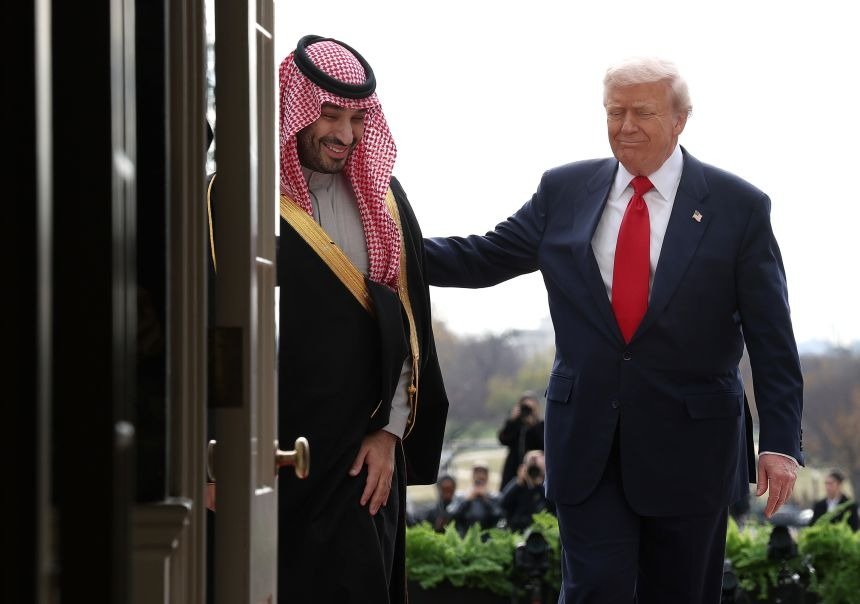
The Trump administration has officially submitted a nuclear cooperation agreement with Saudi Arabia to Congress, initiating a 90-day window for legislative review. Under the Atomic Energy Act, the deal is set to take effect automatically unless both chambers of Congress pass resolutions of disapproval during this period.
Despite the formal submission, the administration continues to link the pact’s final implementation to the Abraham Accords. An administration official confirmed that the president’s position remains unchanged: the agreement will only proceed if Saudi Arabia establishes formal diplomatic ties with Israel. Energy Secretary Chris Wright, appearing alongside International Atomic Energy Agency (IAEA) head Rafael Grossi, stated that the nuclear deal and the diplomatic negotiations regarding the Abraham Accords will be managed in parallel.
The agreement, which provides a framework for potential uranium enrichment on Saudi soil, has drawn scrutiny due to its classified nature. Sources familiar with the process described the decision to classify the entire text of the 123 agreement as unprecedented, noting that such deals typically only contain small, classified annexes regarding nonproliferation analysis. An official previously indicated that the package includes sensitive side letters, though it remains unclear if any unclassified versions or additional documentation will be released to the public.
Regarding the technical aspects of the deal, Secretary Wright confirmed that while the agreement creates a pathway for domestic uranium enrichment, such capabilities are many years away. The framework includes a joint study mechanism that could allow the kingdom to enrich fuel for civilian reactors without adopting the IAEA’s Additional Protocol—a standard set of safeguards designed to help the UN watchdog identify potential weapons sites. Wright argued that the bilateral safeguards, developed in coordination with the IAEA, provide sufficient security. Grossi added that the IAEA Board of Governors will review these measures, emphasizing that the agency would not support any agreement that fails to guarantee nonproliferation.
The diplomatic condition requiring Saudi participation in the Abraham Accords was announced after the deal was signed, a move that reportedly surprised the administration’s own nuclear negotiators. A Saudi official responded to inquiries by stating that bilateral relations are continuously evolving and deepening, expressing a desire to work closely with the US government to strengthen the partnership.
Legal experts and observers are monitoring how the administration might navigate the potential conflict between the 90-day congressional clock and the diplomatic prerequisite. Scott Roecker of the Nuclear Threat Initiative noted that the administration is entering uncharted territory, as there is no legal requirement to finalize the deal even after the congressional review concludes. He suggested the White House could effectively pause the final steps of the process until Riyadh agrees to normalize relations with Israel.
Historical precedent exists for withholding such agreements; in 2008, the George W. Bush administration withdrew a 123 agreement with Russia following the invasion of Georgia. At that time, the administration determined it could no longer certify that the deal would not jeopardize US national security. President Trump issued his formal certification for the Saudi deal on July 16, according to the Federal Register, setting the current process in motion. The report also notes that a Saudi official responded to a query saying, “Saudi-US relations are ever-evolving and have continued to broaden and to deepen over the years.”. The report also notes that describing the secrecy as “highly unusual.”, a source familiar said that the text sent to Congress on Monday was classified. The report also notes that only a small portion of civil nuclear cooperation agreements — an annex with a detailed State Department nonproliferation analysis — is classified, said Andrea Stricker of the Foundation for Defense of Dem, traditionally. The report also notes that the agreement itself did not include a provision mandating Saudi Arabia join. The report also notes that wright said Wednesday that the two countries must “mutually (agree that enrichment) makes commercial sense and … fits into our national security framework.”. The report also notes that “The idea is that we will have a number of extra measures … added layers of very stringent verification,” said Grossi.