

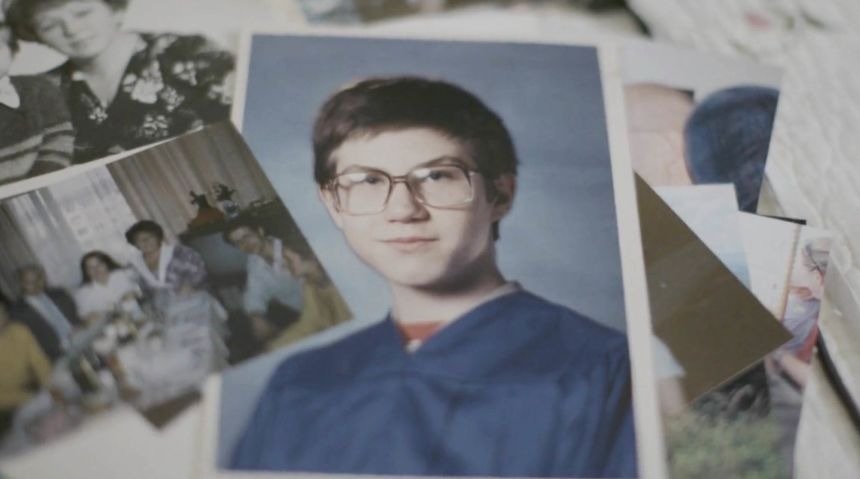
Ilya Beloozerov drained his bank account, canceled his cell phone and sped away from his quiet life in suburban Virginia. After a few days on the road, the Russian-born American citizen befriended a couple living in a parking lot. He told them he’d give them $30,000 to buy a pickup truck and take him to California. Beloozerov had a suitcase full of cash, nearly a dozen laptops, and a seemingly untraceable ride. All that was left was finding a place to ditch his SUV that he’d driven from Virginia.
But on a sunny fall morning, as he finalized plans for his cross-country escape, a team of federal agents swarmed him outside a Super 8 hotel in Hernando, Mississippi, and gunshots rang out. When the smoke cleared on October 4, 2024, Beloozerov’s body lay splayed out on the pavement amid shards of glass from his car window. Nearly two years later, federal authorities have said nothing about who Beloozerov was or why they fatally shot him. He had been shot at least five times – in his right arm, his left leg, his right foot, and twice in his abdomen, said forensic pathologist Constance DiAngelo, who reviewed funeral home photographs of Beloozerov’s body at request. She noted a large wound on his right arm that could have been from a shotgun.
Behind his public persona as a doting father who liked to play chess, the émigré held a United States security clearance, maintained at least one Russian dating profile and, according to expired passports, had traveled to both Russia and Ukraine in recent years. For the last two years of his life, Beloozerov worked for a company that produced high-resolution satellite imagery. Weeks before he was killed, learned, his employer contacted authorities with concerns about him. In interviews with federal agents and later with, his family dismissed the notion that Beloozerov may have been a mole. They insisted he would never betray the US by sharing secret intelligence and would never help Russia.
“It’s crystal clear, how much he was pro-Ukraine,” Beloozerov’s son, who goes by the pseudonym Alexander, said. “He was super anti-Russia and anti-authoritarianism.” Since Beloozerov’s death, questions about why he was being pursued by the FBI and why agents killed him have tormented his loved ones. “No one ever should die like this,” said his former wife, Marina. “I need to understand why.” Just a few people attended Beloozerov’s funeral – a closed casket ceremony – at a Maryland cemetery in October 2024. In an email to Marina, the funeral home suggested avoiding a family viewing, saying it might “emotionally upset [your child] further because some of Ilya’s injuries cannot be concealed.”
Born in the Soviet Union in 1974, Beloozerov was raised by his mother Lena and stepfather Nikolai. Nikolai’s anti-Soviet views had a lifelong impact on the younger Beloozerov: “Ilya identified himself as a son of the Soviet dissident – that was a defining feature.” Beloozerov appeared to embrace life in the United States, making the dean’s list at military school and building a career in IT, working for IBM in Boulder, Colorado, in the late ’90s. Former colleagues described him as a regular guy who sometimes met up for dinner and drinks after work. “We were just holding down jobs and doing everyday work,” one former colleague recalled.
Beloozerov and Marina divorced in 2012 and agreed to share custody of their son. His Facebook page almost solely showed photos of his son. “He loved our child obsessively,” Marina said. After his divorce, Beloozerov pursued relationships with Russian and Ukrainian women in the United States and abroad. Lyubov Campion, who had known Beloozerov since the late 2000s, noted, “He liked Ukraine, he always told me he wanted to live in Ukraine.” Beloozerov also spoke at length with Marina about his sympathies for the country after the Russian invasion.
In December 2022, Beloozerov was hired by Maxar Technologies, which provided satellite imagery to commercial and government clients. He served as a systems administrator on a contract for the Department of Defense, a role that called for at least a secret-level security clearance. Nothing seemed amiss with his job, his son said. But in the final months of his life, warning signs emerged. He began steadily draining his bank account, withdrawing $11,500 in August 2024, and nearly $9,000 that September. He soon realized that he’d triggered authorities’ interest, prompting his desperate, final flight across the country. The report also notes that “No one ever should die like this,” said his former wife and the mother of his 18-year-old son, herself a Russian-born immigrant. The report also notes that born in the Soviet Union in 1974, Beloozerov was raised by his mother Lena and stepfather Nikolai Beloozerov, a Soviet dissident and a mathematician, among a community of intellectuals in southwestern Moscow. The report also notes that arriving in the United States in 1987 and settling in Virginia, so the family left. The report also notes that including a review of bank statements, personal documents and interviews with coworkers, friends, and relatives, found that Beloozerov led a secret double life, unknown to his family and confidantes – but highly alarming to federal authorities, but a investigation. The report also notes that a common way to craft fake identities, among his possessions at the time of his death were a Social Security card and multiple IDs belonging to different dead men. The report also notes that after all, Beloozerov had grown up fiercely anti-Russian, the son of a Soviet-era dissident, and as an adult he strongly supported Ukraine – even sending a care package to soldiers on the front lines. The report also notes that could he have been convinced to help the Ukrainian war effort another way. The report also notes that the bureau, which faces little public accountability in fatal shootings, declined to comment for this story.