

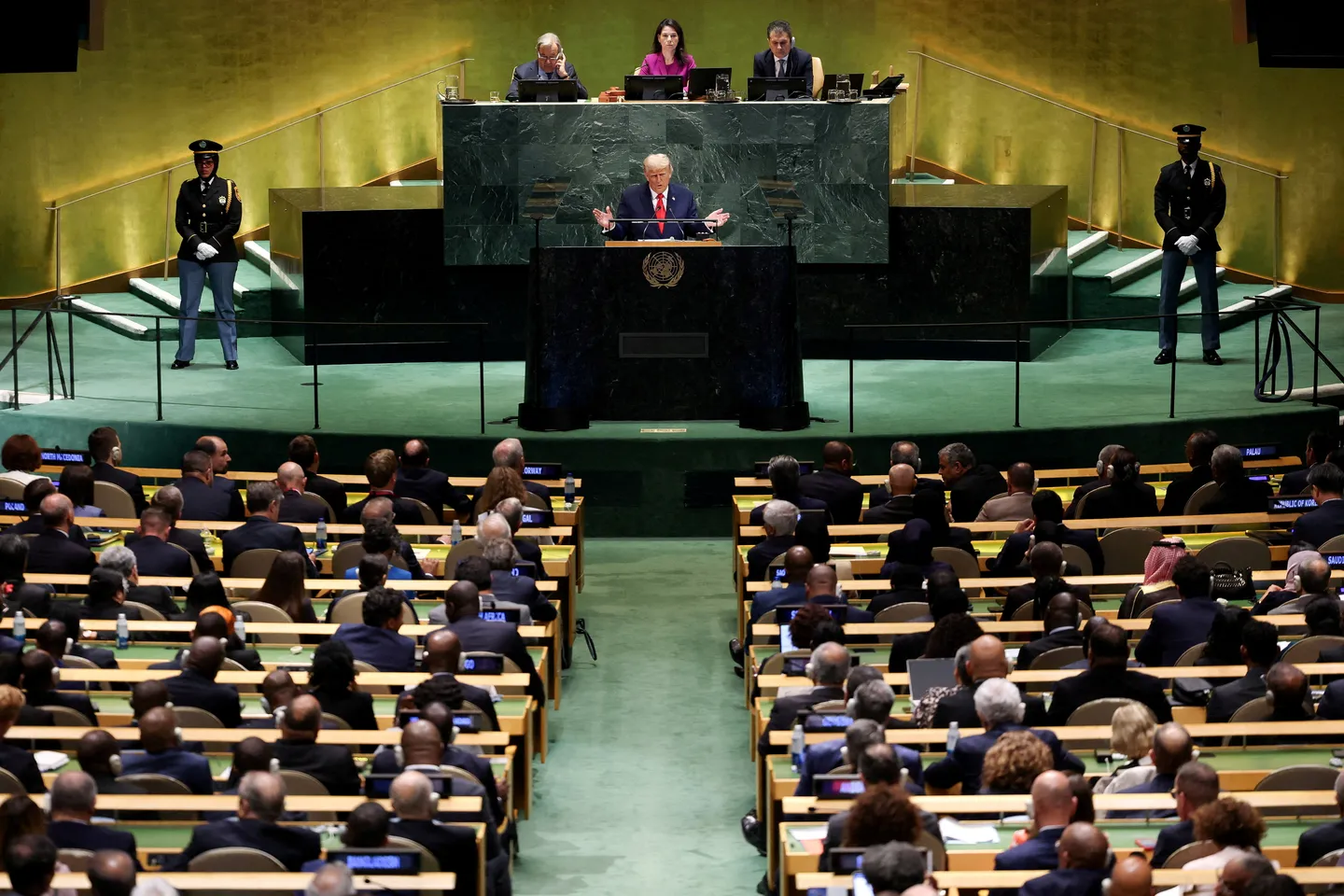
Tensions are expected to run high at the upcoming 81st UN General Assembly, as world leaders converge on New York for a General Debate centered on the theme, “Restoring trust, managing transformation: a United Nations that delivers for all.” Scheduled from September 22 to 28, the high-level gathering follows a year defined by significant geopolitical volatility and escalating conflict.
Observers anticipate a particularly contentious atmosphere. Richard Gowan, Program Director for Global Issues and Institutions at the International Crisis Group, predicts that both Iranian President Masoud Pezeshkian and Israeli Prime Minister Benjamin Netanyahu will arrive in “fighting form.” Gowan notes that while Netanyahu remains eager to project strength amid domestic electoral pressures, there are few indications that the UN platform will be used to facilitate de-escalation between Tehran and Washington.
This climate of friction persists in the wake of the 80th UN General Assembly, which saw forceful addresses regarding the war in Gaza and regional military confrontations. During his inaugural UN address, President Pezeshkian labeled US-Israeli strikes on Iran’s critical infrastructure, cities, and nuclear facilities as a “grave betrayal of diplomacy” and “savage aggression.”
Conversely, Prime Minister Netanyahu delivered a theatrically staged speech last year, utilizing visual aids to thank the United States for what he termed “bold and decisive action” against Iran. His address took place in a nearly deserted chamber, following a coordinated walkout by approximately 80 delegations in protest.
The discourse this year will be framed by the broader war initiated on February 28 between the US, Israel, and Iran. Hostilities have expanded significantly, with Iran retaliating through regional strikes and the blockade of the Strait of Hormuz. Simultaneously, the Houthi movement in Yemen has seized control of the country’s entire Red Sea coastline and strategic islands within the Bab al-Mandeb Strait.
US President Donald Trump is set to address the assembly on its opening day, September 22, typically appearing after the Brazilian representative. While his remarks remain unconfirmed, expectations suggest he will discuss various global conflicts, trade agreements, and his broader critiques of multilateralism and the UN structure itself. Gowan characterizes Trump as an unpredictable “showman” who often departs from prepared scripts, recalling his focus last year on facility maintenance issues at the UN headquarters.
Beyond the conflict-driven agenda, the assembly will confront urgent warnings regarding artificial intelligence. Researchers and industry executives have issued apocalyptic forecasts, suggesting that unchecked superintelligence could pose existential risks to humanity. The debate follows recent alarms raised by former Anthropic staffer Jacob Coxon and calls from industry leaders like Sam Altman, Elon Musk, and Dario Amodei for government intervention to monitor frontier AI development.
The race for the next UN Secretary-General adds another layer of complexity. Eight candidates are vying for the position, which begins on January 1, 2027. Ivonne A-Baki, an Ecuadoran-Lebanese diplomat and current nominee by Tonga, has publicly expressed concern over the intersection of nuclear threats and AI governance. Gowan suggests that current veto-wielding powers appear to favor a candidate focused on austerity and administrative cost-cutting rather than a figure who might challenge the status quo.
As New York transforms into a global diplomatic hub, the city anticipates the usual logistical strain, including significant security cordons, street closures, and an influx of delegates and media. Despite the intensity of the official schedule, the true substance of the event is expected to emerge from the myriad of bilateral meetings and side events occurring across the city, as leaders attempt to navigate a world grappling with multiple active wars and rapid technological transformation. The report also notes that washington DC: At last year ‘ s 80th UN General Assembly, Israel ‘ s war on Gaza and the aftermath of a 12-day confrontation, which included US air strikes on Iran, were common threads as the leaders of the US, Iran, and Israel delivered their forceful addresses. The report also notes that meanwhile, US President Donald Trump spoke early and significantly exceeded the standard time limit to deliver an unfiltered critique of the world body, blending self-congratulation, grievances, policy statements, and strikes on Iran in his speech. The report also notes that while the meeting of leaders and top diplomats from eight Arab and Muslim countries with the US president helped lay the groundwork for a ceasefire in Gaza and the establishment of the “Board of Peace”, even as Israel continues to breach the agreed truce almost every day, world leaders subsequently convened for bilateral talks with Trump. The report also notes that as he faces elections and will want to look strong,” says Gowan, who has a long history of observing the UN and liaising closely with diplomats and international officials, netanyahu will be especially abrasive towards his critics at the UN. The report also notes that according to the provisional programme, iran ‘ s Pezeshkian is scheduled to address the assembly as the fifth speaker on September 23. The report also notes that however, his address is expected to touch upon the war involving Iran, the resolution of multiple conflicts — up to 10 wars, according to him — peace and trade deals, as well as criticism of the UN, multilateralism, and migration, among other topics. The report also notes that even including his speechwriters, nobody can really know what Trump will say.