

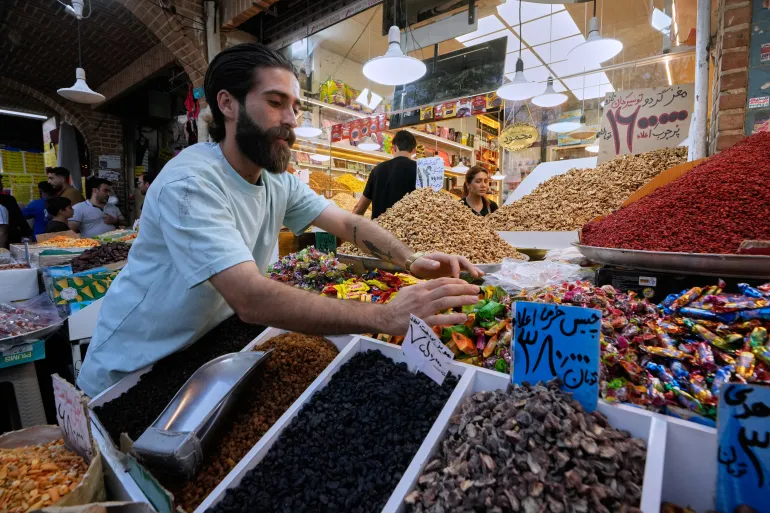
Tehran is doubling down on domestic production and self-sufficiency as it faces a fresh wave of US economic sanctions. Despite the ongoing six-month conflict, Iranian authorities maintain that their internal resources are sufficient to keep the economy afloat, even as they prepare for a difficult year of financial navigation.
Economy Minister Ali Madanizadeh outlined a two-year recovery plan on state television this Monday. Asserting that Tehran is well-versed in the mechanics of international pressure, Madanizadeh stated, “We have our own tools and we also know the game.” He expressed confidence that many nations would disregard US President Donald Trump’s threats to sever ties with Iran, suggesting that Tehran could potentially pivot to an offensive stance in a shifting global landscape where the US no longer holds singular dominance.
Central Bank Governor Abdolnasser Hemmati confirmed that oil exports—the nation’s primary source of foreign currency—have nearly ceased. However, he reassured business leaders that the government maintains sufficient cash stockpiles in secure, inaccessible locations to fund essential imports. While Hemmati acknowledged severe challenges, including rampant inflation and diminished purchasing power, he distinguished these hardships from total economic collapse, which he characterized as the ultimate US objective.
The government’s strategy relies heavily on stockpiling gold, foreign currency, and essential goods. Despite these efforts, the Iranian rial hit a record low of 2.05 million against the US dollar this Tuesday before seeing a minor recovery. Government spokesperson Fatemeh Mohajerani warned citizens not to anticipate immediate improvements in the coming year, noting that the Supreme National Security Council must authorize the release of official poverty data.
To bolster national resilience, security chief Mohsen Rezaei has encouraged younger Iranians to engage directly with the economy by manufacturing household and community goods. This push for self-sufficiency is a long-standing strategic goal, with the government aiming to increase agricultural self-sufficiency from current levels to 90 percent in the near term, eventually targeting full domestic production of essential foods. Agriculture Minister Gholam-Reza Nouri noted that while Iran currently imports roughly $16 billion in agricultural products against $8 billion in exports, the country remains reliant on external suppliers for wheat, maize, rice, and vegetable oils.
These efforts face significant hurdles. The UN Food and Agriculture Organization has warned that logistics disruptions and rising import costs are fueling inflation, with food prices in July rising 128 percent compared to the previous year. Furthermore, the push for agricultural self-sufficiency has raised concerns regarding the country’s severe water scarcity.
The pharmaceutical sector is also under pressure. Although Iran claims to produce 97 percent of its medicine, imported components remain vital. Parliament’s health committee spokesperson, Salman Eshaghi, reported in May that nearly 1,000 medicines face shortages. Costs have continued to climb as the government scales back subsidized currency allocations for imports.
Infrastructure damage from ongoing aerial campaigns by the US and Israel has exacerbated energy shortages. Daily power outages are common, and natural gas supplies are expected to tighten as winter demand approaches. Fuel distribution has also been strained, with reports of shortages at petrol stations in Tehran, Mashhad, and Karaj leading to long queues. While Mohajerani promised that fuel prices and quotas would remain stable through September 22, economist Sadegh Alhosseini warned that the government may eventually be forced into “painful reforms” to avoid the social unrest seen in other nations.
Looking toward the near future, the National Iranian Oil Refining and Distribution Company announced that two new refineries in southern Iran are expected to launch by late March, which would increase daily production capacity by approximately 12 million liters. The report also notes that and was confidant that many countries would effectively reject US President Donald Trump’s threats to cut off all links with Iran, he added that Tehran could potentially “go on the offensive” in a world where the US was no longer the only dominant force. The report also notes that but said, “enduring hardship is very different from collapse and what the US is after”, hemmati acknowledged “serious issues” like runaway inflation and constantly declining purchasing power for the people. The report also notes that government spokesman Fatemeh Mohajerani told state-linked media on Tuesday, iranians must not expect conditions to get any better over the next year. The report also notes that before slightly recovering on Wednesday, iran’s national currency fell to a new all-time low of 2.05 million rials against the US dollar on the open market on Tuesday. The report also notes that with national development plans repeatedly emphasising “self-sufficiency” and setting targets to achieve it at great cost, that mentality has permeated the Islamic Republic’s strategic thinking for decades. The report also notes that the government claims that Iran can produce 85 percent of its agricultural products domestically, even as concerns remain over what the increase in domestic agricultural production means for Iran’s dire water scarcity problems, to reduce its reliance on food imports for a population of around 90 million.