

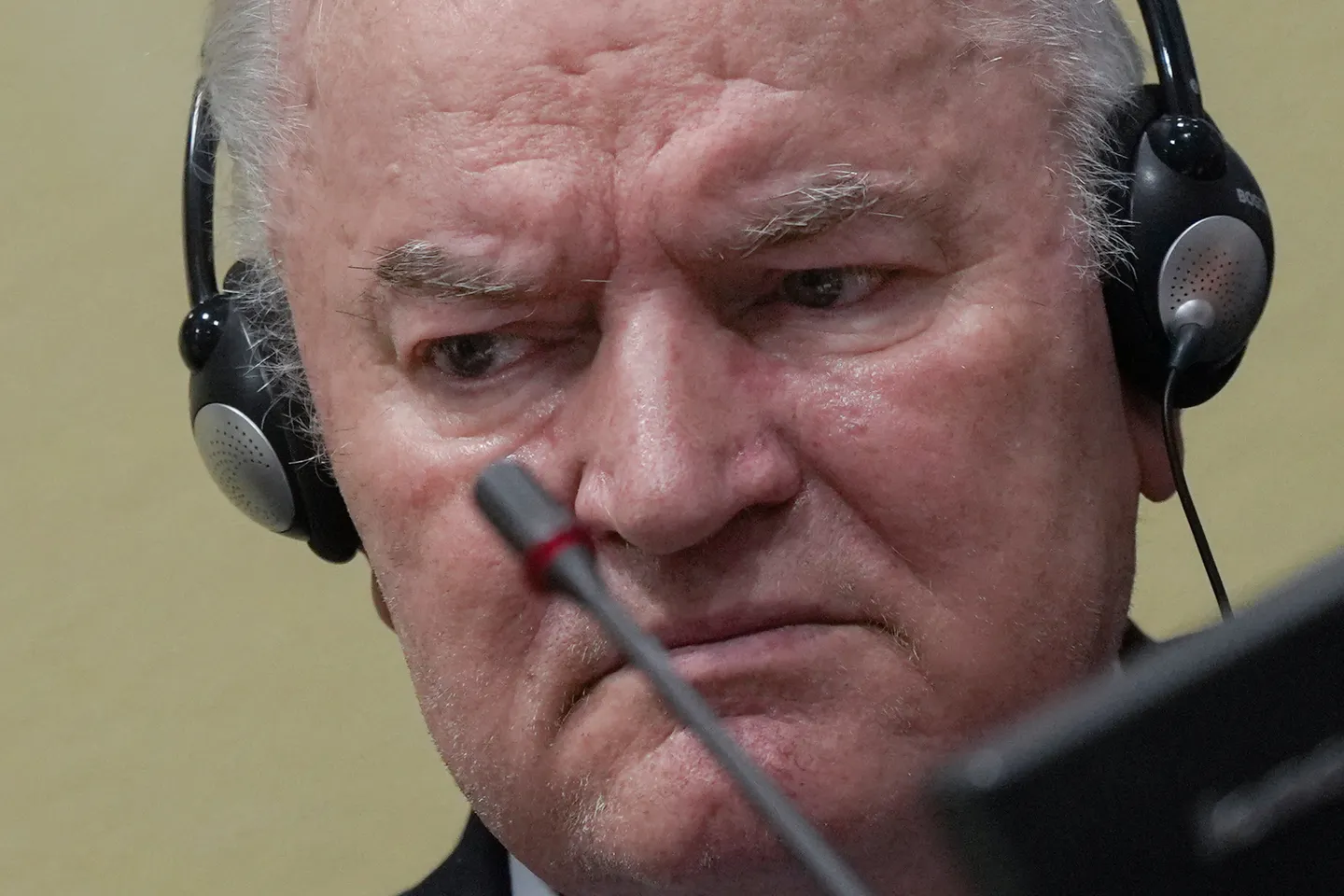
Ratko Mladic, the former Bosnian Serb general whose name became synonymous with the brutal conflicts of the 1990s, has died at the age of 84. He passed away at a UN detention hospital in The Hague, where he had been serving a life sentence for his role in orchestrating some of the most severe atrocities on European soil since the Second World War.
Born in 1942 in the village of Bozanovici, then part of the Nazi-aligned Independent State of Croatia, Mladic was raised in a Partisan family that suffered the loss of his father during the war. He pursued a military career, graduating from the Yugoslav military academy in Belgrade in 1965. He steadily advanced through the ranks of the Yugoslav People’s Army, developing a reputation for a rigid, aggressive military style that prioritized combat ferocity.
When Yugoslavia began to fracture in 1992, Bosnia declared its independence, prompting Bosnian Serbs to establish their own breakaway entity, Republika Srpska. In May 1992, Mladic was appointed commander of the Bosnian Serb army. According to Albinko Hasic, founder of the platform Bosnian History, the withdrawal of the Yugoslav People’s Army left behind a massive infrastructure of weaponry, personnel, and logistical support that enabled Mladic to wage a highly organized campaign of ethnic cleansing.
Mladic’s forces were responsible for the 1,425-day siege of Sarajevo, the longest in modern warfare. During this period, the city was subjected to relentless shelling and sniper fire, with streets like Mesa Selimovic Boulevard—dubbed “Sniper Alley”—becoming death traps for civilians. On a single day in July 1993, approximately 4,000 shells struck the city. Mladic personally directed these attacks, famously ordering his gunners to target Muslim neighborhoods until the inhabitants were pushed to the brink of madness.
The most haunting symbol of his campaign remains the 1995 Srebrenica genocide. In a chilling display of deception, Mladic entered the town, distributed sweets to children, and assured terrified Bosniak civilians of their safety. Shortly thereafter, his forces systematically separated over 8,000 Muslim men and boys, some as young as twelve, and executed them in mass killings. Three decades later, families continue the painful search for the remains of their loved ones.
Following the war, Mladic lived as a fugitive for 16 years, shielded by networks of protection that Hasic notes were essential to his longevity. He was finally apprehended in 2011, physically frail and suffering from the effects of an untreated stroke. His trial before the International Criminal Tribunal for the former Yugoslavia spanned over 500 sitting days, featuring testimony from nearly 600 witnesses.
In 2017, judges convicted Mladic of genocide, crimes against humanity, and war crimes. During the verdict, he famously erupted in fury, shouting that the proceedings were a fabrication before being forcibly removed from the courtroom. An appeals chamber upheld the conviction in 2021.
Reflecting on his death, Hasic emphasized that Mladic’s passing does not alter the historical or legal reality of his actions. He noted that the most striking aspect of Mladic’s end was that he was granted the opportunity to grow old—a privilege denied to the thousands of victims who were robbed of their futures, careers, and families. For survivors and the families of the victims, the focus remains on ensuring that these events are documented and remembered for future generations. The report also notes that he spent the rest of his life in detention and never expressed remorse for the crimes he and his army committed. The report also notes that graduated in 1965, and climbed steadily through the ranks of the Yugoslav People’s Army, a career officer forged in a military culture that prized martial ferocity as a virtue rather than a warning sign, he trained at the Yugoslav military academy in Belgrade. The report also notes that with total conviction, to drive them from what he considered Serb soil for good, he viewed Bosnia’s Muslims as the descendants of the Ottoman Turks and set out. The report also notes that “Serbia and the Federal Republic of Yugoslavia provided enormous amounts of military and financial support, including weapons, ammunition, fuel, salaries, logistical assistance and personnel,” Hasic, also a history expert, tells. The report also notes that that broader structure is essential to understanding how Mladic became so powerful, Hasic says. The report also notes that “The genocide required soldiers, buses, trucks, fuel, weapons, communications, execution sites and a functioning chain of command. The report also notes that and indeed the wider Bosnian genocide, itself demonstrates just how organised this machinery was,” he adds, the Srebrenica genocide.