

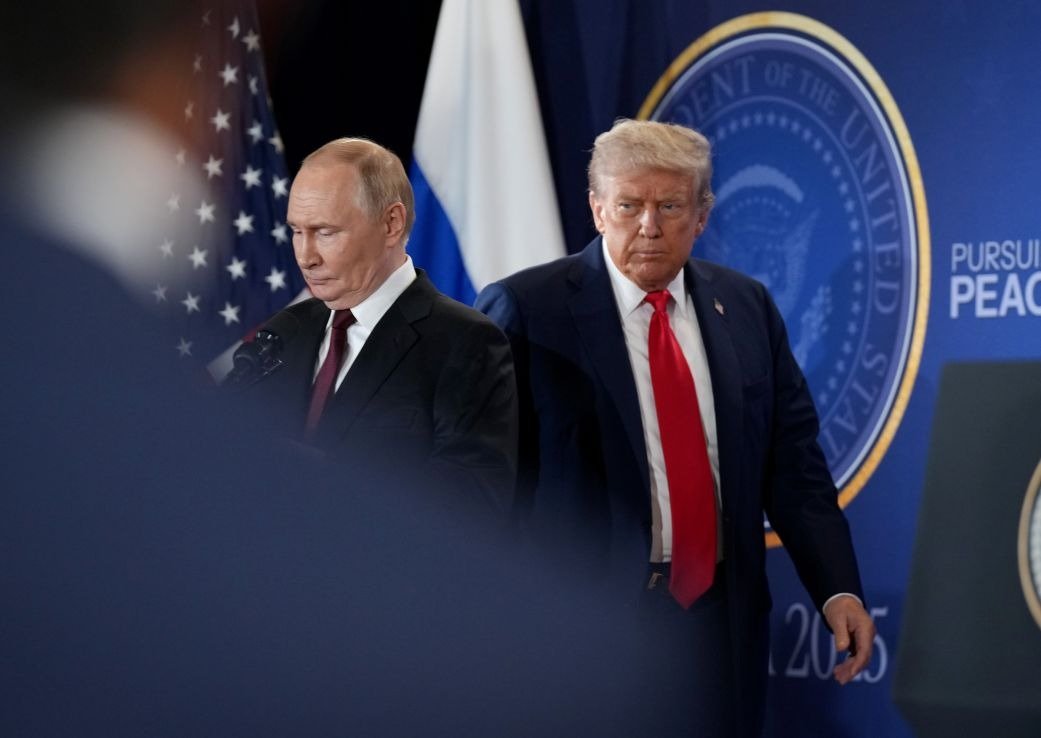
CIA Director John Ratcliffe traveled to Moscow this week for a high-stakes visit, reportedly to deliver a blunt assessment to Russian officials regarding their ongoing war in Ukraine. The irony of the mission was likely not lost on his hosts, as the Kremlin views President Donald Trump as being trapped in his own difficult conflict in Iran—a war that, much like the one in Ukraine, has proven difficult to conclude or win.
Both leaders currently face a similar strategic dilemma: they launched hostilities after underestimating the resilience of their adversaries, only to find their conventional military advantages neutralized by asymmetrical tactics. Both Ukraine and Iran have effectively utilized inexpensive, emerging technologies like drones to disrupt the operations of two of the world’s most powerful militaries. In Washington, there is growing concern that Vladimir Putin is not receiving honest updates on the trajectory of the war in Ukraine, a problem some observers suspect may also plague the Trump administration regarding its military efforts in Iran.
While the parallels between the two leaders are significant, there are clear differences in their approaches. Trump has avoided the massive deployment of ground troops that has resulted in over 1.4 million Russian casualties—including those killed, injured, or missing—according to data from the Center for Strategic and International Studies. Furthermore, while Putin has targeted civilian infrastructure in Ukraine, Trump has largely avoided such tactics in Iran. However, the US administration has faced criticism for failing to provide a full public accounting of a February missile strike that killed nearly 200 people at an Iranian school, an incident reportedly caused by the use of outdated intelligence.
During his Moscow visit, Ratcliffe warned Russia against any overt or covert aggression toward NATO territory, reflecting European anxieties that Putin might test the alliance’s defenses. He also urged Russian officials to cease economic and military support for Iran. This diplomatic outreach comes as the wars in Ukraine and Iran continue to destabilize the Middle East and raise the specter of a broader geopolitical conflict. Despite Trump’s past claims that he could resolve the Ukraine war within 24 hours, his peace efforts have stalled, and his assertions that Putin desires a peaceful resolution have been repeatedly contradicted by events on the ground.
The US has been an indirect participant in the Ukraine conflict, just as Russia has maintained an over-the-horizon role in the Iran war. Tensions have been exacerbated by reports that Moscow has provided Tehran with intelligence on the movements of American troops, ships, and aircraft, often utilizing satellite imagery. As the war in Iran reaches its six-month mark, the US has shifted its focus toward economic warfare. However, experts warn that this strategy requires international cooperation.
Firas Maksad, managing director for the Middle East and North Africa at the Eurasia Group, noted that for economic pressure to be effective, Trump needs the cooperation of China and Russia. He expressed skepticism, stating, “I think he’s going to have a real hard time getting the Chinese to cooperate… It’s a similar situation with Russia.” This sentiment is echoed by political figures like Democratic Senator Mark Kelly, who criticized the administration’s lack of a clear strategic goal or exit plan in Iran, noting that the ongoing conflict ultimately benefits Russian interests.
Recent intelligence suggests that the Kremlin perceives the US as weakened by its involvement in Iran, where the failure to secure a decisive victory has strained naval and air forces and depleted munitions. This has led to concerns that adversaries may increasingly question Washington’s capacity to respond to crises elsewhere. While Ratcliffe’s mission may offer some reassurance to allies concerned about US commitments to NATO, the administration continues to face scrutiny over its motives and its inconsistent approach to supporting Ukraine, including the delayed licensing of Patriot anti-missile systems. The report also notes that injured or missing, according to the Center for Strategic and Intern, trump has not copied Putin’s grave error of pouring ground troops into a quagmire — a decision that has left more than 1.4 million young Russians dead. The report also notes that but his peace efforts have gone nowhere, trump once predicted he could end the war in Ukraine in 24 hours. The report also notes that russia’s harrowing history has bred a dark sense of humor in its citizens. The report also notes that but they can’t walk away and save face. The report also notes that many observers wonder whether Trump’s sunny assessments of US victory in Iran mean he’s also poorly served by an inner circle unwilling to give him bad news. The report also notes that for example, were humbled by wars in Afghanistan, washington and Moscow are no strangers to costly foreign entanglements; both. The report also notes that russia’s disaster in Ukraine in some way recalls the US defeat in Vietnam.