

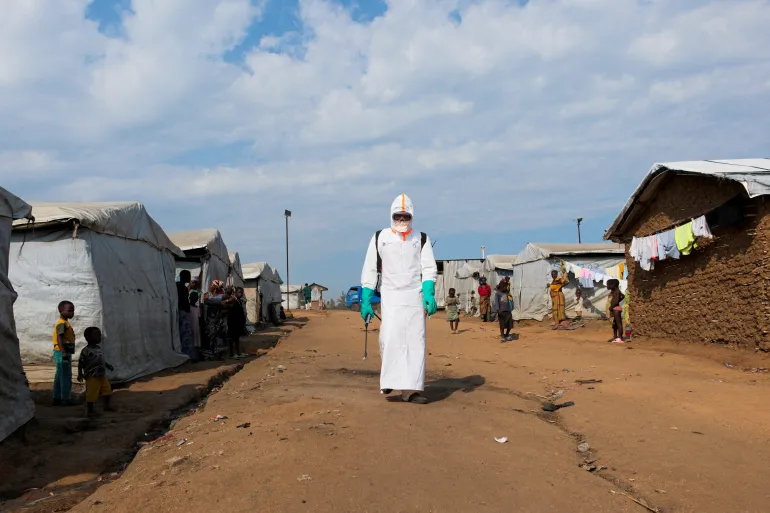
The Ebola epidemic in the Democratic Republic of the Congo (DRC) has reached two additional health zones, bringing the total number of affected areas to 60. According to government data released on Friday, the new zones of Biena and Manguredjipa in North Kivu province are experiencing fatality rates significantly higher than the national average of 48 percent, a trend officials attribute to delays in medical intervention.
Health ministry figures indicate that the country has documented 5,794 confirmed cases and 2,786 deaths. The virus is currently spreading at an unprecedented pace, outpacing containment and tracking efforts. Experts warn that the crisis is on a trajectory to surpass the 2014–2016 West African epidemic, which resulted in over 11,000 fatalities.
Containment operations continue to face severe obstacles, including regional armed conflict, population displacement, attacks on healthcare infrastructure, and a lack of essential resources. Furthermore, the absence of an approved vaccine or treatment for the rare Bundibugyo strain of the virus forces relief workers to rely heavily on traditional containment strategies, such as rigorous contact tracing and patient isolation.
To bolster the response, Doctors Without Borders (MSF) has opened a new treatment facility in Beni, a region that has recorded 122 cases and 87 deaths since mid-May. With a local fatality rate nearing 69 percent, Beni remains one of the most critical areas. The new center, according to MSF, “enables the rapid treatment of patients, strengthens contact tracing and supports the health authorities in their efforts to contain the spread of the virus.”
MSF currently maintains a workforce of 1,400 personnel in the DRC, managing treatment centers with a combined capacity of 400 beds. Albert Stern, the organization’s emergency coordinator, emphasized that early diagnosis is vital for survival and for limiting transmission within families. He noted that the epidemic is expanding faster than the current response capacity.
UN Secretary-General Antonio Guterres issued a stark warning on Thursday regarding the speed of the outbreak. In a statement posted on X, Guterres described the situation as the fastest-spreading Ebola epidemic ever recorded, urging the international community to escalate action immediately to regain control of the crisis. The report also notes that the outbreak is now on track to surpass the deadliest Ebola epidemic on record – the 2014 to 2016 outbreak in West Africa that killed more than 11,000 people. The report also notes that “We know how to contain Ebola and save lives. The report also notes that the world must urgently step up action to get it under control.”.