

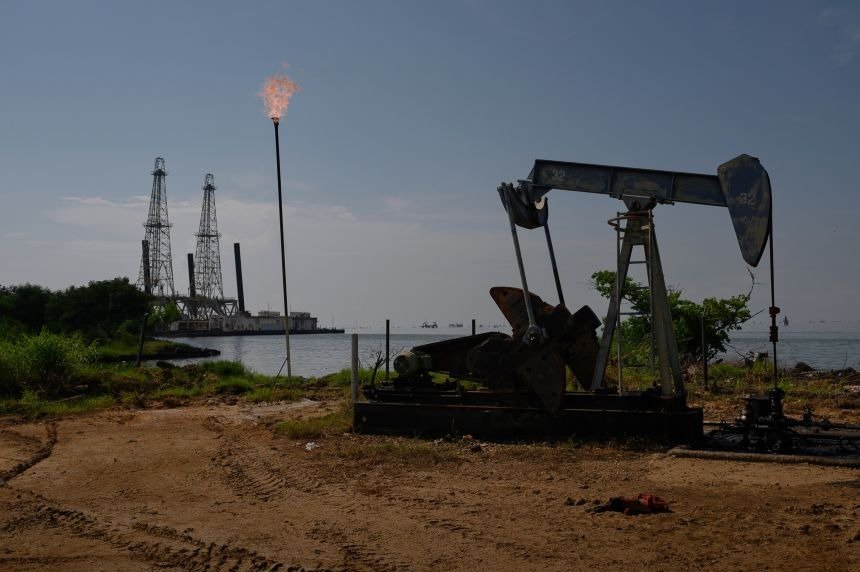
President Donald Trump announced on Friday that the United States has successfully negotiated an oil agreement with Venezuela. This strategic move is expected to more than double American oil reserves, bolster the national supply, and ultimately lower gas prices for consumers. The announcement comes as the U.S. national average for gasoline remains above $4 per gallon, with the administration looking to address supply concerns ahead of the upcoming midterm elections.
The agreement, which Trump described as being secured at no cost to American taxpayers, grants the U.S. control over more than 65 billion barrels of proven oil reserves. According to the President, this initiative is designed to set Venezuela on a path toward prosperity while simultaneously strengthening the energy position of the United States. Secretary of State Marco Rubio and Secretary of War Pete Hegseth played key roles in the negotiations, working alongside Venezuelan Interim President Delcy Rodríguez to finalize the partnership.
A White House official confirmed that the deal establishes a new private joint venture, in which the United States will hold 55% of the effective output. This venture is projected to become the world’s second-largest private oil company by reserves. Under the terms of the arrangement, Rodríguez has granted a private entity 100-year concessions for the oil fields. This private company operates as a collaborative project between the U.S. government and a private operator based in Venezuela.
The U.S. government expects to secure over half the value of this new oil giant through a combination of equity ownership and guaranteed at-cost off-take. As production scales, the stable supply of oil will be directed toward replenishing the U.S. Strategic Petroleum Reserve and meeting the fuel requirements of the American military. The administration views this as a vital step to stabilize energy markets, especially as global stockpiles have dwindled following the disruptions caused by the Iran war.
Secretary of State Rubio praised the agreement as a significant victory for both nations. He noted that the deal is expected to attract nearly $100 billion in private investment to Venezuela, create thousands of high-paying jobs, and serve as a catalyst for the country’s economic reconstruction. In a statement, Rodríguez echoed this sentiment, emphasizing that the goal is to consolidate Venezuela’s standing as an energy-producing power to drive national development and improve the well-being of its citizens.
The foundation for this deal was laid earlier this year following a large-scale military operation that resulted in the capture of Venezuelan leader Nicolás Maduro and his wife, who were subsequently brought to New York to face criminal charges. Following that operation, the administration signaled its intent to assist in rebuilding the nation’s oil industry. Legislative changes approved by Venezuelan lawmakers in January, supported by Rodríguez, further facilitated this transition by easing restrictions on foreign participation in the country’s oil sector.
The current energy landscape remains strained, with U.S. emergency reserves at their lowest levels since the early 1980s. With global fuel stockpiles depleted and market patience wearing thin, the administration is positioning this deal as a long-term solution to ensure energy security and economic stability for the United States. The report also notes that almost two months before the US midterm elections, comes as the national average gas price sits at more than $4 a gallon, trump’s emphasis on lowering American gas prices. The report also notes that but it reached an inflection point in recent weeks: Billions of oil and fuel barrels in commercial stockpiles have vanished, the Iran war has disrupted a fifth of the world’s oil supply for six months.