

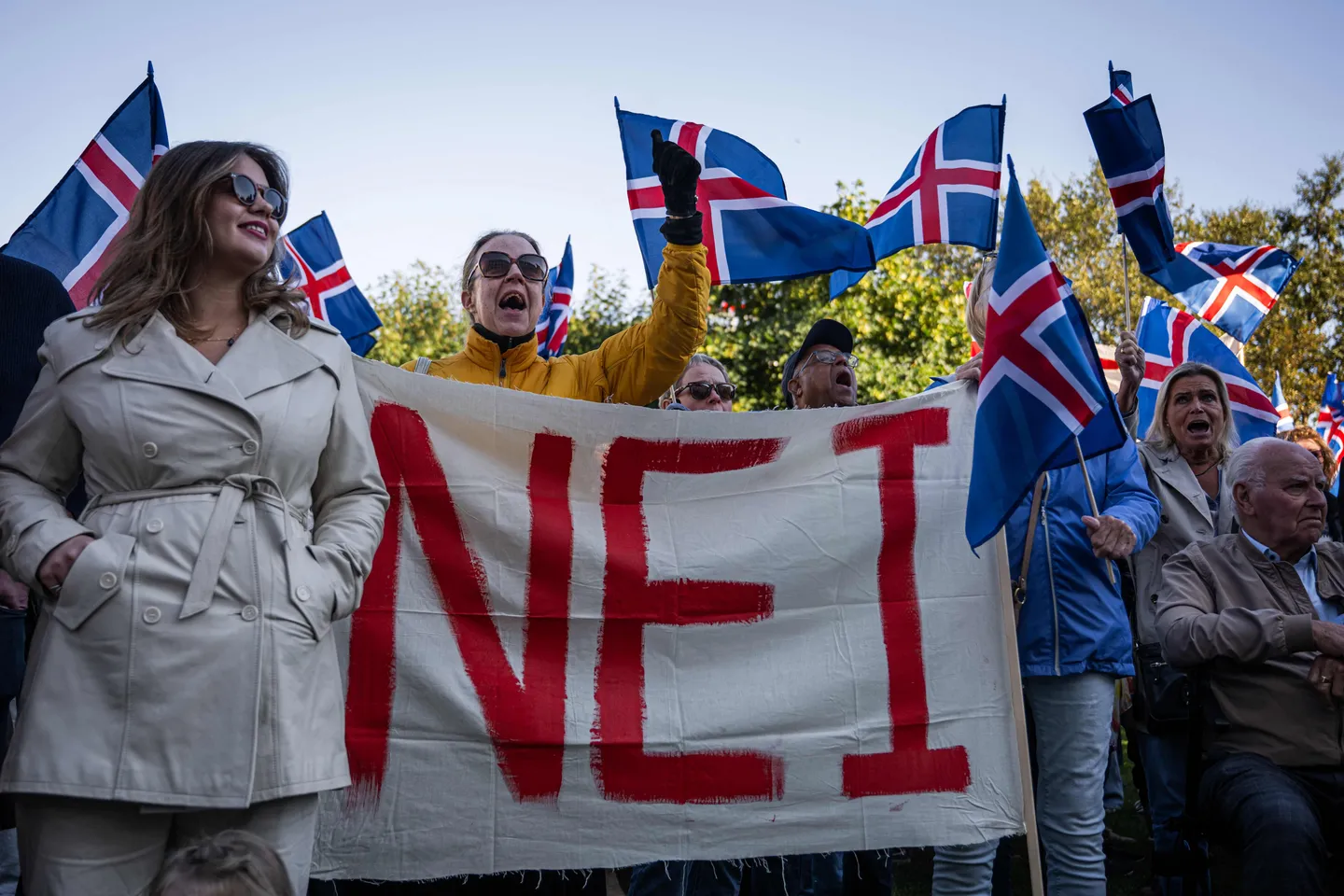
Election Outcome and Government Response
- Result: Nearly 53 percent of voters opposed renewed EU accession talks.
- Government Stance: Prime Minister Kristrún Mjöll Frostadóttir confirmed her administration will respect the public mandate.
- Context: The vote occurred despite a government push to re-evaluate the nation’s relationship with Brussels.
The decision marks a significant moment for the European Union, which has expanded from six to 27 members over seven decades. While the government sought to reopen the debate, the electorate remained wary of shifting decision-making authority to EU institutions. Margrét Ágústa Sigurðardóttir, secretary general of the Icelandic Farmers’ Association, noted that sovereignty and democratic accountability were the central issues for voters, who prioritize national control over matters vital to long-term interests.
The Economic and Cultural Stakes
Fishing remains the cornerstone of the Icelandic economy, with seafood and marine products accounting for 30 to 40 percent of the nation’s exports. The industry is deeply rooted in rural areas, particularly in the northwest, where opposition to EU talks was strongest. Even in urban centers like Reykjavík, enthusiasm for joining the bloc remained limited among younger voters. Full membership would have forced Iceland to navigate the EU’s Common Fisheries Policy, a prospect that many viewed as a threat to their traditional livelihoods.
Historical Context and Sovereignty
Iceland’s identity is closely tied to its independence, achieved in 1944 after severing constitutional ties with Denmark. Anders Wivel, a professor at the University of Copenhagen, explains that many Icelanders cherish this full independence for historical reasons. The nation previously applied for EU membership in 2009 following a global financial crisis, but negotiations were suspended in 2013 and the application was withdrawn in 2015. The current push to resume talks was largely driven by a changing security environment.
Geopolitical Implications
- Regional Security: Iceland, a NATO member located 290 kilometers from Greenland, has faced pressure to adapt to evolving Nordic security dynamics.
- External Influence: Remarks from the Trump administration regarding the potential acquisition of Greenland created unease in Reykjavik, with some officials feeling the country was being placed on a “hot seat.”
- EU Standing: Experts like Evren Kucuk suggest the result may signal a weakening of the EU’s geopolitical gravitational pull, potentially emboldening skepticism in other non-member European nations like Norway and Switzerland.
Kucuk argues that the rejection could set a precedent for anti-EU movements across the continent, prompting voters elsewhere to question the value of ceding sovereignty. However, other analysts urge caution in overstating the international impact. They emphasize that the vote was specifically about reopening accession negotiations rather than a broader referendum on Europe itself. As Sigurðardóttir noted, Iceland remains deeply integrated with the continent through the single market and the Schengen free-travel area, even as it maintains its firm stance on national autonomy and food security. The report also notes that the EU has grown from six founding members to 27 states over the past seven decades and is pursuing further enlargement. The report also notes that “Concerns about fisheries, agriculture, natural resources, food security, and democratic accountability featured prominently throughout the campaign. The report also notes that many people felt that decisions on these fundamental issues should continue to be made in Iceland by those directly accountable to Icelandic voters,” she says. The report also notes that who actively supported the “No” campaign, says its supporters came from different regions and a wide range of social and economic backgrounds, sigurðardóttir. The report also notes that descendants of Vikings, a nation of sailors, have long prided themselves on their cod and haddock catches from the icy Arctic waters around Iceland, where seafood and marine products make up nearly a third to 40 percent of the Nordic country’s total exports, the country’s fishermen. The report also notes that as a result, the country’s economy has largely been built around its fishing industry, rooted in rural areas and Iceland’s northwest, where more than 60 percent said no to EU talks. The report also notes that professor of political science at the University of Copenhagen and an expert on Scandinavian foreign policy and Nordic security, the resistance to EU membership reflects two interconnected factors: Iceland’s history as part of the Danish kingdom and the economic importance of fisheries, for Anders Wivel. The report also notes that economically, the fishery policies of the EU are unattractive to the politically influential fishery industry,” Wivel tells.