

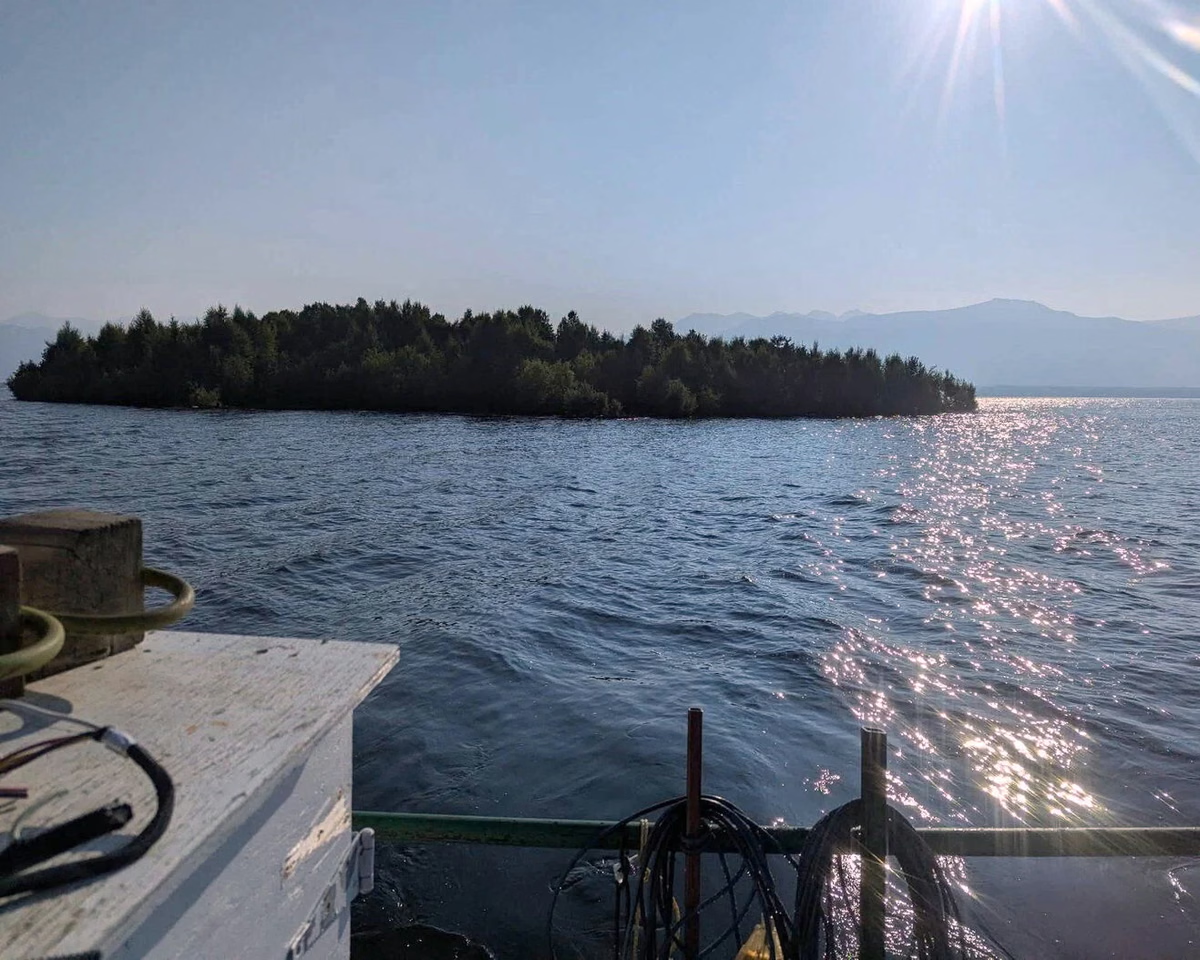
A mysterious, heavily forested island has emerged on Williston Lake in British Columbia, leaving both local residents and experts stunned. Measuring approximately 150 metres long and 75 metres wide, the land mass was not present on any official navigation charts or maps when it first appeared. A boater who encountered the floating anomaly captured video footage showing nearly 100 trees swaying in the lake’s chop, providing a rare glimpse of the phenomenon.
The island’s presence was short-lived, as it vanished shortly after its initial discovery. However, it reappeared on Monday, roughly 20 miles from its previous location, marking a significant aquatic displacement. The mystery is unfolding within Williston Lake, a narrow, 1,700-square-kilometre reservoir created in the early 1970s following the construction of the W.A.C. Bennett dam. It currently stands as the largest body of freshwater in British Columbia.
Bob Gammer, a spokesperson for the government-owned utility BC Hydro, which manages the reservoir, described the sight as “quite something and rather unbelievable.” Initially skeptical, Gammer noted that in an era of artificial intelligence, corroborating eyewitness accounts were essential for verification. Subsequent satellite imagery confirmed the island’s existence, placing it within the main body of the reservoir about 60 miles west of the dam.
BC Hydro officials suggest the island formed over years as trees and vegetation took root in woody debris along the reservoir’s sheltered shorelines. The structure is likely held together by a dense mat of peat, mud, and root systems, similar to the well-known Forty Acre Bog in Wisconsin. The island is currently teeming with life, hosting various birds and small animals among its coniferous and broadleaf trees, while its submerged root system likely provides a habitat for fish.
The current water levels in the reservoir are the highest they have been in 14 years, driven by heavy winter snowpacks and consistent summer rains. Gammer explained that these conditions likely provided the buoyancy needed to lift the mass from the shoreline into open water. He likened the growth process to hydroponics, noting that the trees are thriving on a decaying food source with abundant water, allowing them to grow rapidly.
While the island’s exact age remains unknown, local observers suspect the trees could be decades old. Gammer emphasized that the island could potentially remain in the open water for years if conditions stay favorable. He also clarified that the island’s disappearance between sightings did not mean it had sunk; it likely drifted back into a more sheltered area along the shoreline.
Despite the curiosity surrounding the island, officials have issued strong warnings against attempting to board it. Rocky Avery, a local resident who shared the initial footage to warn others of a potential hazard, admitted he would be tempted to step on it if possible. However, Gammer cautioned that the island is “very unsafe” and “very unstable,” noting that video evidence shows the trees shifting atop a delicate, thin layer of logs.
The discovery has also sparked a wave of social media commentary, with some users humorously referencing recent geopolitical tensions between Canada and the United States. Following the collapse of trade talks, which led to the US president renaming Lake Ontario, some online observers joked that the island might be the next target for a territorial claim. Despite the humor, the focus remains on the unusual natural occurrence that continues to captivate the region. The report also notes that the land mass took local people and experts by surprise, nearly 150 metres (500 feet) long and 75 metres (250 feet) wide. The report also notes that and then, within days, it disappeared. The report also notes that on Monday, the island made its second appearance – nearly 20 miles from its location earlier in August – in stunning aquatic displacement that has left residents wondering how an entire island can seem to simply vanish. The report also notes that at nearly 1,700 sq km (650 sqmiles) it is the largest body of freshwater in the westernmost province. The report also notes that including Wisconsin’s famed Forty Acre Bog, similar islands have shown up across the globe. The report also notes that measuring roughly 12,000 sq metres (14,000 sq yards) in size, the British Columbia island is also bursting with life: birds and small animals are living among the mix of coniferous and broadleaf trees. The report also notes that he added, is higher than it has been in 14 years, as a result of high winter snowpacks and consistent summer rains that have raised water levels in the Peace River and the lake, the reservoir.