

The Emirate of Sharjah is currently undertaking a comprehensive overhaul of its transportation infrastructure to streamline daily commutes and accommodate rising population growth. Spearheaded by the Sharjah Roads and Transport Authority (SRTA), these initiatives integrate large-scale road construction, advanced traffic management, and a significant shift toward sustainable public transit.
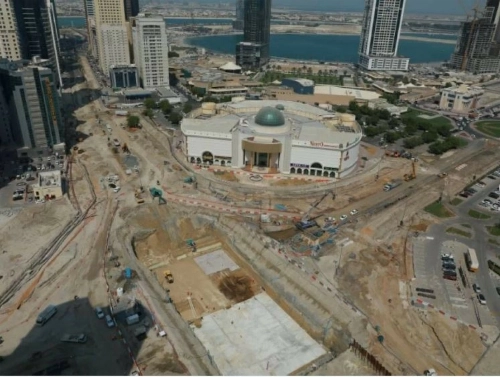
A major focus of this development is the Al Taawun Square Tunnel, designed to improve connectivity between Sharjah and Dubai. The project, which is scheduled for a phased rollout, will see the first stage open in November 2026, with full completion expected by February 2027. Once operational, the tunnel will feature three lanes in each direction, providing a capacity of 4,000 vehicles per hour during peak periods. This infrastructure is projected to reduce traffic congestion and cut waiting times by as much as 85%.
In parallel, the SRTA is advancing the Sheikh Khalifa Bin Zayed Road and Mleiha Road intersection project. This development includes the construction of a 500-meter-long, three-lane overpass and approximately 2.5 kilometers of surface roads, backed by a budget of Dhs140 million. Officials anticipate this upgrade will reduce travel times from 20 minutes to roughly 10 minutes for motorists heading toward Mleiha Road. Further localized improvements include new U-turns and traffic signals near Al Juraina and the University Hospital, as well as beneath the Sheikh Humaid bin Saqr Al Qasimi Bridge.
Dr. Engineer Yousif Khamis Mohammad Alathmane, Chairman of the SRTA, noted that these projects align with the vision of His Highness Dr. Sheikh Sultan Bin Mohammad Al Qasimi, Ruler of Sharjah, to prioritize human-centric urban development. To maintain efficiency, the Authority has utilized asphalt recycling technology since 2021, which has accelerated construction timelines, reduced natural resource consumption, and improved overall maintenance standards.
The Authority is also aggressively modernizing its fleet to meet sustainability goals. Between 2017 and 2025, the SRTA has worked to integrate natural gas, hybrid, and electric vehicles into its public transport network in partnership with local taxi operators. The electric bus initiative, which began with two units, saw a major expansion in 2024 with the addition of 10 new vehicles. These buses are equipped with artificial intelligence for data analysis and internal safety monitoring.
The current public transport fleet includes 41 luxury tourist and semi-tourist buses that meet Euro 6 emissions standards. Additionally, the fleet features 18 electric buses, each 9 meters long, capable of carrying 33 passengers with a range of 200 to 250 kilometers per charge. A larger 12-meter electric bus model is also in use, offering a capacity of 51 passengers and a range of 300 to 350 kilometers. The fleet also includes a specialized luxury bus designed for VIPs and official delegations, featuring spacious seating and a dedicated meeting table.
To enhance accessibility, the SRTA has transitioned from fixed-route models to an adaptable “Bus on Demand” service. Operating daily from 6:00 AM to 10:00 PM, this service allows users to book rides via a mobile app or online, providing door-to-door or designated pick-up options in areas such as Muwaileh Commercial, Aljada, University City, Al Juraina, Al Qarain, and Al Nouf. The service is specifically designed to be accessible to people with disabilities.
Safety remains a cornerstone of these upgrades. The SRTA is outfitting 131 intercity buses with 10 cameras each—four external and six internal—to monitor road conditions and passenger safety. Similarly, the taxi fleet has been equipped with a five-camera system that uses artificial intelligence to supervise driver behavior, track road conditions, count passengers, and alert drivers to any items left behind by commuters. The report also notes that this improvement is set to significantly enhance traffic flow and cut down travel time from around 20 minutes to nearly 10 minutes for those traveling from Sharjah city towards Maliha Road. The report also notes that these include constructing pedestrian crossings with crossing lines and three-way traffic lights on Corniche Road in front of the Sharjah Ladies Club and the Supreme Council for Family Affairs, as well as on Al Mina Road between Al Muraijah and Al Jubail. The report also notes that additionally, the SRTA is utilising asphalt recycling technology to repair damaged road layers by reusing existing materials rather than relying solely on new ones. The report also notes that improve Sharjah’s readiness for future challenges, and ensure sustainable and efficient services in alignment with top international standards, this strategic approach is designed to offer a safer and more efficient transportation experience. The report also notes that this endeavour is in collaboration with Sharjah Taxi, Aman Taxi, Union Taxi, and City Taxi. The report also notes that with seating capacities between 47 and 49 passengers, the fleet comprises 41 luxury tourist and semi-tourist buses. The report also notes that enhancing fuel efficiency while reducing emissions and noise levels, they are powered by engines that meet the Euro 6 emissions standard. The report also notes that offering an operational range of 300 to 350 kilometers per charge, along with a luxury tourist bus designed for 28 passengers, the system also includes a 12-meter-long electric bus with a capacity for 51 passengers.