

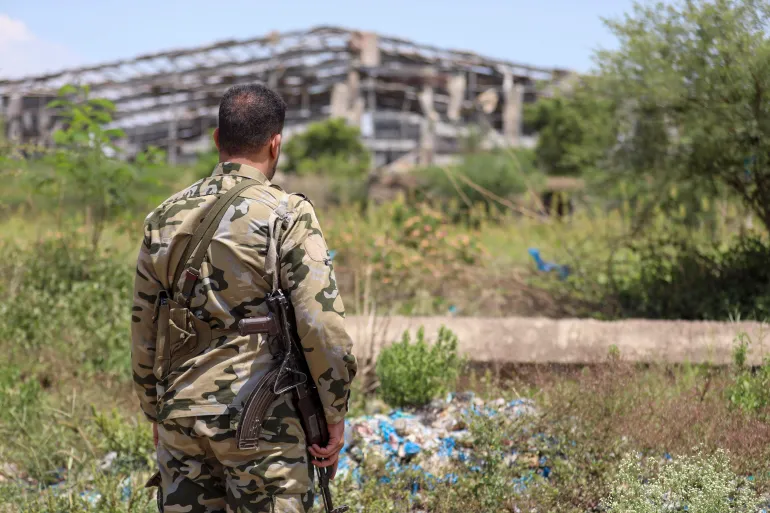
Yemen’s internationally recognized government has announced a major counteroffensive aimed at driving the Iran-aligned Houthi rebels from critical maritime positions. Military authorities confirmed on Monday the recapture of the strategic port city of Mocha and the Dhubab district, both situated along the Bab al-Mandeb Strait, a vital artery for global energy supplies.
The offensive, which includes an aerial campaign supported by a Saudi-led coalition, seeks to reclaim territory lost during a rapid Houthi sweep in September. Major General Turki al-Maliki, spokesperson for the coalition, stated that 100 fighter jets are providing air cover, securing protection over the strait and neutralizing hundreds of rebel targets. Government-aligned news agency Saba quoted military sources as saying that operations in Dhubab successfully severed key supply lines leading toward the waterway. “During the operation, they advanced and seized important positions – cutting off supply lines and roads leading to Bab al-Mandeb,” an unnamed army source told Saba. Government forces are “continuing to comb and secure the liberated areas and cut off supply routes to the Houthi terrorist militia”, Saba reported.
Beyond the coastal push, the government has launched what it described as a “strategic offensive” targeting the capital, Sanaa. The Houthis have maintained control over the city and large portions of the populous northwest since 2014. Despite reports of Houthi casualties and captured fighters during the recent clashes near Mocha, the battlefield developments remain difficult to verify independently. According to the military, On social media that fighting took place across several fronts near Mocha, leaving a number of Houthi fighters dead and wounded. The Houthis, also known as Ansar Allah or Supporters of God in Arabic, lost many fighters and several others were wounded in the clashes, with military equipment destroyed or damaged, according to the source.
This renewed escalation follows the collapse of a 2022 truce in July and occurs against a volatile regional backdrop. As the Houthis solidify their hold on parts of western Yemen, they have effectively obstructed transit through oil corridors amid broader regional tensions, including the closure of the Strait of Hormuz during the ongoing conflict involving Israel and the United States. The war escalated after a fragile truce struck between the government and the Houthis in 2022 collapsed in July.
Presidential Leadership Council Chairman Rashad al-Alimi confirmed on Sunday that the government has commenced operations to clear remaining Houthi-held areas. Meanwhile, the intensified fighting is complicating diplomatic efforts. In Riyadh, Pakistani Deputy Prime Minister Ishaq Dar, Foreign Minister, arrived for high-level talks with officials from Saudi Arabia and Turkey.
The meeting centers on the Mecca Joint Defence Agreement, signed on August 7, which mandates that an attack on one signatory is treated as an assault on all three. While the agenda includes security cooperation, delegates are also discussing a proposal for potential political engagement with the Houthis, an alternative approach suggested by Tehran to avoid prolonged warfare. Saudi Arabia, Turkiye and Pakistan signed the agreement on August 7 to strengthen collective deterrence and expand defence cooperation in the region.
Humanitarian organizations warn that the expanded military campaign threatens to worsen an already dire situation. Michael Appel noted that civilians are trapped along fragmented front lines, with tens of thousands facing the imminent risk of further displacement and acute hunger. As the conflict rages, the prospect of a lasting resolution remains overshadowed by the immediate surge in violence and the resulting humanitarian toll.