

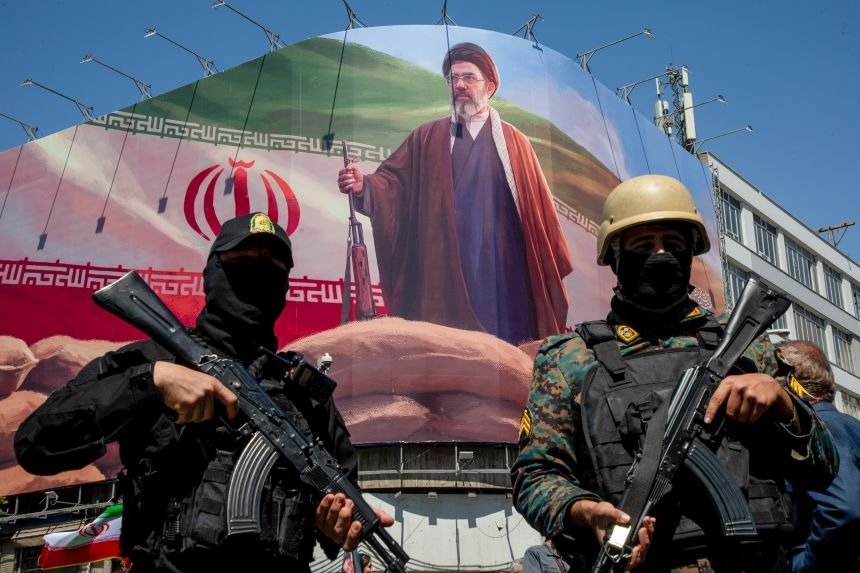
A prevailing narrative has emerged suggesting that Iran has successfully weathered the ongoing conflict, maintaining its regional influence despite significant military pressure from the United States and Israel. Proponents of this view point to the fact that the Iranian government remains in power, its missile capabilities persist, and it continues to threaten shipping through the Strait of Hormuz, thereby driving up global energy costs. However, this assessment may be premature as the dynamics of the war shift toward a contest of endurance and economic sustainability.
The conflict has unfolded in distinct stages. Act One began on February 28 with six weeks of intensive airstrikes. Act Two followed with an April 7 ceasefire and negotiations, leading to a June 17 Memorandum of Understanding signed by Donald Trump and Iranian President Masoud Pezeshkian. Act Three commenced when Iran resumed targeting commercial vessels, triggering further military exchanges. We are now in Act Four, defined by a rigorous US-led military embargo and blockade.
Since mid-July, the United States has reimposed a blockade on Iranian ports and tightened sanctions on its oil trade. Simultaneously, the US military has focused on clearing shipping lanes and protecting commercial transit. These efforts have yielded tangible results: global shipping has stabilized, and energy prices have remained consistent. Data indicates that oil flows through the Strait have recovered to two-thirds of pre-war levels, shifting the burden of pressure onto Tehran rather than Washington.
Iran’s economic situation is increasingly precarious. The International Monetary Fund projects a contraction of more than 5% for the Iranian economy this year, with inflation rates nearing 70%. The national currency has depreciated significantly, and basic goods have become increasingly expensive. Official figures from the Iranian Labor Ministry suggest that over one million jobs were lost within the first three months of the war alone, compounding the pre-existing public unrest that saw thousands of citizens killed in the streets prior to the conflict.
This current blockade represents a unique challenge for the Iranian regime, marking the first time since the 1979 Revolution that its primary economic lifeline through the Strait of Hormuz has been effectively quarantined. While Foreign Minister Abbas Araghchi recently dismissed the sanctions and blockade as “bound to fail,” asserting that such campaigns have historically been unable to alter Iranian policy, the regime’s reliance on the Revolutionary Guards to maintain order requires resources that are now being severely restricted.
Tehran’s previous strategy—threatening maritime commerce to force global economic concessions and influence US domestic politics ahead of midterm elections—has struggled to gain traction in this current phase. While the risk of escalation remains, particularly through proxy forces like the Houthis in Yemen or strikes on Gulf energy infrastructure, these tactics have not succeeded in forcing a US withdrawal. Admiral Brad Cooper, commander of CENTCOM, has clarified that the current US objective is to enforce the blockade and ensure the safe passage of commercial traffic.
Ultimately, the path forward for Iran remains tied to abandoning its claims on the Strait and dismantling its nuclear enrichment program. While Iranian leadership may view such concessions as a sign of weakness, the current status quo increasingly favors Washington. The conflict, which has spanned nearly five decades, has reached a point where the economic and military constraints on Tehran are testing the regime’s breaking point in ways not seen in previous years. The report also notes that bloomberg reported this week that oil flows through the Strait have recovered to 2/3 of pre-war levels. The report also notes that according to Tehran, that’s something we all must accept as a fact of life in the Middle East. The report also notes that brett McGurk is a global affairs analyst who served in senior national security positions under Presidents George W. The report also notes that bush, Barack Obama, Donald Trump and Joe Biden. The report also notes that a conventional wisdom has begun to settle over the war with Iran: Iran won. The report also notes that inflicted enormous damage, and demanded major concessions, the US and Israel bombed Iran for weeks. The report also notes that its missiles remain a threat across the region. The report also notes that and most important, Tehran still has the ability to disrupt shipping through the Strait of Hormuz, imposing higher energy costs on the US and much of the world.