

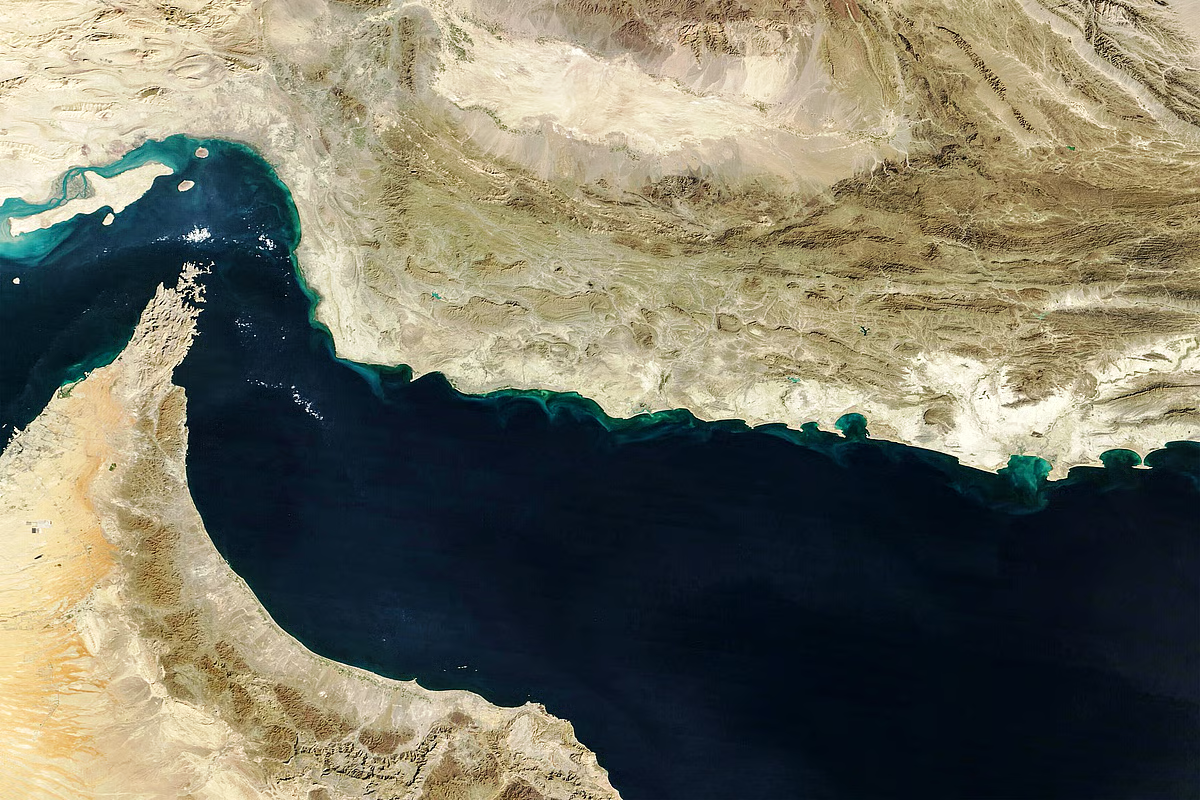
Strait of Hormuz talks are advancing as Iran has set seven specific conditions for the United States, complicating efforts to restore normal maritime traffic in the region. Iranian Foreign Minister Abbas Araghchi recently announced that Tehran and Muscat are “very close” to reaching an agreement on managing commercial shipping through the waterway. Omani officials have corroborated this progress, stating that negotiations are continuing in a “positive and constructive atmosphere.”
Despite the diplomatic momentum, a full reopening of the strait remains conditional. Iran has emphasized that an agreement with Oman alone is insufficient to restore normal operations. The country’s leadership maintains that the strait will not fully reopen until the US “corrects its behaviour.” Iran’s Supreme National Security Council chief, Mohammad Bagher Zolghadr, has been explicit that Tehran’s broader demands must be met before the waterway is returned to its pre-conflict status.
The seven conditions set by Iran include a permanent end to the war with Iran and its regional allies, the lifting of the US naval blockade on Iranian ports, and the unconditional release of frozen Iranian assets. At the time of reporting, the United States had not formally responded to these demands. Furthermore, Iran’s Revolutionary Guard has stressed that Tehran’s internal conditions, rather than the outcome of talks with Oman, will ultimately determine the status of the strait.
Under the proposed arrangement, ships would initially utilize a temporary route while Iran and Oman work toward a more permanent framework. However, the technical and security challenges are significant. A Traffic Separation Scheme is a set of designated shipping lanes designed to keep vessels moving in orderly directions, but the current crisis has disrupted these standard protocols. S&P Global has reported that many ships have moved away from the traditional Traffic Separation Scheme during the crisis, which has allowed Tehran to exert greater control over how vessels navigate the waterway.
The European Union has also noted that Iran’s Revolutionary Guard introduced a system requiring vessels to provide detailed information and, in some instances, pay tolls to transit. This shift has led experts to conclude that the key question is not just “Will Hormuz reopen?” but “Who will control how ships pass through it?” Even if a deal is finalized, ships may not immediately return to their traditional routes, as questions remain regarding which paths will be used and who will coordinate security.
The current shipping volume through the strait remains far below pre-war levels. Before the conflict, the strait handled roughly 130 to 140 vessel crossings per day. According to maritime intelligence firm Kpler, just eight vessels crossed the strait on Friday, a decline from the previous day. This sharp reduction illustrates why a formal agreement may not trigger an immediate return to normal traffic, as shipping companies remain wary of the volatile security environment.
Security concerns were further highlighted by recent attacks. The UAE reported that an ADNOC vessel was targeted by an Iranian missile while sailing through the Strait of Hormuz on Saturday. ADNOC stated that more than a dozen of its vessels have been targeted by missiles and drones since the conflict began, resulting in one crew member killed and 20 injured. Separately, the UK Maritime Trade Operations centre reported that a vessel located about 18 nautical miles off Khasab, Oman, was struck by an unknown projectile.
These incidents complicate the negotiations, as the safety of commercial vessels remains a primary concern for international shipping firms. Oman has warned that ongoing attacks could undermine the progress made in the talks. While a workable Iran-Oman arrangement could provide a pathway to resume commercial movement, the broader geopolitical conflict continues to cast a shadow over the region.
The Strait of Hormuz links the Arabian Gulf with the Gulf of Oman and remains one of the world’s most critical energy chokepoints. Before the disruption, approximately 20 million barrels of oil per day—roughly one-fifth of global oil production—passed through the strait. Consequently, even a partial or conditional reopening could have profound effects on oil prices, shipping costs, and global energy security.
The immediate focus remains on whether Iran and Oman can finalize their shipping arrangement and whether Washington will engage with Tehran’s list of demands. Even if a deal is reached, stakeholders expect that normal traffic is unlikely to return overnight. The industry is now waiting to see if Iran will provide ironclad guarantees for safe passage and who will ultimately coordinate vessel movements.
As the situation develops, the international community is closely monitoring the interplay between the diplomatic talks in Muscat and the military realities on the ground. The uncertainty surrounding the control of the strait continues to influence global markets, as the lack of a clear, secure transit corridor forces vessels to navigate with extreme caution.
Ultimately, the resolution of the Hormuz crisis depends on a complex alignment of security guarantees, political concessions, and the restoration of trust between the involved parties. Until these elements are satisfied, the vital waterway will likely remain a point of high tension, with shipping volumes suppressed and the risk of further incidents remaining high.
Strait of Hormuz talks advance as Iran sets 7 conditions for the US
That is important because agreeing on a route is only one part of the problem.
The incident caused a fire that was later extinguished, and the vessel and crew were reported safe.
The attacks add another complication to the negotiations: even if a new shipping route is agreed, will commercial operators feel safe enough to use it?
It also carries a major share of global LNG shipments.
Can the wider US-Iran dispute be resolved?
Will Trump meet Iran’s latest price to reopen Hormuz?
Trump: Iran keen to find a way to end conflict
Tragic end to search for Indian sailor after attack