

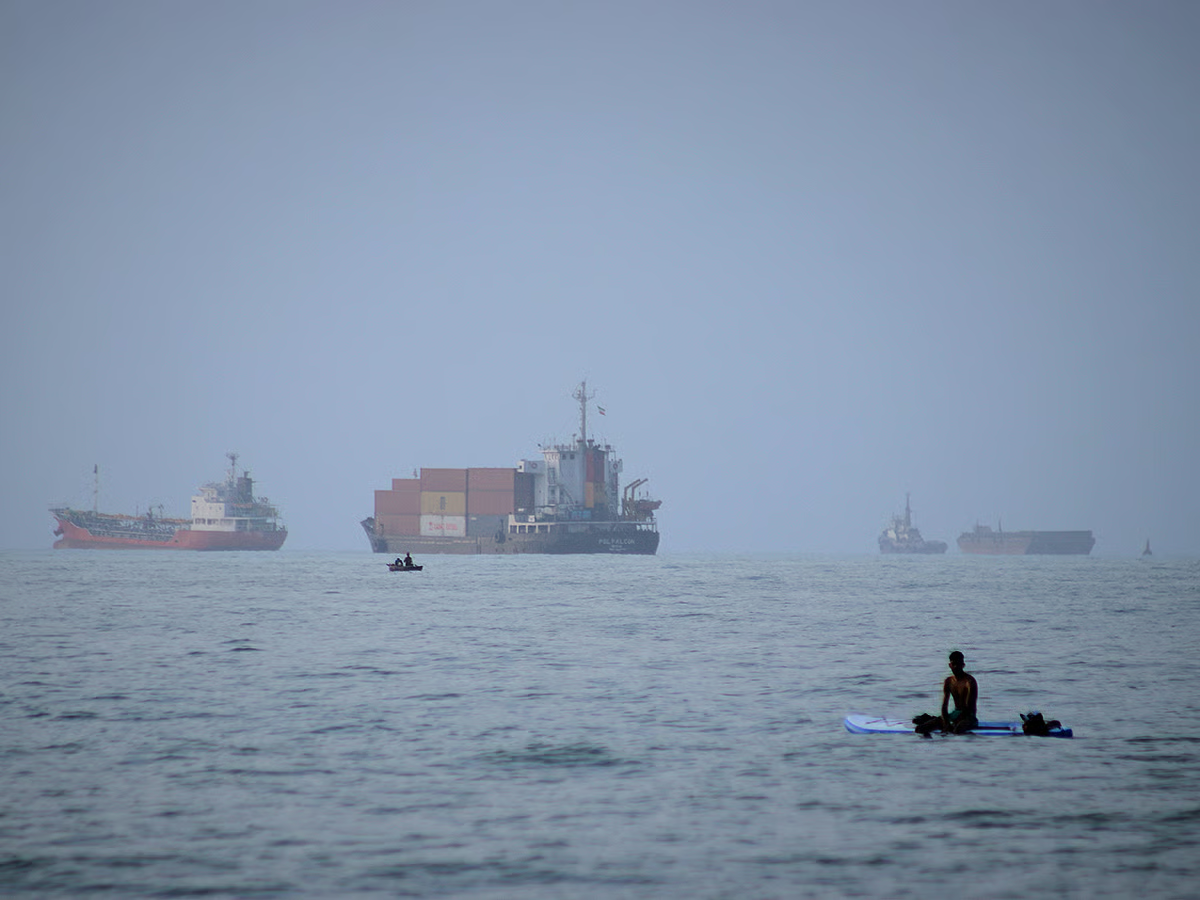
The Strait of Hormuz remains the focal point of regional instability as Iran and Oman engage in negotiations for a temporary shipping arrangement. Meanwhile, an ADNOC vessel was recently targeted by a missile strike, and US forces have intensified their blockade of Iranian ports and coastal areas, heightening security concerns across the Gulf.
Iranian President Masoud Pezeshkian stated on Friday that Tehran remains committed to diplomacy to protect its national interests. In an interview on his official website, he defended his administration’s decision to negotiate with the US and sign a memorandum of understanding aimed at de-escalating the conflict. Pezeshkian emphasized that Iran would honor its commitments provided Washington fulfills its own obligations, warning, “Wherever they fail to fulfil their commitment, we have no obligation to continue.”
Addressing internal political speculation, the President dismissed rumors of his resignation, asserting that he would continue his duties “resolutely.” Separately, he told the Iranian state broadcaster IRIB that Tehran does not seek war or territorial expansion but will resist what he described as “coercion.” He further claimed that Iran’s military actions are intended to bolster defense capabilities and accused the US of utilizing Gulf military bases to launch attacks against Iranian territory.
Iranian Foreign Minister Abbas Araghchi reported that Tehran is “very close to an agreement” with Oman regarding a temporary shipping route through the Strait of Hormuz. Military and naval officials from both nations are currently finalizing these arrangements, which could serve as a framework for long-term traffic management. However, Araghchi also accused Washington of violating previous memorandums and attempting to establish unauthorized routes.
Brigadier General Hossein Mohebi, spokesperson for the Islamic Revolutionary Guard Corps, clarified that the reopening of the strait is contingent upon Washington meeting Iran’s specific conditions, a matter he insisted is separate from the ongoing Omani-led negotiations. He described the waterway as a vital component of Iran’s strategic and economic position.
The UAE-based oil company ADNOC confirmed that one of its vessels was struck by a missile while transiting the Strait of Hormuz early Saturday. The company reported that the situation was brought under control without any injuries and urged the public to rely exclusively on official information.
Maritime intelligence firm Kpler noted that traffic through the strait remained subdued on Friday. Only eight vessels crossed the waterway, a significant decline from the daily average of 130 to 140 ships recorded before the conflict. Analysts anticipate that this reduced volume will continue to exert pressure on global oil prices and shipping costs.
US Central Command reported that its forces have redirected 51 commercial vessels, disabled two, and boarded two others as part of the ongoing blockade. This escalation has prompted internal debate within the US administration. According to CNN, General Dan Caine, Chairman of the Joint Chiefs of Staff, has privately advised officials in President Donald Trump’s administration to seek an “off-ramp” from the conflict, expressing concern that further escalation and reliance on airpower may not achieve strategic objectives.
For UAE residents, the summer travel season remains active, though the regional climate necessitates caution. While most flights are operating, travelers may encounter schedule changes due to operational adjustments and airspace restrictions. Authorities advise passengers to verify flight statuses directly with airlines, arrive at airports at least three hours before departure, and ensure contact information is updated for disruption alerts.
Dubai International Airport has specifically advised passengers to allow extra time for travel due to high summer demand. Travelers are encouraged to utilize online check-in services and airline applications to stay informed, as international carriers continue to adjust or suspend services in response to the evolving security situation.
Looking ahead, the primary developments for residents to monitor include the finalization of the Iran-Oman shipping arrangement, the recovery of commercial traffic through the strait, further reports of vessel attacks, progress in US-Iran diplomatic talks, and potential shifts in regional flight schedules.
The situation remains highly fluid. While Iran signals a willingness to negotiate, it maintains a firm stance against perceived coercion, while the US continues to apply significant military and maritime pressure. The Strait of Hormuz continues to serve as the critical nexus of this crisis, with its stability remaining a priority for the UAE and the broader Gulf region.
Resolving US-Iran conflict in ‘progressive stages’
Crossings since Monday were also significantly lower than the previous week.
Analysts expect traffic to remain well below normal levels for now.
The move marks a further escalation in efforts to restrict Iran’s maritime activity and enforce the US campaign against Tehran.
Use online check-in and airline apps where available.