

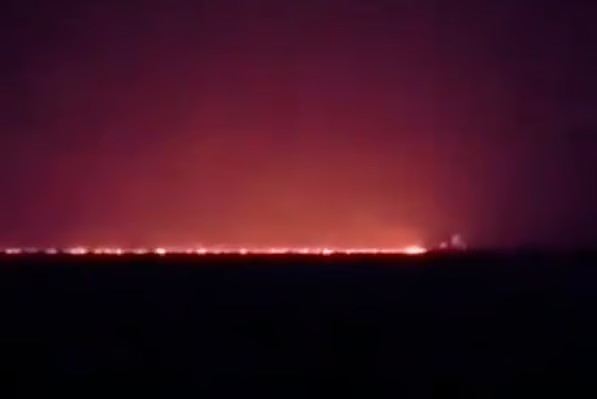
Unverified reports circulating on social media since Sunday evening allege that Iran launched multiple anti-ship cruise missiles from the Sirik region of southern Iran, striking an oil tanker off the coast of Oman. The vessel, which was reportedly transiting the U.S.-backed southern shipping corridor of the Strait of Hormuz, is said to be on fire following the strike.
The initial reports emerged around 21:23 UTC on August 9, 2026, corresponding to 1:23 a.m. Gulf Standard Time on Monday. These claims have been widely shared and amplified by various accounts that monitor regional conflicts and global energy markets.
Secondary social media posts have provided further, albeit unconfirmed, details regarding the alleged attack. Some sources claim the tanker was struck by “multiple missiles,” with at least one account specifying four projectiles. These reports also noted the possible additional targeting of another vessel in the vicinity.
Furthermore, there are unverified reports circulating that a US MQ-9 drone has been downed over southern Iran. As of the latest available information, these claims remain unverified by official sources, including the United Kingdom Maritime Trade Operations (UKMTO), U.S. Central Command, Iranian state media, or major international news outlets.
No specific details have emerged regarding the tanker’s identity, flag, ownership, cargo, crew status, or the extent of any damage or casualties. The incident, if confirmed, would fit into a pattern of repeated attacks on commercial shipping in and around the Strait of Hormuz amid the ongoing US-Iran conflict.
The latest official attack reported by UKMTO, designated as Warning 108-26, was dated August 8, 2026. That report cited an incident 18 nautical miles east of Khasab, Oman, where a vessel was struck by an unknown projectile, causing a fire that was eventually extinguished with no reported environmental impact.
Iran has previously targeted vessels using the southern corridor near Oman—routes promoted as alternatives farther from Iranian-controlled waters—while asserting that ships must follow Tehran-designated paths or face consequences. Earlier incidents this year have included drone and missile strikes on tankers and cargo ships, leading to fires, structural damage, and periodic US retaliatory strikes on Iranian military infrastructure near Sirik.
Shipping traffic through this vital chokepoint, which handles a significant share of global oil and gas trade, has been heavily disrupted by these ongoing tensions. Recent days have seen reports of another vessel strike off Oman, alongside Iranian statements that the strait will not fully reopen until the United States “corrects its behaviour.”
If confirmed, attacks of this nature typically raise insurance costs, divert shipping, and can pressure oil prices, though market reactions remain dependent on official verification and the scale of any disruption. The situation remains fluid as observers await further data from maritime authorities.