

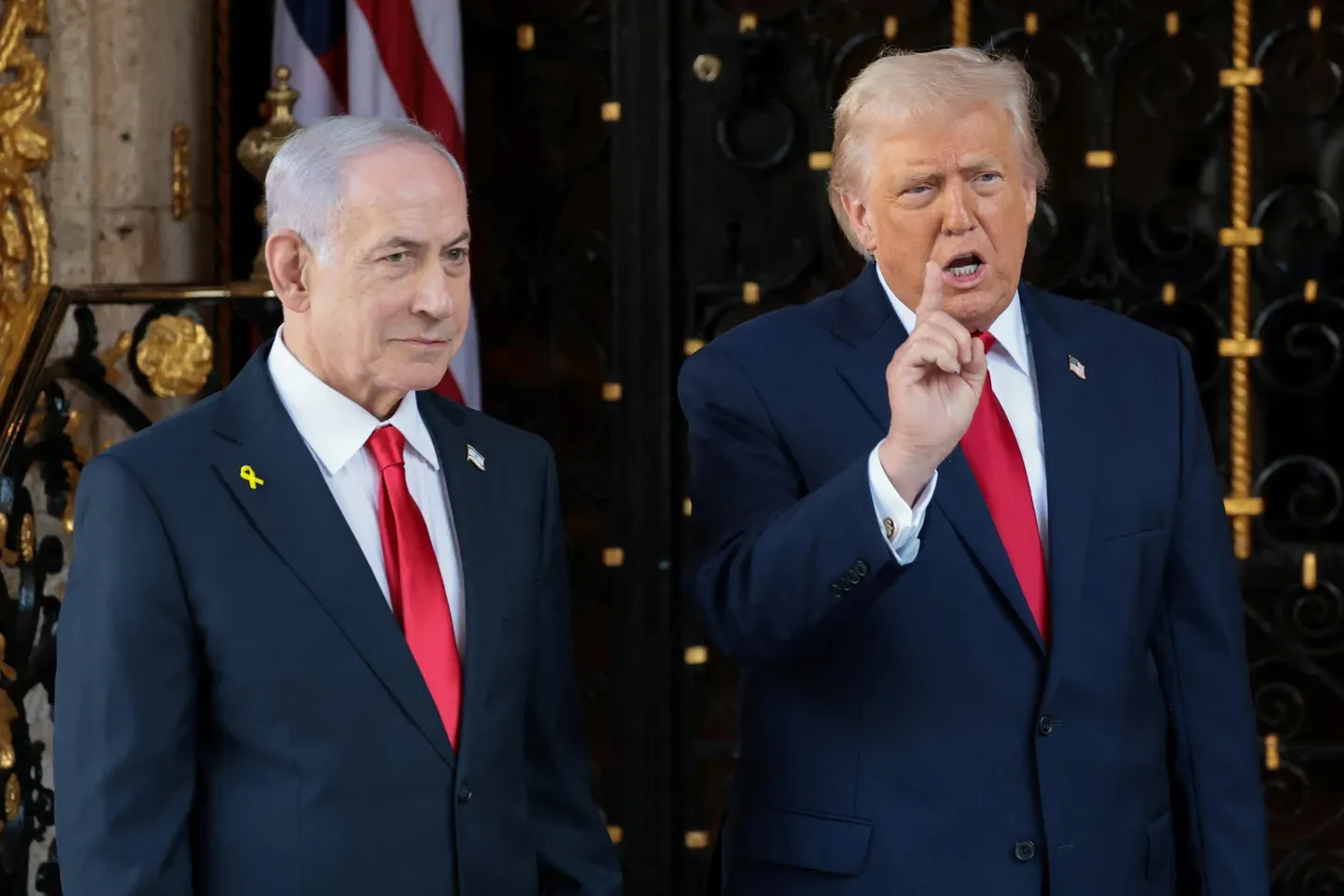
The future of the US-backed Gaza peace initiative has been thrown into disarray following Israeli Prime Minister Benjamin Netanyahu’s explicit rejection of a central condition within the 15-point framework. During a cabinet meeting on Sunday, Netanyahu declared that Tel Aviv would not commit to a withdrawal from the Gaza Strip until Hamas is “genuinely disarmed.” This development directly challenges the roadmap established as part of the second phase of President Donald Trump’s broader 20-point Gaza plan, which was first introduced in October 2025.
The framework hinges on a phased Israeli military retreat linked to the demilitarization of Hamas, overseen by a Palestinian technocratic administration. Last month, Hamas dissolved its government in Gaza and formally handed over administration to the National Committee for the Administration of Gaza, signaling a willingness to proceed with disarmament subject to a full Israeli withdrawal. However, Netanyahu’s latest stance effectively stalls this transition.
Despite a ceasefire agreed upon in October 2025, Israel has continued to violate the fragile agreement by killing more than 1,250 Palestinians in Gaza. At the same time, Tel Aviv has kept expanding its control over the besieged territory by moving the demarcation line. This unilaterally drawn boundary continues to shift further into the enclave, effectively shrinking Gaza’s habitable area by the month as Israel maintains its military posture.
Mustafa Yetim, a professor of international relations at Eskisehir Osmangazi University, notes that the Trump administration appears to be seeking greater alignment with regional actors and international public opinion to constrain Israel’s actions. Yet, Israel continues to resist withdrawal, partly due to domestic pressures, including general elections scheduled for October. “This position could seriously undermine the peace process, particularly because Hamas’s willingness to proceed with disarmament is closely linked to Israel’s full withdrawal from the territory,” Yetim explains.
Yetim further argues that Israel’s military power has long been enabled by comprehensive Western support, especially American, through advanced capabilities, political protection, economic aid, and diplomacy. According to the Costs of War Project at Brown University, the US spent $21.7 billion on military aid to Israel between October 2023 and September 2025. Yetim suggests that cutting arms sales would leave Israel with “no choice but to submit,” though he warns that a failure to curb renewed military action remains a more plausible scenario than the establishment of a stable political order.
Zahide Tuba Kor, a scholar of Middle Eastern studies, remains highly skeptical that any US pressure on Israel will succeed. She argues that the ceasefire was merely a tactical pause for Israel to continue its operations in Gaza without international interference. “Israeli politics and society cannot survive without war,” she asserts, noting that a powerful lobby supports the reoccupation and settlement of the territory.
Kor emphasizes that no Israeli government can back down due to external pressures, especially in the run-up to the elections. She recalls a statement Netanyahu made while serving as deputy ambassador to the US in the 1980s: “If the US government were to oppose Israeli policy, I know how to manipulate American public opinion against its own government.” This sentiment remains a cornerstone of the current political strategy.
With US midterm elections approaching in November, the Republican Party’s base, particularly evangelicals, is often described as being “more pro-Israel than Israel itself.” Kor suggests that no American president can afford to take the political risk of alienating this base by imposing strict conditions on Tel Aviv. Consequently, the underlying Israeli security paradigm continues to pose a persistent challenge to any regional arrangement.
The tension between Washington and Tel Aviv is exacerbated by the presence of radical Jewish-nationalist and Zionist elements within the Netanyahu government. These factions remain committed to policies of expansion, which directly conflict with the Trump administration’s broader regional vision. The unresolved issue of Israeli withdrawal has become a critical point of friction that threatens to jeopardize the entire peace initiative.
Experts warn that there is a relatively fragile boundary between containing regional instability and allowing it to escalate into a much wider conflict. As the diplomatic standoff continues, the strategic necessity of a resolution becomes increasingly urgent. Yet, without a fundamental shift in the US approach, the prospects for a lasting peace remain dim.
Washington possesses various levers of influence, including the removal of diplomatic protection, allowing international court proceedings, or cutting economic aid. However, the political cost of utilizing these tools remains high. Analysts argue that unless the US is willing to abandon the current propaganda framing of the conflict, Israel will likely continue its interventionist policies unchecked.
Ultimately, the failure to secure a withdrawal agreement reflects the deep-seated ideological commitments of the current Israeli leadership. As the humanitarian situation in Gaza deteriorates, the international community watches to see if the US will prioritize its stated peace goals over its long-standing alliance with the Netanyahu government. For now, the peace roadmap remains in a state of deep uncertainty.