

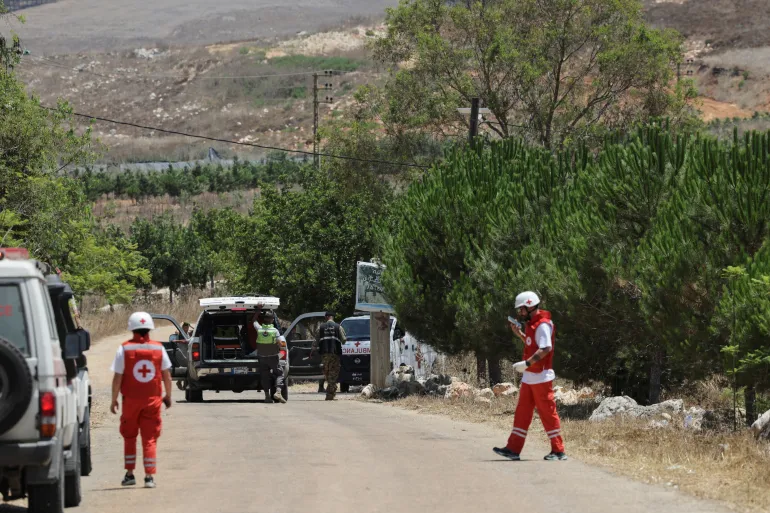
United Nations peacekeepers have warned that civilians in southern Lebanon are enduring the consequences of a significant intensification in Israeli military operations over the past two weeks. According to the UN Interim Force in Lebanon (UNIFIL), the region has experienced a marked escalation in hostilities, placing local families in a state of constant insecurity and forcing many to flee their homes or abandon their daily routines.
In a formal statement released on Monday, UNIFIL reported that it tracked an average of 137 projectiles fired daily between August 5 and August 16. The intensity of the conflict was particularly evident over the weekend, with the force documenting 208 projectiles on Saturday and another 185 on Sunday.
This surge in violence persists despite the existence of a ceasefire agreement established on June 26. While the United States-brokered deal was intended to stabilize the region, it remains largely ineffective. The framework requires the disarmament of Hezbollah as a condition for Israeli withdrawal from occupied southern territories, yet Hezbollah has refused to comply until Israeli forces fully exit the area. To date, the promised withdrawal has not occurred, and the two sides have held seven rounds of negotiations without a breakthrough.
The human toll of the ongoing conflict continues to mount. Following two separate Israeli air raids on Saturday that resulted in 11 deaths, the total number of fatalities from Israeli assaults in southern Lebanon since March 2 has reached 4,346.
Ziad Abu Rish, an associate professor of Middle Eastern Studies at Bard College, suggested that the current Israeli strategy aims to exert collective punishment on the Lebanese population, particularly in Shia-majority regions. He noted that these strikes are intended to “pummel” both Hezbollah and the broader public, serving as a display of “undeterred resolve” regarding Israel’s occupation of the south.
Despite the volatile environment, UNIFIL continues to operate on the ground. Peacekeepers are maintaining patrols, monitoring the situation, clearing road obstructions, mitigating explosive risks, and ensuring that humanitarian aid can reach those in need. The mission remains anchored to UN Security Council Resolution 1701, which was adopted in 2006 to end hostilities and bolster the presence of the Lebanese army alongside UN forces.
With the UNIFIL mandate set to expire at the end of this year, the future of the mission is currently a subject of international debate. Lebanon’s government in Beirut has expressed a strong desire to maintain the force as a vital pillar of regional stability. On Monday, President Joseph Aoun reaffirmed his support for extending the mandate, emphasizing the necessity of an international presence to prevent further collapse in the south. The report also notes that “As tensions rise, civilians are once again paying the highest price, with many families displaced or forced to change their daily routines because of insecurity and uncertainty,” UNIFIL said. The report also notes that monitoring, removing obstacles from roads, reducing risks posed by explosives and facilitating access for humanitarian aid, uNIFIL said its peacekeepers have maintained their presence through patrols. The report also notes that with a seventh round of talks held earlier this month, that has not happened and the Lebanese and Israeli governments have been negotiating.