

The United Arab Emirates (UAE) has declared an indefinite trade embargo against Iran, citing an alleged ballistic missile attack on its soil. In an official statement, the UAE Ministry of Foreign Affairs announced that all commercial exchanges, trade activities, and financial transactions involving Iran are suspended until further notice. The government justified this drastic measure as a response to regional escalations that threaten national security and stability.
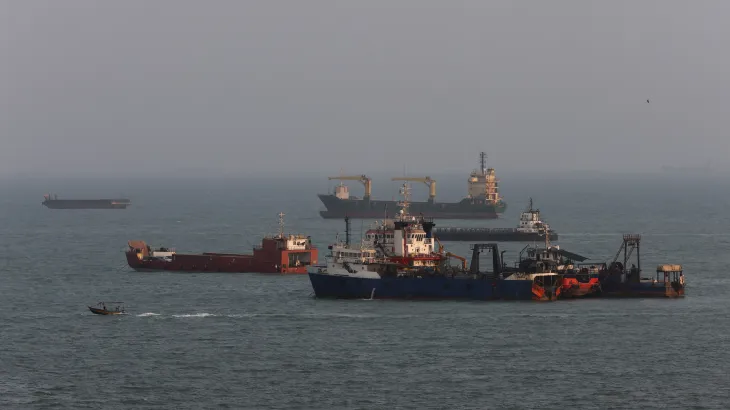
The UAE Ministry of Defence reported that its air defense systems intercepted two ballistic missiles it claimed originated from Iran. According to officials, one missile landed within the nation’s territorial waters, while the other fell outside. Authorities further alleged that these projectiles were aimed at maritime traffic, vowing to take firm action against any threats to the country’s security or regional shipping lanes.
Tehran has categorically denied these accusations. An Iranian Foreign Ministry spokesperson, Esmaeil Baghaei, dismissed the claims as baseless and characterized the reported incident as a “false flag operation” orchestrated by the United States and Israel. This tension unfolds against the backdrop of the ongoing US-Israel conflict with Iran, which intensified following the February 28 death of former Supreme Leader Ayatollah Ali Khamenei.
Analysts suggest that the UAE’s embargo could prove more damaging to the Iranian economy than existing American sanctions. Mark Kimmitt, a retired US general and former assistant secretary of state, emphasized that the UAE serves as a critical financial and logistics hub for Tehran. He noted that Dubai’s role as a global commercial center has long allowed Iran to bypass international restrictions, effectively providing a lifeline that this new embargo now threatens to sever.
Kimmitt compared the severity of the UAE’s move to the near-total economic isolation imposed on Japan after World War II. He suggested that Tehran might perceive this action as bordering on an act of war, given that Dubai has quietly become Iran’s most significant trading partner, outpacing both China and Turkey in supplying essential goods.
The economic stakes are substantial. According to data from the Observatory of Economic Complexity, official trade between the two nations reached $6.2 billion in 2023, with the UAE exporting roughly $5.8 billion in goods to Iran. Key imports for Iran included telephones worth $2.81 billion, alongside computers, tobacco, and nuts. Conversely, Iran exported agricultural products, spices, and building materials to the UAE.
This diplomatic rupture follows the expiration of a June 17 memorandum of understanding between the US and Iran, which lapsed on Monday with no signs of renewal. Meanwhile, US Treasury Secretary Scott Bessent recently announced plans to heighten economic pressure on Iran, including an ongoing naval blockade of Iranian ports, promising measures of unprecedented scale in the history of economic isolation.
The current hostilities represent a significant escalation in a conflict that has seen frequent exchanges since February. Iran has previously targeted UAE infrastructure, including the Jebel Ali port, the Musaffah fuel terminal, and the Fujairah oil terminal. These strikes, along with a drone attack on the Barakah Nuclear Energy Plant in May, have resulted in 15 deaths and 246 injuries within the UAE.
The latest missile incident is the first reported attack on the UAE since May and follows recent accusations by Abu Dhabi that Iran targeted two state-owned ADNOC vessels in the Strait of Hormuz. Iran has denied involvement in the vessel incidents.
The impact of long-standing international sanctions has already been severe for Iran, with GDP per capita dropping from $8,000 in 2012 to $5,000 by 2024. By closing its doors to Iranian trade, the UAE is effectively shutting down an informal conduit that has historically allowed Tehran to procure consumer goods, industrial equipment, and food despite Western-led economic isolation.
The UAE’s decision marks a sharp reversal from the cooperative stance established during the Joint Economic Committee summit held in Abu Dhabi in May 2024. During that meeting, both nations had committed to deepening ties in sectors such as renewable energy, logistics, and agriculture.
As the situation develops, the international community remains focused on the potential for further regional instability. With the UAE’s strategic position as a gateway for Iranian commerce now closed, the effectiveness of the broader US-led economic pressure campaign against Tehran is expected to intensify significantly. The report also notes that with little prospect of being renewed, the recent developments come shortly after the June 17 memorandum of understanding (MoU) between the US and Iran lapsed on Monday. The report also notes that it added, the decision was made in “light of escalations that undermine peace and security in the region”. The report also notes that which began with US-Israeli strikes on Tehran that killed then-Supreme Leader Ayatollah Ali Khamenei on February 28, Iran hit back with drone and missile strikes on US military assets a, in the first six weeks of the war. The report also notes that the ministry said the missiles were “targeting maritime traffic” and promised to “resolutely confront any attempt to undermine the security of the nation or maritime navigation in the region”, in a follow-up statement. The report also notes that which began with US-Israeli strikes on Tehran that killed then-Supreme Leader Ayatollah Ali Khamenei on February 28, Iran hit back with drone and missile strikes on US military assets as well as energy and other infrastructure in several neighbouring Gulf countries, in the first six weeks of the war. The report also notes that in all, Iran launched more than 530 ballistic missiles, 26 cruise missiles and more than 2,200 drones towards targets in the UAE, which it has described as US assets in the country. The report also notes that however, the UAE says civilian sites have also been hit either by missiles or by debris from missiles intercepted by US-supplied THAAD and Patriot missile defence systems. The report also notes that on March 1, the day after the US and Israel launched strikes on Iran, Dubai’s port of Jebel Ali, the largest constructed deep-water harbour in the world, was struck.