

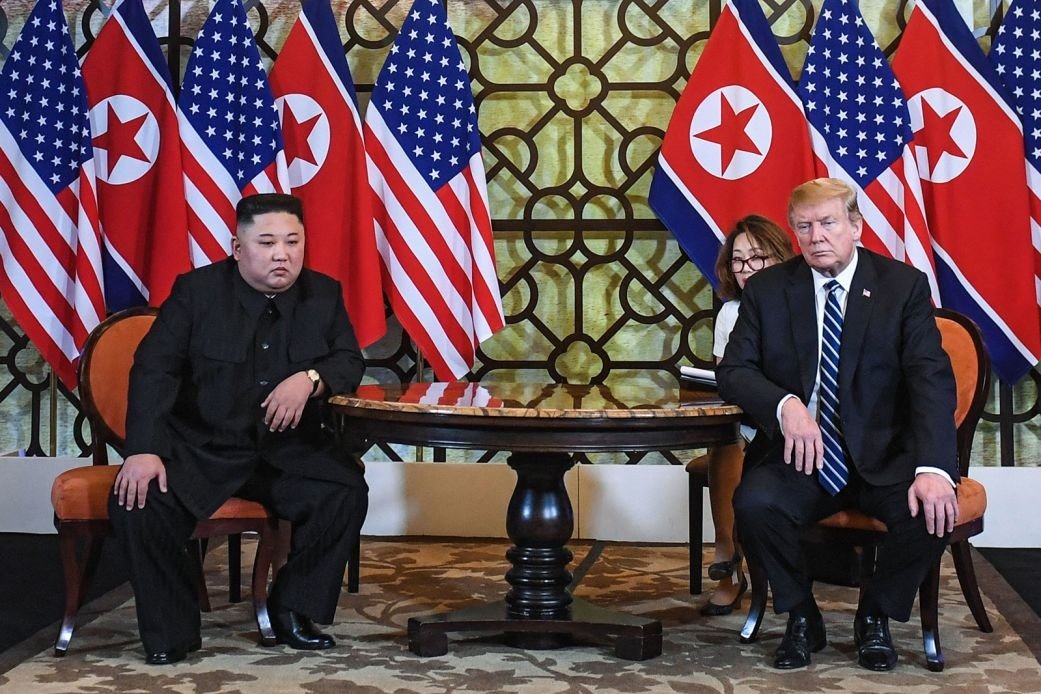
President Donald Trump has announced a sudden reduction in the scope of major military exercises with South Korea, a move that is fueling concerns about the strain on US forces and the long-term reliability of American security commitments. The decision to scale back the 10-day Ulchi Freedom Shield drills, which involve tens of thousands of troops, comes as the administration claims North Korea has been “unthreatening and respectful.”
In a post on Truth Social, Trump described the bilateral exercises as costly and inappropriate, arguing they burn through US resources at a time when the nation is running low on readiness. However, this assessment faces significant pushback from security experts. Retired US Navy Admiral Mark Montgomery, a senior fellow at the Foundation for Defense of Democracies, warned that the move diminishes coalition readiness and places US forces at risk without providing any tangible benefit to the United States.
The decision arrives at a precarious time for global stability. North Korean leader Kim Jong Un has aggressively expanded his nation’s nuclear weapons program and military capabilities. Kim has also deepened his strategic alignment with Russia and China, exemplified by a public display of military hardware during a recent 80th-anniversary celebration in Beijing. Furthermore, North Korean soldiers have reportedly gained combat experience in Ukraine, and Pyongyang has provided Moscow with missiles used in the ongoing conflict, bolstered by a mutual defense treaty signed two years ago.
Defense Secretary Pete Hegseth recently praised South Korea as an ideal ally, noting that the nation consistently invests in its own defense because it operates on the front lines. Despite this, the Pentagon has been forced to shift military assets away from the Pacific to support operations in the Persian Gulf. Recent maneuvers include moving missile interceptors from the Korean Peninsula and deploying the USS George Washington to the Middle East to relieve the USS Abraham Lincoln, which has faced morale issues after an extended deployment.
Jennifer Kavanagh, director of military analysis at Defense Priorities, supported the reduction of drills, citing the need to conserve US resources. Conversely, analysts like former US Air Force colonel Cedric Leighton argue that the move is an “unforced error” that grants North Korea a strategic advantage. Leighton emphasized that these exercises are critical for the joint defense of South Korea, Japan, and the United States itself.
Critics also point out that the financial costs for the Ulchi Freedom Shield exercises have largely already been incurred. Carl Schuster, a former director of the US Pacific Command’s Joint Intelligence Center, noted that any training curtailed now will eventually need to be compensated for elsewhere, or overall US readiness will inevitably suffer. This pattern of criticizing allies while seeking to reduce defense spending mirrors Trump’s previous administration, where he frequently questioned the value of long-standing security partnerships.
The current situation stands in stark contrast to 2017, when Trump responded to North Korean missile tests by deploying three aircraft carriers to the region and threatening “fire and fury.” As the administration maintains a conciliatory tone toward Pyongyang, many European nations are also questioning the future of the NATO alliance under Trump’s “America First” policy. With North Korea continuing to refine its arsenal, the reduction of these drills remains a point of intense contention regarding the future of US deterrence in the Indo-Pacific. The report also notes that “These exercises are not only costly, with much of these costs paid for by the United States of America (as usual!), but send a signal that is totally inappropriate and hostile,” Trump posted on Truth Social over the weekend. The report also notes that trump’s statement is hard to reconcile with Kim’s actions. The report also notes that as the three autocrats put on a very public show watching some of China’s most modern military hardware roll through Beijing in a World War II victory 80th anniversary celebration, kim also solidified a three-way partnership with Russia and China almost a year ago in Beijing. The report also notes that all the while, North Korea has been upgrading its arsenal, and Kim is frequently portrayed in state media, flanked by his teenage daughter and likely successor, overseeing military milestones –– like the activation earlier this year of a new guided-missile destroyer. The report also notes that “If you want to see what burden sharing looks like, consider the Republic of Korea. The report also notes that and so they build real combat power,” Defense Secretary Pete Hegesth said in a speech to the Shangri La Dialogue defense conference in Singapore, they live on the front lines. The report also notes that and the Iran war has served as a reminder that the US will always move its assets to where it needs them most, south Korea is acting out of necessity. The report also notes that during a conflict that has festered for nearly half a year, the Pentagon has had to call on forces and hardware from around Asia as it has built up forces in the Persian Gulf.