

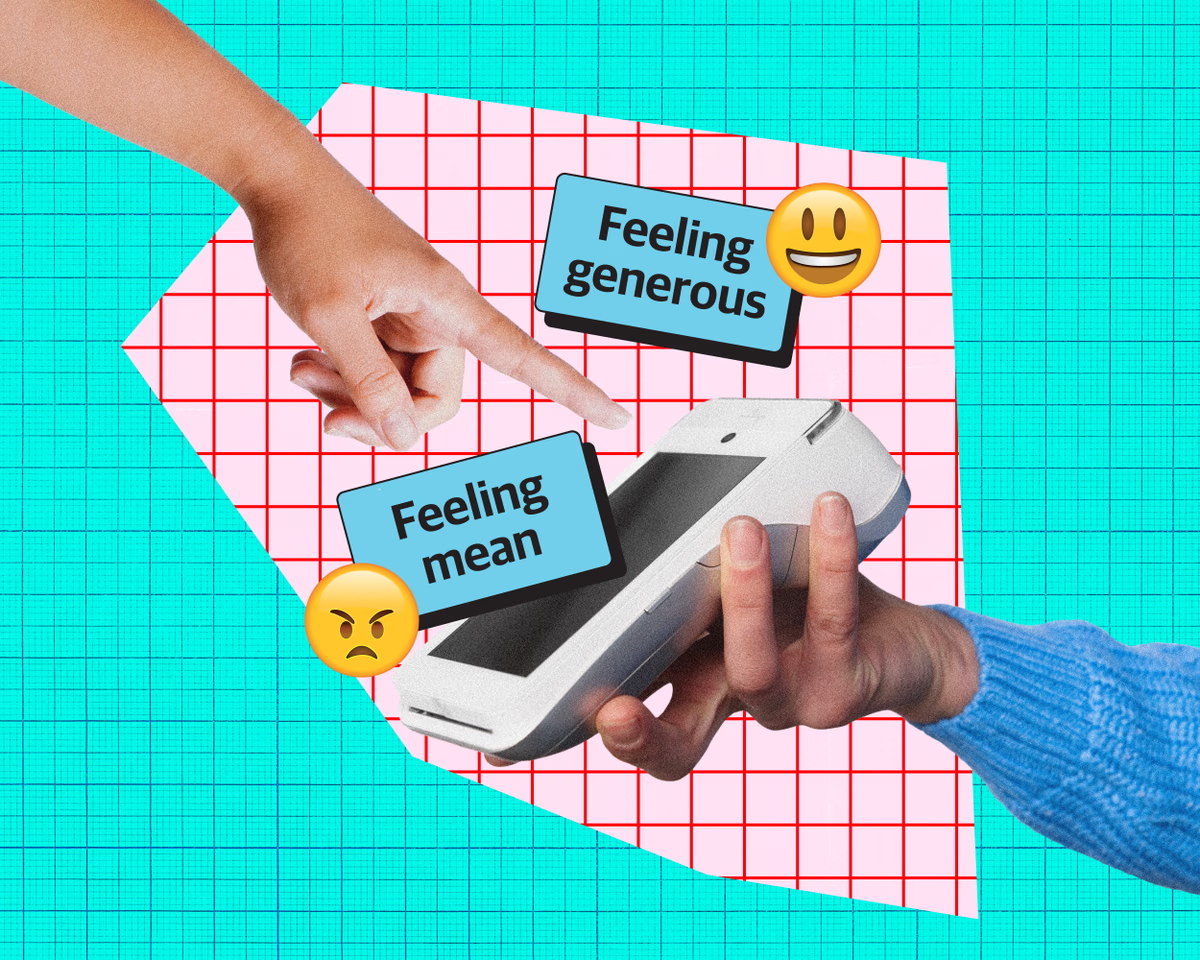
British consumers are increasingly grappling with a transformation in tipping culture that mirrors the aggressive expectations often associated with the United States. For many, the shift has turned routine transactions into a source of social anxiety. Greg Double, a PR creative director, recently expressed frustration after being prompted to add a service charge to an eight-pound pint of beer, describing the experience as “absolutely criminal.” This sentiment reflects a broader unease as tipping, once a discretionary gesture of appreciation, feels increasingly mandatory across various service sectors.
The landscape of tipping in the UK has historically been defined by a 10% standard for restaurant dining, alongside occasional uncertainty regarding whether to tip service workers like hairdressers or delivery drivers. However, the rise of digital payment terminals has fundamentally altered this dynamic. These systems, often designed to reduce transaction “friction,” now frequently present customers with automated, pre-set percentage options. Prof. John Vines, chair of design informatics at the University of Edinburgh, notes that these interfaces are not merely about convenience; they are strategic tools that control the customer’s options and remove the need for manual calculation, often nudging users toward higher gratuity amounts.
Economic and political shifts have also played a role in this evolution. Since October 2024, legislation in Great Britain has mandated that all tips and service charges must be distributed to staff, a move intended to bolster lower wages. While this provides a clearer benefit to employees, it has also led some businesses to lean on service charges to manage rising operational costs, such as minimum wage hikes and national insurance contributions. As noted in the publication London Centric, labeling a charge as “optional” can serve as a tax-efficient way for businesses to supplement staff income without raising menu prices, though this creates a “muddy zone” for customers who feel pressured when a staff member watches them interact with the payment screen.
The influence of American corporate technology is a significant driver of this trend. Much of the software infrastructure used in UK hospitality is developed in the US, particularly in California, bringing with it embedded cultural values regarding service and compensation. Prof. Vines suggests that while it may seem cynical to claim that tech companies benefit from these prompts, it is likely true, as these platforms often take a commission on every transaction. This technological shift has left many consumers feeling bullied into selecting a 20% or higher tip simply to avoid the embarrassment of choosing the lowest option or pressing “no.”
The psychological impact of these prompts is profound. For many, the act of tipping has become a performance of social status and power. Michael Lynn, an emeritus professor of consumer behavior at Cornell University, explains that tipping often functions as a way for patrons to signal that they are not envious of the service worker’s labor. However, this dynamic is complicated by the fact that people are generally more inclined to tip those they perceive as having a lower financial or social status than themselves, such as a hairdresser, while feeling less obligation toward professionals like dentists or accountants.
The COVID-19 pandemic further accelerated these changes, as societal norms shifted to include tipping for roles that were previously excluded. Lynn points out that the “accepted level” of tipping has historically trended upward, influenced by increasing urbanization and the move away from cash. Furthermore, social variables—such as the attractiveness of the server, their gender, or their ability to build rapport—continue to influence how much a customer leaves. Research into this area has produced mixed results regarding bias, with some studies suggesting that Black service workers receive lower tips, though other data remains inconclusive.
For those working in the industry, the pressure to solicit tips can be equally uncomfortable. Peter, a pub worker in Lincolnshire, reports that his establishment’s new card machines automatically suggest a tip, a feature he personally finds off-putting. He often manually overrides the prompt to zero before handing the machine to a customer to avoid creating an awkward interaction. This highlights the disconnect between the automated systems designed for efficiency and the human desire for a more natural, less transactional exchange.
Ultimately, the British public remains in a state of flux. While some, like Double, might consider tipping in a coffee shop if they are occupying a table for an extended period, the expectation to tip for a simple takeaway coffee or a quick drink at a bar is met with significant resistance. As the industry continues to integrate these digital prompts, the tension between traditional British reserve and the imported, high-pressure tipping model of the US is likely to persist, leaving both customers and staff to navigate an increasingly complex social minefield. The report also notes that in the past, you might have told the bar staff to keep the change or have a “drink” on you, but since when did we routinely tip in pubs. The report also notes that a 15% service charge is relatively commonplace, the amounts edge higher – in fancier London restaurants. The report also notes that the variables around tipping seem endless and changeable, with each of us having to create our own rules. The report also notes that but he might acquiesce if he bought a round, he wouldn’t tip if he’d walked up to a bar and bought a drink for himself. The report also notes that it almost calls out for a tip, since drinking Guinness became fashionable.