

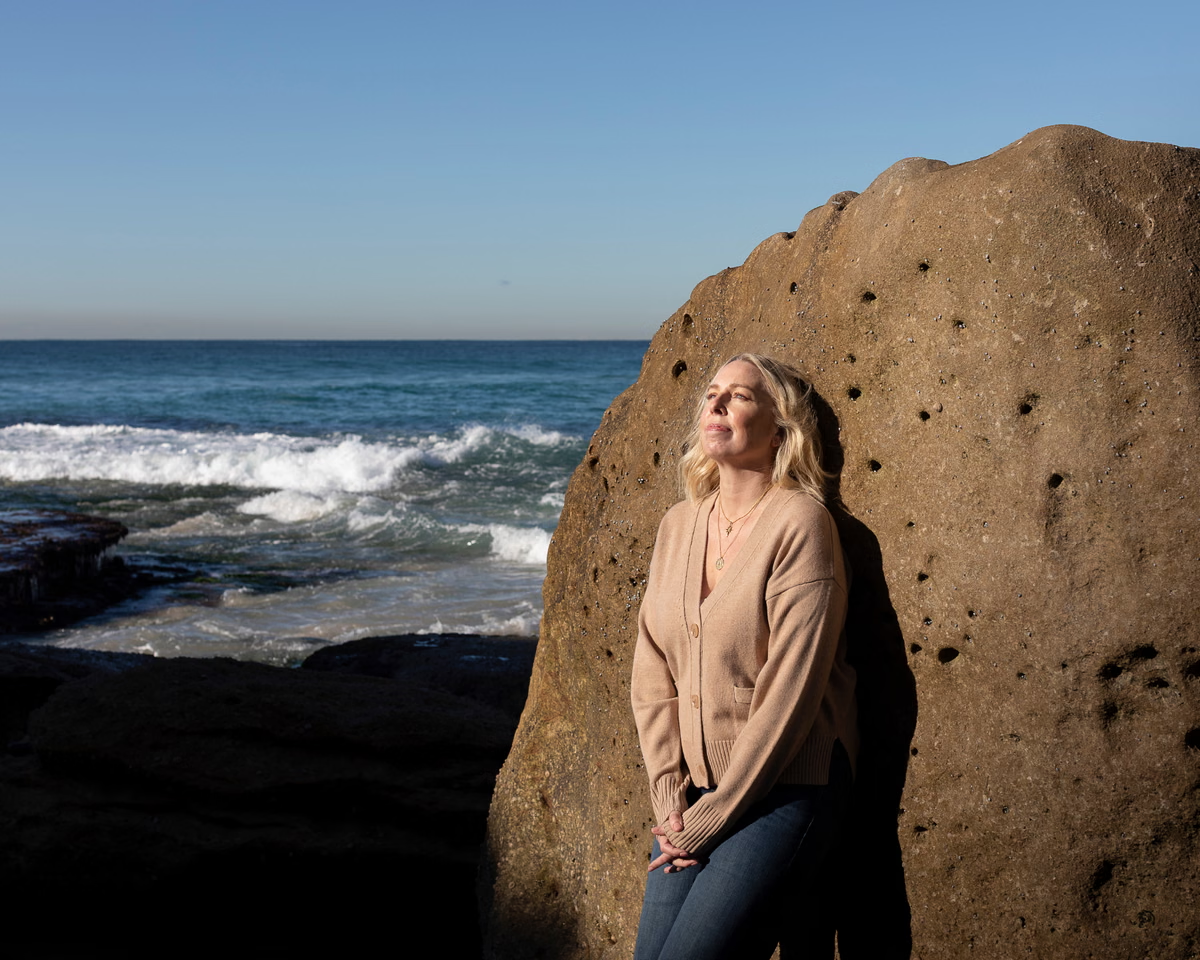
Surfers often approach the ocean with a calculated mindset, carefully assessing wind patterns, tidal shifts, and the temperament of the water before entering. My own relationship with the sea, however, was irrevocably altered on an ordinary Wednesday in early July 2024, when a single, crashing wave transformed my life into a landscape of grief. Ten years later, I found myself sitting on Tamarama beach in Sydney, reflecting on how that day, and the decade that followed, reshaped my existence.
The notification of the tragedy arrived at our small sandstone cottage in Sydney. Two plainclothes police officers knocked on our door, and I recall the surreal nature of the moment. One officer mentioned receiving a call from a Bondi detective, noting that they had been unable to reach my husband, Matt. When they asked if I was Hannah Richell, I nodded, and they delivered the devastating news: Matt had been involved in a fatal surfing accident. My initial reaction was one of disbelief, as I mentally scrambled to arrange childcare for a hospital visit, unable to process that he was already gone.
The subsequent hours were a blur of shock. I was taken to the morgue to view his body, an experience that remains the most painful and intimate hour of my life. I spent time alone with him, holding his hand, where I discovered grains of Tamarama sand still clinging to his skin. Later, I met with Adam, the friend who had been surfing with Matt that day. Adam described the sudden, treacherous shift in the tide and the moment Matt’s board came loose, providing a clearer, albeit heartbreaking, picture of the accident.
In the aftermath, I sought support from Wendy, a counsellor from the forensic science team. Our sessions in a small, windowless room became a sanctuary where no topic was off-limits. I struggled with the feeling that returning to the coast was a way of returning to Matt, even as I acknowledged the impossibility of that hope. Wendy offered a space for my grief, helping me navigate the void that had opened up where my daily life once stood.
As the months passed, the monotony of grief was punctuated by the challenge of helping my children process their loss. We utilized memory jars to keep Matt’s presence alive. My daughter fondly remembered him singing Frozen songs in the car, while my son recalled him curling up with them. They shared memories of him making Yorkshire puddings and the simple joy of being hoisted onto his shoulders. These moments of connection were vital, even as the children occasionally needed to escape the weight of our shared sorrow to play in the courtyard.
Nearly two years after the accident, an inquest was held to examine the circumstances of Matt’s death. Wendy explained that the process was not about assigning blame but about understanding the chain of events. Over two days, the details of the accident were laid out. Following the inquest, I began to grapple with the concept of acceptance. I realized that acceptance is not about finding the situation right or fair, but rather about learning to live with the reality of what occurred.
The process of moving forward also involved the practical, painful task of clearing out our home. As I prepared to move, I sifted through our possessions, each item a testament to the life we had built together. Sitting in my son’s room, I allowed myself to grieve the loss of those shared moments. Eventually, I locked the door to our cottage for the last time, marking the end of a chapter. While the pendulum of grief continues to swing, I have learned that there is no final stage to this journey—only the ongoing, quiet work of carrying love forward. The report also notes that break points and swells, they analyse currents and patterns. The report also notes that i have travelled across oceans and a day to sit here on Tamarama beach in Sydney on a high-tide weekday morning in 2024. The report also notes that too, attempt to read the waves, to find meaning in their unfathomable churn, a notebook and pen lie beside me on the sand as I. The report also notes that this beach has loomed large in my mind, these past 10 years. The report also notes that it’s as if my face has been turned to these waves and I have been buffeted, sometimes staggering, sometimes falling, always bracing for the next set to roll in, even when absent. The report also notes that one day, to come along and knock you off your feet, for I have learned that all it takes is one ocean. The report also notes that buried in my studio, wrestling with the tangled threads of a novel, when I receive a call from my husband’s PA, i am a few streets away.