

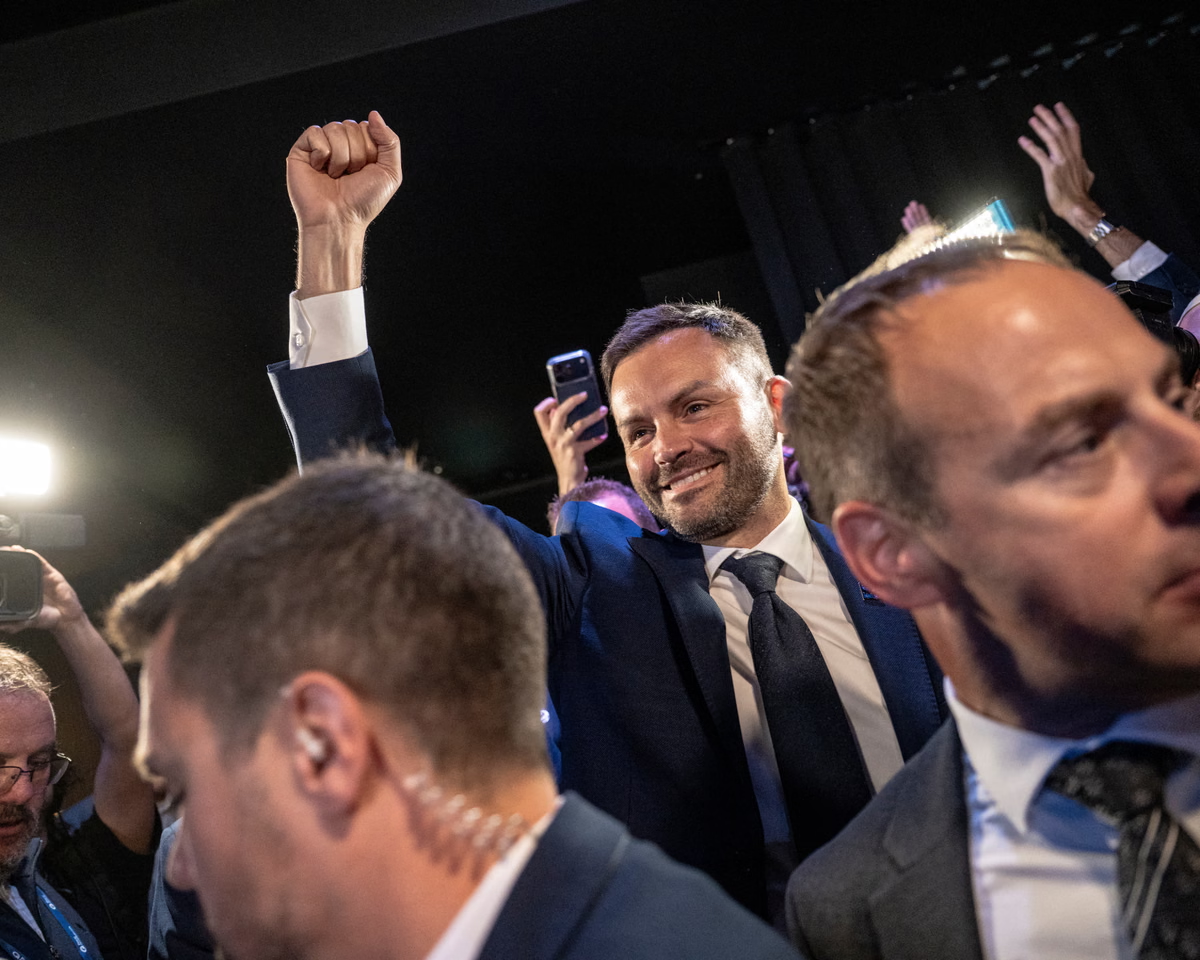
The Parti Québécois (PQ) secured a major electoral victory in Quebec this Monday, yet the path toward provincial separation remains fraught with significant obstacles. While the party successfully added 56 seats and more than doubled its 2022 vote share, earning its first taste of power in 14 years, it failed to capture a majority government. Falling five seats short of that threshold renders the PQ’s campaign promise to hold an independence referendum after Donald Trump’s presidential term concludes in 2028 highly improbable. Of separating the French-speaking province from Canada, much closer – but Canadian unity may not be nearly as threatened as may first seem, the victory of the Parti Québécois in Monday’s election in Quebec might seem to bring its signature goal. The PQ’s victory was both impressive and disappointing. The vast majority of Quebecers voted for parties that want nothing to do with a referendum. “And every time they see Trump’s picture on the screen at night, it does nothing to improve a desire for separation.
Polling analyst Philippe Fournier noted that the party triumphed with approximately 28% of the popular vote, marking the lowest percentage for a governing party in Canadian history. This result highlights a profound 30-year reluctance among Quebecers to engage in another divisive debate regarding the province’s future within Canada, an sentiment heightened by the ongoing trade tensions and threats issued by Donald Trump. It’s a reflection of the province’s 30-year aversion to another bruising debate about Quebec’s place in Canada – particularly in the wake of Trump’s tariffs and threats against the country.
The election outcome complicates several key PQ proposals, including plans to abolish the monarchy, extend strict provincial language laws to colleges, and implement stricter immigration caps. The latter policy has already drawn criticism from local farmers and the business sector. Meanwhile, Prime Minister Mark Carney remains the province’s most popular political figure, largely due to his firm stance against Trump, placing the PQ leader, Paul St-Pierre Plamondon, in a precarious position regarding his separatist platform.
St-Pierre Plamondon acknowledged these political realities during his victory address, where he pledged to act as a “good-faith collaborator” with the rest of Canada and spoke in English to broaden his appeal. He further attempted to navigate the ideological divide by declaring on Tuesday his intention to block the lieutenant governor, who represents the British Crown, from swearing in his administration.
John Parisella, a former chief of staff to two Quebec premiers, noted that roughly 70% of Quebecers oppose a new referendum. According to Parisella, the presence of Trump on the global stage serves to further discourage separation, as many voters view the link with Canada as essential. Furthermore, the election may reflect a desire to punish the outgoing Coalition Avenir Québec (CAQ) rather than an embrace of separatism. The CAQ, which formerly combined federalist and nationalist elements, collapsed entirely, winning no seats and securing only a third of its 2022 vote share. Leader Christine Fréchette lost her riding and subsequently resigned on Tuesday. The link with Canada is absolutely crucial, even if it isn’t necessarily emotional.”, for a lot of Quebecers.
The electoral map also saw the emergence of the Parti Conservateur du Québec (PCQ) and a recovery for the Liberal party. The PCQ won 19 ridings in rural areas and around Quebec City, capitalizing on support lost by the CAQ. Led by Éric Duhaime, the populist party garnered support by promising an underground highway linking Quebec City to its suburbs, a project estimated to cost C$9.3bn (US$6.5bn) despite reports indicating it would have minimal impact on traffic congestion. Meanwhile, the staunchly federalist Liberals will serve as the official opposition, having reclaimed ground in Montreal and the Eastern Townships.
As the PQ attempts to govern without a majority or a strong foothold in the metropolis, the hurdle of winning an independence referendum appears even steeper. The focus now shifts toward national stability, with Alberta scheduled to hold a “referendum on a referendum” regarding secession in less than two weeks. Despite the shifting political landscape in Quebec, polls suggest that Albertans share a similar aversion to independence, mirroring the current sentiment of their eastern counterparts regardless of recent local election results.