

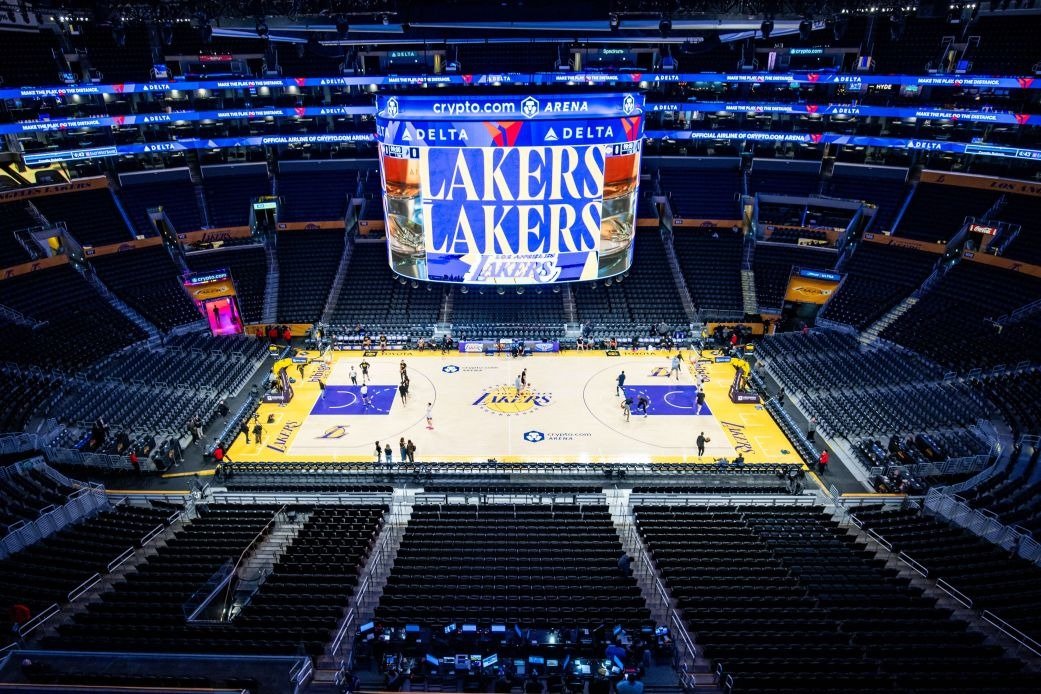
Professional sports franchises are experiencing a historic surge in valuation, with teams across major leagues changing hands at record-breaking prices. From the Los Angeles Lakers and the Seattle Seahawks to significant stakes in the New York Yankees, the market for sports ownership has become increasingly competitive, driven by a limited supply of teams and a growing pool of billionaire investors.
Sal Galatioto, a veteran investment banker who has spent three decades negotiating team sales, notes that he has never been busier. He suggests that investors are increasingly viewing sports teams as a hedge against technological disruption. “I’m willing to bet odds are greater that in 100 years that the Yankees will be here compared to IBM being here,” Galatioto remarked. He emphasizes that ownership is rarely about immediate cash returns, but rather long-term appreciation, scarcity value, and ego gratification, likening the assets to fine art.
While other sectors like electric utilities are also considered resilient to artificial intelligence, Victor Matheson, an economics professor at the College of the Holy Cross, notes that sports teams offer a unique appeal. “No one has ever dreamed of being CEO of National Grid,” Matheson said, contrasting the utility sector with the prestige of managing a franchise like the Yankees. Beyond the glamour, the rise of legalized sports betting following a 2018 Supreme Court decision has significantly bolstered viewership and sponsorship revenue. Matheson estimates that gambling-related income for leagues and teams could reach $1 billion annually, keeping fans engaged even in matchups they might otherwise ignore.
Recent deal activity highlights the scale of this investment frenzy. Former Disney CEO Bob Iger and venture capitalist Josh Kushner recently secured a controlling interest in the Lakers in a deal valuing the franchise at $12.5 billion. Meanwhile, the San Diego Padres were sold for $3.9 billion, surpassing the $2.4 billion Steve Cohen paid for the New York Mets in 2020. The NFL is also nearing approval for the $9.6 billion sale of the Seattle Seahawks, while the NBA’s Minnesota Timberwolves and WNBA’s Lynx were sold for $4.5 billion. Additionally, the Yankees recently accepted a $2.6 billion investment from Apollo Global Management for a minority stake.
Irwin Kirshner, head of the sports law group at Herrick Feinstein, observes that private equity firms are increasingly recognizing the potential of these assets as valuations climb annually. This trend is accompanied by a shift in ownership dynamics, with American investors acquiring European soccer clubs and foreign capital flowing into North American leagues. Minority stake sales have also become a common strategy for long-standing owners, such as the Mara family, who have controlled the New York Giants for over a century.
Despite the high entry costs, investors remain optimistic about future liquidity. Galatioto notes that regardless of how technology evolves to distribute games, the value lies in owning the content itself. Matheson adds that the market operates on a “greater fool” theory: “You can afford to overpay as long as you believe that there will be people in the future willing to overpay by at least as much or more.” As long as the supply of teams remains constrained, the race to acquire these assets shows no signs of slowing down. The report also notes that driving valuations to stratospheric heights, teams are turning over at a rapid pace. The report also notes that one reason for the sales boom you might expect: There are an ever-increasing number of billionaires with the resources to buy teams. The report also notes that sports is believed to be a relatively AI-proof investment. The report also notes that teams are not likely to be upended by the game-changing technology the way other investments might be. The report also notes that or a stake in teams, for 30 years, galatioto has been negotiating deals to buy teams. The report also notes that which also owns the Boston Red Sox, reportedly sold 40% of Premier League club Liverpool to a consortium that includes Amazon founder Jeff Bezos, fenway Sports Group. The report also notes that “Every year (valuations) seems to go up more, and so I think private equity started to recognize the value of this opportunity,” Kirshner said.