

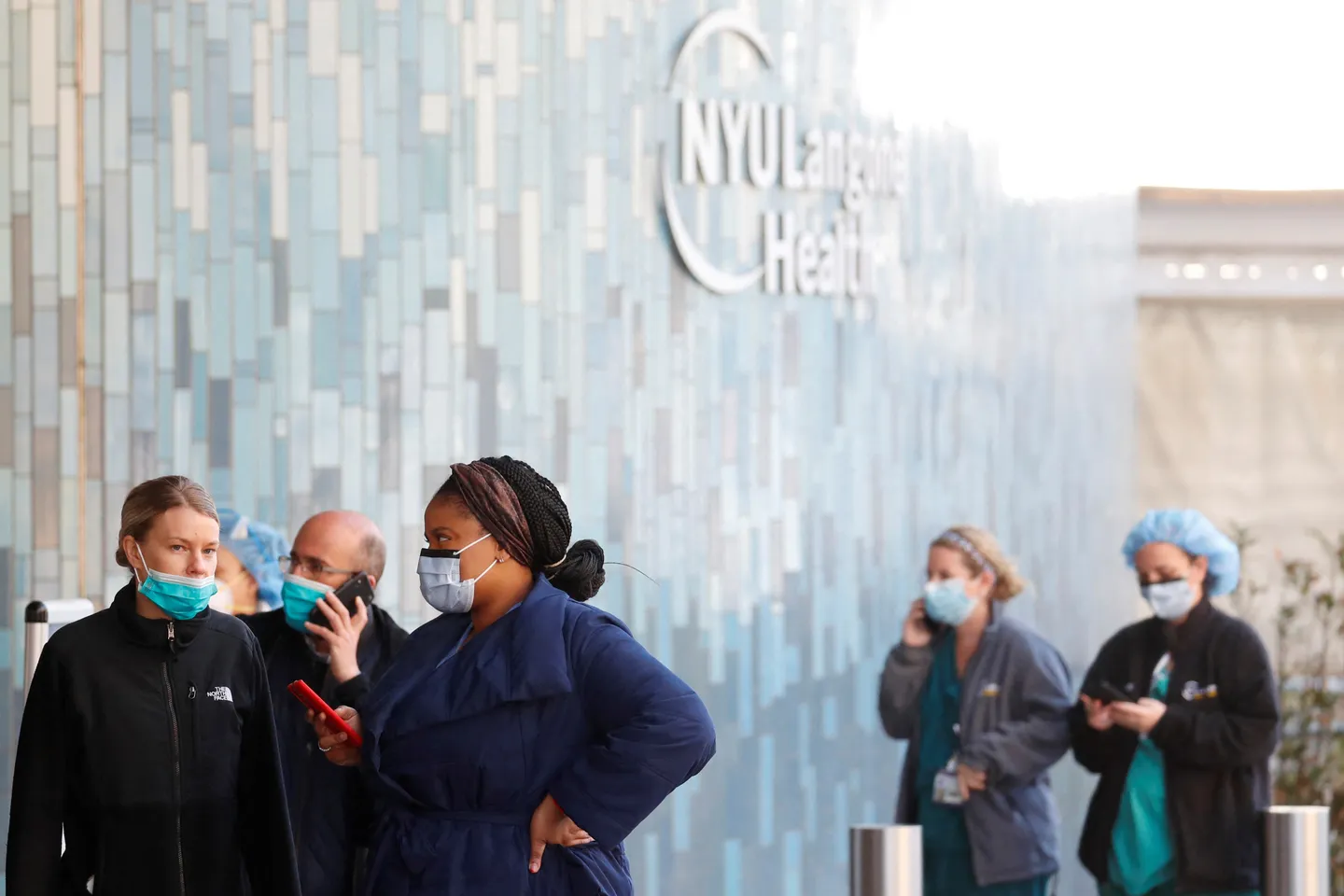
Annapolis, the waterfront capital of Maryland, remains a vibrant coastal city, yet it carries the scars of the 2020 pandemic. During that period, the city was among the many American municipalities gripped by intense protests, as crowds filled the streets to denounce government-mandated lockdowns and challenge the scientific consensus surrounding vaccines.
Six years later, that skepticism has not faded; it has become a defining feature of the local and national landscape. For residents like Penelope, the initial willingness to comply with vaccination protocols has given way to profound confusion. “When Covid came around, people were gonna get vaccinated because that’s what we were trained to do. So then, then you get vaccinated again, and then you get vaccinated again. And now people start to wonder, ‘What is this about?’,” she explains.
This sentiment is shared by others in the community who express deep-seated doubts about medical interventions. One local resident noted, “I won’t get another vaccination, you know. I just have to deal with the consequences, you know, because it didn’t, it didn’t help because I still caught Covid. I really don’t think they work, you know. And then again, I don’t know what they really injected in me.”
The decline in public confidence is not limited to healthcare. Data shows that trust in 12 of the 14 core American institutions monitored since 1993—including Congress, the Supreme Court, and the media—is currently at or near historic lows. Pediatrician Dr. Paul Offit, who was removed from a government vaccine advisory board last year for his vocal criticism of Health Secretary Robert F. Kennedy Jr., argues that the pandemic acted as a catalyst for this institutional erosion.
Dr. Offit recalls the era of strict mitigation measures, such as school closures, travel restrictions, and vaccine mandates, which many Americans perceived as government overreach. He argues that the public’s frustration was compounded by unclear messaging, leading many to conflate public health policy with a broader loss of faith in government authority. He warns that this distrust is now often framed as “medical freedom,” which he believes disregards the collective well-being of those who cannot be vaccinated.
Political analysts offer varying perspectives on the root causes of this polarization. Ameshia Cross, a Democratic analyst, suggests that the rapid, often weekly shifts in official guidance left the public feeling disoriented and frustrated. She defends the officials who acted on the information available at the time but acknowledges that the pandemic damaged the mental and social psyche of the nation.
Conversely, Matthew Hurtt, a Republican official from Arlington, argues that the pandemic merely exposed a long-standing decline in confidence. He points to shifting guidance from former Chief Medical Advisor Dr. Anthony Fauci and concerns over vaccine mandates as primary drivers of skepticism. Hurtt also highlights that the CDC acknowledged a potential link between certain Covid-19 vaccines and myocarditis in young people, which further fueled parental concerns.
The information environment has also played a significant role in this divide. Cross points to the rise of non-journalists on social media and the spread of debunked claims as major factors in the erosion of media literacy. “It’s the Wild Wild West across social media, and everybody is picking one that confirms what they already believe,” she says. She notes that this distrust has even led to irrational fears regarding grocery-store produce and the resurgence of diseases like measles that were previously considered eradicated.
Despite these challenges, there remains a debate over whether the country can recover its institutional capital. When asked if the US could handle another national crisis, Cross expressed doubt, noting that the current structure is “so badly disrupted.” Hurtt, however, remains more optimistic, insisting that local communities still demonstrate an effective capacity to respond to natural disasters, suggesting that healthy skepticism of government does not necessarily preclude effective local cooperation. The report also notes that politically charged demonstrations gridlocked its streets, at the height of the pandemic. The report also notes that the science supporting them, or their government, the latest research indicates that more Americans than ever before do not trust vaccines. The report also notes that the vaccine hesitancy has grown in US in recent years. The report also notes that and it could be spread from somebody who had no symptoms, this was a virus that was spread person to person. The report also notes that so all we could do was prevent human to human contact. The report also notes that restricted travel, social distanced and quarantined,” Dr, so we closed schools and shuttered businesses. The report also notes that you couldn’t go to your favourite restaurant or sporting event without your vaccination card.