

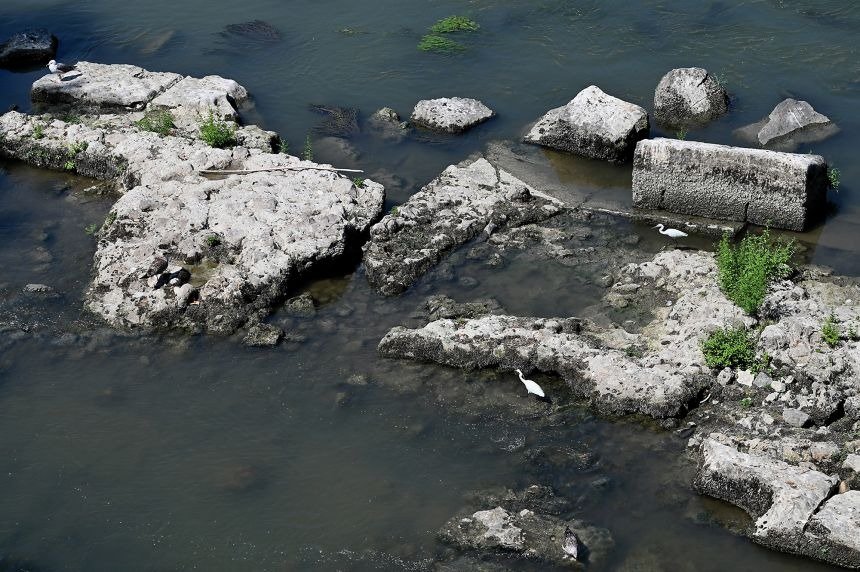
A combination of intense summer heat and an extended dry spell has caused water levels in Rome’s Tiber River to plummet, offering a rare glimpse of the submerged ruins of a 2,000-year-old bridge. The structure, known as the Pons Neronianus or Nero’s Bridge, is typically hidden entirely beneath the water’s surface, but the current drought has left large stone blocks exposed, providing archaeologists with a unique opportunity to examine the site.
Giovanni Giganti, Rome’s civil protection coordinator, noted that the river’s flow, which originates from tributaries in the northern Apennine Mountains, has dropped below 80 cubic meters per second. This figure represents only half of the typical national average for this time of year. Giganti described the situation as a significant water crisis, explaining that while the region experienced substantial rainfall during the winter, the subsequent dry periods have been exceptionally long and persistent.
Historical records suggest the bridge was originally constructed as a triumphal monument around 39 AD under the reign of Emperor Caligula. It later became associated with his nephew, Nero, who ruled from 54 to 68 AD and frequently renamed ancient landmarks to honor himself. The bridge historically linked the ancient Campus Martius—an area now home to the Spanish Steps and the Piazza del Popolo—to the Circus of Nero, the site of St. Peter’s martyrdom and the current location of the Vatican City and St. Peter’s Basilica.
Observers can currently view the remnants of the bridge from the Bridge of Angels, which provides access to the Castel Sant’ Angelo near the Vatican. Beyond the ancient ruins, the receding water has also revealed various modern discarded items, including refrigerators, e-bikes, scooters, and a car found further upstream. The last time the bridge’s foundations were visible to the public was during a similarly severe drought in 2022. The report also notes that dry summer have given locals and tourists alike a rare opportunity to see the remains of a 2,000-year-old bridge that once spanned the Tiber river that weaves through the center of Rome, scorching temperatures and a long.