

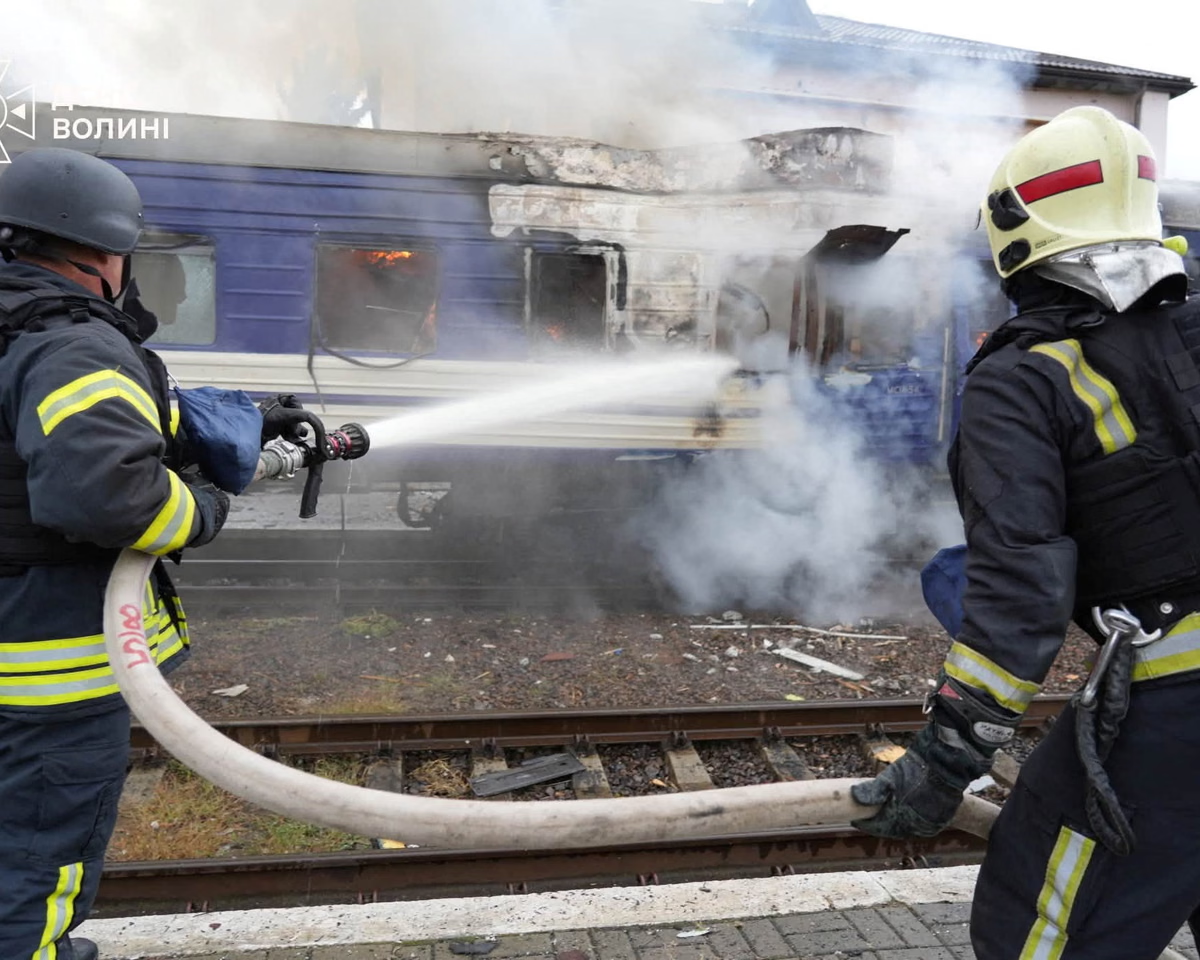
A train transporting prominent figures including former British Prime Minister Boris Johnson and former CIA Director David Petraeus may have been the intended target of a Russian drone strike near the Poland-Ukraine border, according to officials at Ukrainian Railways. The rail operator indicated the vessel passed through the border zone shortly before a Russian drone disabled a locomotive on the line.
While no casualties occurred on the passenger train, the incident has drawn sharp condemnation. Ukrainian Foreign Minister Andrii Sybiha described the aggression as “Putin’s terror knocking directly on the doors of the EU and Nato,” warning that Russian forces are pushing dangerously close to alliance territory. The strike occurred during a broader overnight aerial bombardment involving over 450 Russian drones and missiles across Ukraine. While Ukraine’s air force reported the interception of 405 drones and four missiles, the strikes claimed at least six lives and injured over 40 others, with fatalities reported in the Donetsk and Mykolaiv regions.
Witnesses aboard the Warsaw-bound night train described an intense evacuation process. Passengers were instructed to disembark repeatedly during the night before being ordered to flee into nearby brushwood near a lake as the locomotive in front of their transport was destroyed. Katerina Sergatskova, a passenger and director of Daily Humanity, noted that the proximity of the Shahed drones to the border was a stark escalation. An unnamed British economist on the same train praised the Ukrainian crew for their disciplined emergency management during the three separate evacuations.
The scale of the attack has prompted high-level concern in Warsaw. Polish Prime Minister Donald Tusk convened an emergency meeting to address the threat, noting that intelligence services had previously warned of potential Russian attempts to disrupt, paralyze, or destroy Ukrainian border infrastructure. Tusk emphasized that Poland must remain vigilant, as the escalating conflict could soon impact Polish territory directly. Polish Foreign Minister Radosław Sikorski characterized the border strike as a clear escalation, while Interior Minister Marcin Kierwiński stated the government is monitoring the situation with extreme seriousness.
In response to the accusations, Moscow’s defense ministry claimed its forces targeted railway infrastructure in western Ukraine utilized for transporting military cargo from European nations. This strike coincided with public remarks from U.S. President Donald Trump, who suggested that President Volodymyr Zelenskyy should cease efforts to disable diesel fuel supplies in Russia, claiming those actions were causing international fuel shortages rather than conflicts in the Middle East.
The regional instability extended into Lithuania, where authorities temporarily closed the Vilnius airport following an alert regarding a potential drone sighting. Nato fighter jets were scrambled in response to the detection, which was later identified as a flock of birds, allowing the airport to resume operations within 40 minutes. Following the incident, Boris Johnson took to social media to denounce the attack on civilian rail infrastructure, labeling the strike as both random and senseless in the broader context of the ongoing war. The report also notes that which is typically quieter than Kyiv or the eastern frontline zones, was particularly badly hit, western Ukraine. The report also notes that ukrainian and Polish authorities said a lorry less than 1km from the Dorohusk-Yahodyn border crossing between the two countries was also hit. The report also notes that she said passengers were told to evacuate at about 9am as the train approached the Polish border having already been told to disembark for two hours in the middle of the night. “At this point, the mood was different, we were asked to move very fast,” she said. “Then I heard the first drone. The report also notes that “Seeing and hearing Shahed [drones] just a few hundred metres from the border is a very unpleasant experience.”. The report also notes that travelling on a night train from Kyiv towards Chelm in Poland, also witnessed the attack. “We spent 10 hours at the border and were evacuated three times, a British economist who preferred not to be named. The report also notes that which everyone followed”, they “gave us good warning of the evacuation and had a plan. The report also notes that “The conductor said when we boarded that there was a high risk that we would be evacuated during the journey. The report also notes that the lady and her eight-year-old son who were in my compartment said they had been travelling back and forth every month to Kyiv from Warsaw since 2022 and they had never been evacuated, or the train attacked, while travelling the route.