

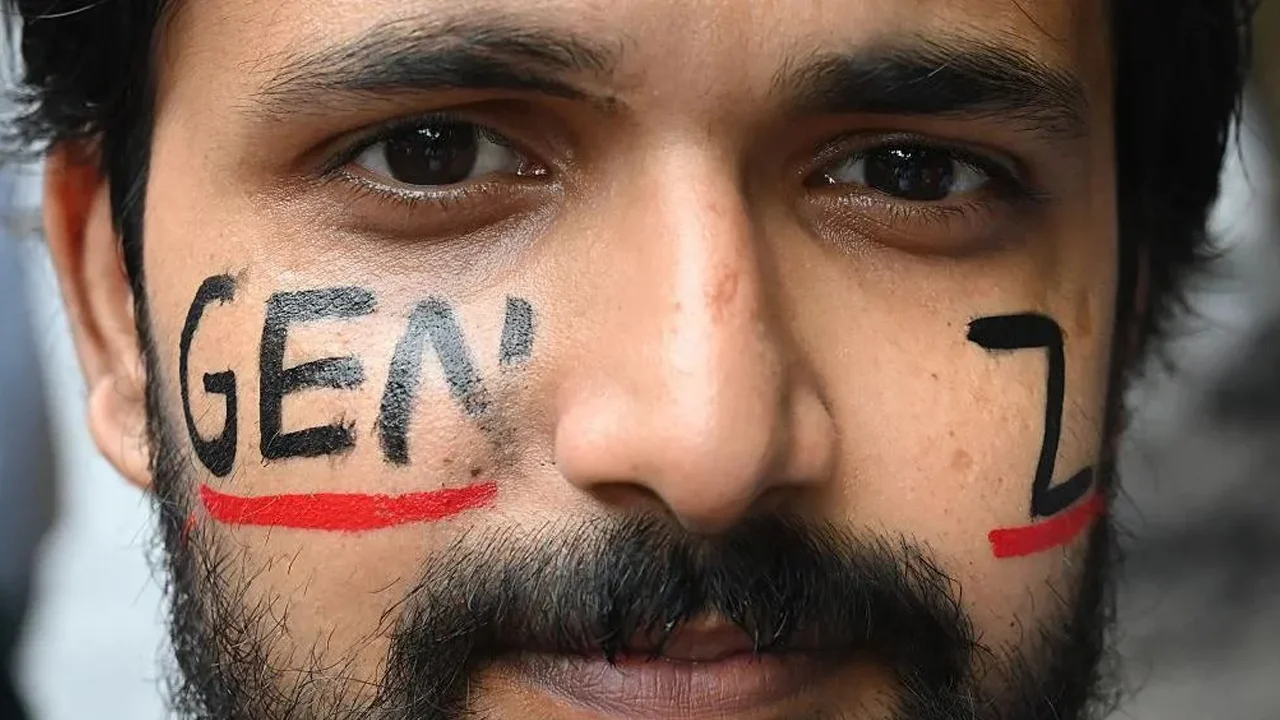
Prime Minister Narendra Modi’s government is facing a critical political and social challenge as dissatisfaction among India’s youth continues to intensify. The unrest, recently highlighted by nationwide protests from Gen-Z students following widespread exam paper leaks, has brought the issues of unemployment and educational failure to the forefront of national discourse.
The severity of the situation was underscored last month when Education Minister Dharmendra Pradhan was forced to resign amid intense public outcry over the compromised entrance exams. In response, Prime Minister Modi announced the formation of special courts to expedite the prosecution of those responsible and appointed technology entrepreneur Nandan Nilekani to lead reforms in the examination system.
Analysts argue that the crisis extends far beyond exam integrity, pointing to a fundamental disconnect between India’s education system and the labor market. Critics contend that the current academic framework fails to equip students with employable skills, while the broader economy has struggled to generate a sufficient number of high-quality jobs.
With over 360 million people aged 15 to 29, India possesses the world’s largest youth population. While enrollment rates and the number of private and technical colleges have surged over the past two decades, the transition from graduation to employment remains fraught with difficulty. According to the State of Working India 2026 report by Azim Premji University, youth unemployment rates are nearly four times higher than those of other age groups and significantly exceed the global average. For the past quarter-century, graduate unemployment has consistently hovered between 35 and 40 percent.
The data reveals a stark decline in job prospects for the educated. In 1983, only 4 percent of 20-to-29-year-olds were graduates, with a 13 percent unemployment rate among them. By 2023, that demographic saw 28 percent holding degrees, yet 67 percent remained unemployed. Furthermore, while the country produces an average of 5 million new graduates annually, only about 2.8 million find work. The report highlights that a mere 3.7 percent of graduates or post-graduates secure white-collar positions, and fewer than 7 percent obtain stable, salaried employment.
Economist Santosh Mehrotra, author of “India Out of Work: Rethinking India’s Growth Story,” notes that the labor market has become increasingly hostile over the last decade. Real wages have stagnated, and structural weaknesses have stifled labor demand. He points out that manufacturing’s contribution to India’s GDP dropped from 17 percent in 2015 to 14 percent today, leading to a decline in industrial jobs. Conversely, the agricultural sector has absorbed nearly 80 million people since 2020, a trend experts describe as “disguised unemployment.”
The rise of artificial intelligence adds another layer of uncertainty. A Goldman Sachs report suggests that 8 to 12 percent of non-agricultural jobs in India could be at risk due to AI integration. Niti Sharma, CEO of the staffing firm TeamLease Digital, observes that hiring growth in the IT sector has slowed to single digits. The recent incident at HCL Technologies, where hundreds of employees protested for salary increases, is viewed by analysts as a clear manifestation of this deepening frustration.
To address these systemic issues, experts suggest that short-term fixes are insufficient. Mehrotra emphasizes the need for a new industrial policy focused on manufacturing and the revitalization of small and medium enterprises (SMEs) that were hit hard by demonetization and the implementation of the Goods and Services Tax (GST). Meanwhile, Sharma stresses that the future labor market will prioritize practical skills over mere degrees, urging educational institutions to shift their focus toward technical and vocational training.
Ultimately, India’s younger generation may have to reconcile with a reality where stable, office-based roles are scarce, and maintaining a standard of living superior to that of their parents becomes increasingly difficult. If economic growth continues to decouple from job creation and income stability, the resulting social and economic pressure will remain one of the most formidable tests for the Modi administration.