

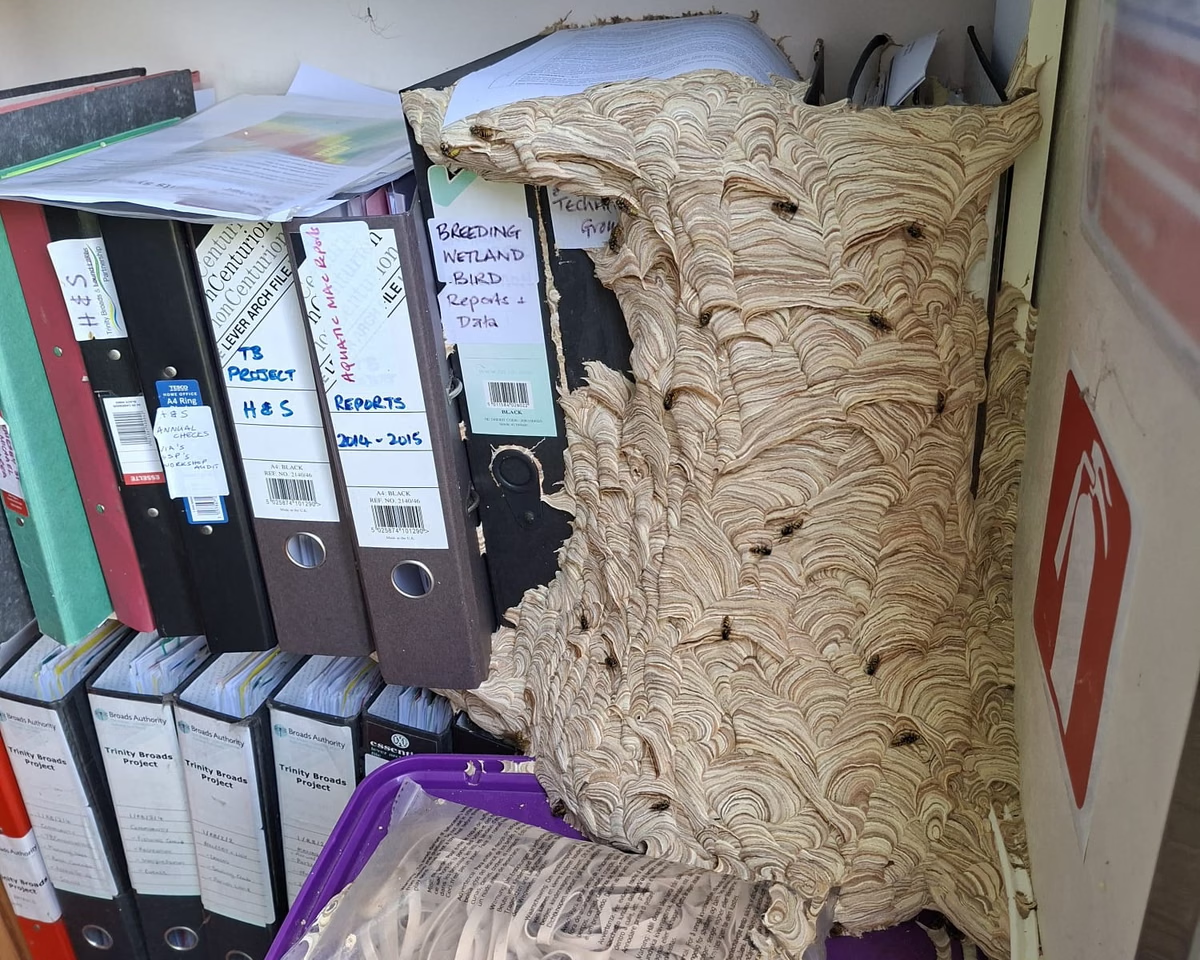
When wasps began appearing through a gap in her office door one June morning, Eilish Rothney, a reserve manager for the Trinity Broads at the Norfolk Wildlife Trust, initially considered removing them. Her workspace, a converted shipping container, had become the site of a new colony. She recalls her initial reaction: “They just built the nest inside my door. My first thought was: ‘Oh no, I have to get rid of that now.’ But then I realised: ‘Wait, why? Why do I have to do that?’”
Two months later, Rothney has fully embraced her unconventional office mates. The nest has expanded to over a metre in height, consuming a bookshelf filled with ring binders. The structure features intricate layers of chewed wood pulp cells, which Rothney describes as a unique, colorful filing system. To accommodate the insects, she keeps a window open to provide them with a clear flight path.
Rothney maintains a calm routine, moving past the nest as if she were a grazing animal. She notes that the wasps have become accustomed to her presence, and she has grown comfortable working alongside them. The colony produces a low, purring sound, which she attributes to thousands of wings beating to regulate the temperature of the nest. She views the colony as a single, complex living organism.
Regarding safety, Rothney is unconcerned about potential stings, suggesting they would be no worse than a mosquito bite. Her advice for others is to remain calm, as she believes insects can sense when an individual does not pose a threat. Her perspective on wildlife is rooted in her university ecology studies, where she developed an appreciation for the intricate relationships within nature.
She expressed frustration with the tendency to label insects as pests to justify their destruction. While acknowledging that some people dislike wasps, she advocates for moving away from killing wildlife out of convenience. She also defended wasps that often disrupt late-summer picnics, explaining that when larvae stop producing sugary secretions, the adult wasps become desperate for food. She suggests that providing them with sugar sources could prevent them from bothering people.
As the autumn season approaches, the colony’s cycle will conclude. The queen will stop laying eggs, the workers and males will die, and the new queens will depart to hibernate. By winter, the nest will be vacant. Rothney admits she will miss them, noting, “It’ll be sad when they leave. I do feel motherly towards them. It’ll be odd when they’re gone, because even the noise itself is amazing.”
She plans to carefully dismantle the nest once it is empty to study its interior. For now, the wasps remain a fixture of her office, which she notes is particularly fitting as the reserve celebrates its 100th anniversary this year. She hopes her experience encourages greater tolerance for wasps and the natural world.
This story is part of a series profiling invertebrates nominated by readers. From 3 to 12 August, the publication is highlighting a different species daily before opening a vote for the public to select their favorites. Readers are encouraged to share their thoughts by emailing the environment desk with “Invertebrate” in the subject line. The report also notes that “I just stroll past like I’m a browsing cow, calmly going about my day,” she says. The report also notes that she says she isn’t worried about being stung – “it wouldn’t be a whole lot worse than mosquito bites” – and her advice for anyone less enthusiastic than her is: “Insects learn that certain individuals won’t harm them. The report also notes that “I’m going to try to take it apart very carefully when they leave so I can see what it looks like inside.”. The report also notes that “The wasps were fine with me being there. The report also notes that the more I felt relaxed being alongside them.”, the longer I was there. The report also notes that while worker wasps forage and bring food back to feed the larvae, the queen lays eggs continuously. The report also notes that that, in turn, exudes a sugary liquid that the adult workers drink. The report also notes that and to what she describes as “a kind of poetry and beauty in understanding the intricate relationships between everything”, rothney traces her convictions about wildlife back to an ecology field trip at university.