

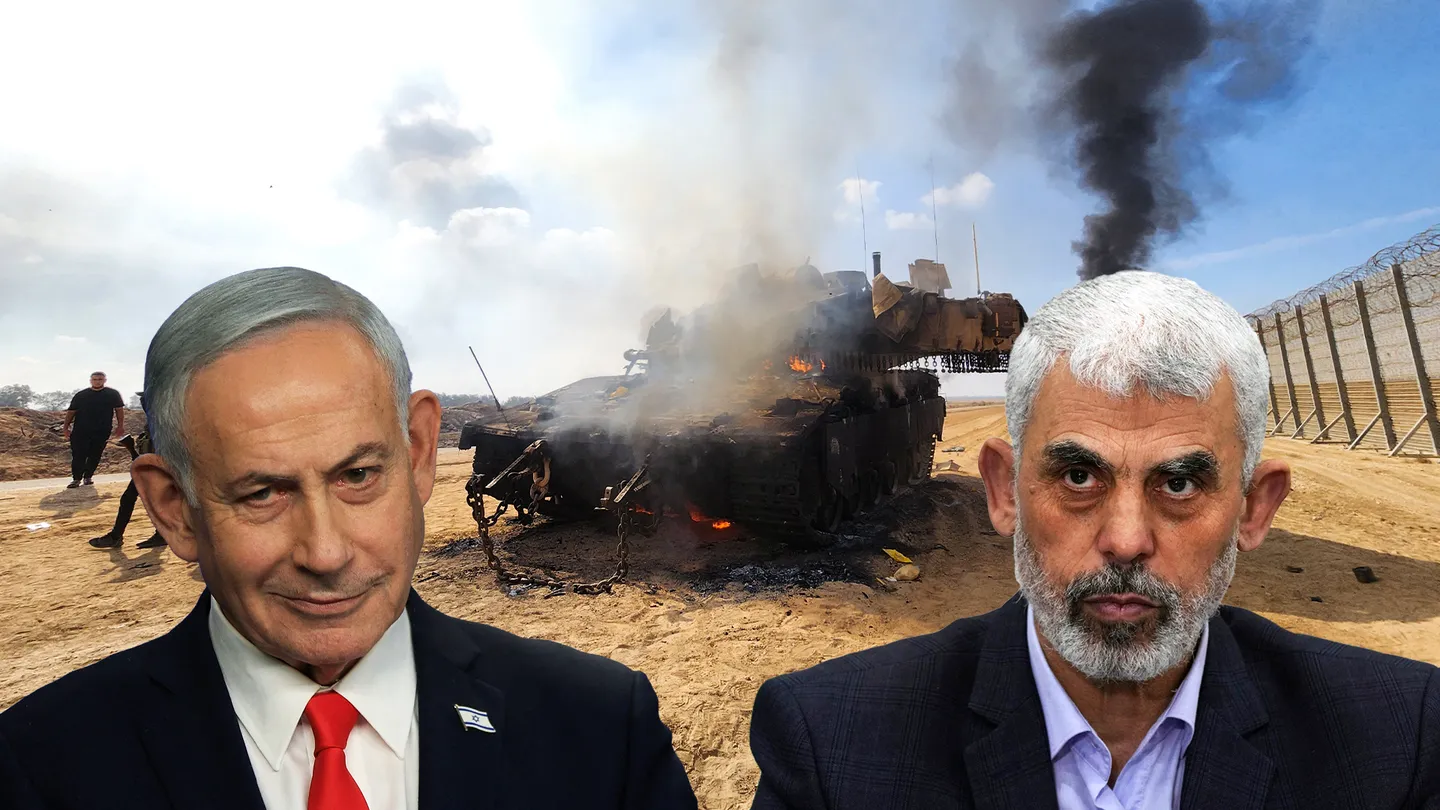
Three years following the October 7, 2023, Hamas-led assault, Israel finds itself in the midst of a critical general election cycle scheduled for October 27, 2026. This period has brought renewed focus on the actions of Prime Minister Benjamin Netanyahu, as fresh media revelations suggest the Israeli leadership had received specific warnings regarding an impending attack long before it occurred. The warning was clear and hard to miss. Which discussed warnings, at the end Israeli leadership did not make any serious decisions and preparations on Hamas’ potential attack planning, while Netanyahu quickly organised a security meeting.
Reports published by outlets such as Haaretz and Yediot Ahronot indicate that Netanyahu and his administration were alerted to a potential blitz by Hamas. One of the most stark warnings, according to accounts from that period, involved a message from Hamas leader Yahya Sinwar, who was eventually assassinated by Israel. Sent in the weeks leading up to the attack to a Palestinian intermediary, the message stated: “Convey a message to them that I am preparing the mother of all surprises. A terrifying operation. Something extraordinary.” Sinwar reportedly used the Arabic term “zilzal,” or earthquake, to characterize the scale of the impending event. They would eventually travel through Abu Dhabi and reach the highest levels of the Israeli government, according to a recent Haaretz investigation. Weeks later, Hamas fighters broke through the Gaza boundary and launched an attack that stunned Israel and reverberated across the Middle East. The UAE leader Mohamed bin Zayed Al Nahyan, the Crown Prince of Abu Dhabi, decided to inform Netanyahu about Sinwar’s designs in mid-September, after different rounds of consultations with his advisers.
The flow of these intelligence warnings allegedly involved a network of Palestinian intermediaries, the leadership in the United Arab Emirates, and Egyptian intelligence. Dania Koleilat Khatib, an expert on Arab-American relations, asserts that the warnings were widespread. According to Khatib and various Israeli sources, the primary Palestinian intermediary—referred to as “Coal Eyes”—was identified as Sufyan Abu Zaida, a former Palestinian Authority Minister of Prisoners’ Affairs. Khatib notes that Abu Zaida maintained a close friendship with Mohammed Dahlan, a former Fatah official currently serving as an adviser to UAE President Mohammed bin Zayed. “Everyone on the face of this planet informed them (Israelis),” Dania Koleilat Khatib, an expert on Arab-American relations with extensive experience with Gulf leaderships, tells.
Beyond these channels, high-level diplomatic warnings were reportedly ignored. Both Haaretz and the Wall Street Journal documented that Egyptian intelligence chief Abbas Kamel personally contacted Netanyahu in early October 2023 to warn of an imminent threat, with some accounts suggesting multiple calls were placed. Despite these reports, Netanyahu has consistently denied that he was informed by either Egyptian intelligence or the UAE, characterizing such claims as inaccurate.
The timing of these revelations has intensified the pressure on Netanyahu as he pursues another term. Before the October 7 attack, the Prime Minister was already mired in internal political turmoil, including ongoing corruption charges and nationwide protests against his proposed judicial overhaul. Analysts like Khatib suggest that Netanyahu’s handling of the situation may have been influenced by his own political survival strategy. She argues that the Prime Minister may have viewed the escalating tensions as a means to consolidate power, distract from domestic judicial crises, and potentially pursue a broader agenda involving territorial expansion.
Sami al Arian offers a perspective on Netanyahu’s dismissal of the warnings, pointing to the Prime Minister’s growing sense of arrogance and his reliance on an “ideological bubble.” This mindset, Arian suggests, left little room for incoming information that challenged his long-standing assumptions about Palestinian resistance. Israel had historically viewed these threats through a paternalistic lens, often dismissing native uprisings as top-down manipulations manageable through minor military interventions, a strategy sometimes dubbed “mowing the lawn.”
The debate has now shifted toward whether the October 7 disaster was merely an intelligence failure or a calculated political risk. Critics argue that framing the event solely as a failure of communication perpetuates the myth that events in Palestine are entirely subject to Israeli control. Furthermore, reports from Haaretz indicate that Hamas had initially been prepared to release civilian hostages without conditions shortly after the attack, an offer that Netanyahu allegedly rejected.
As the October 27 election approaches, the question of what Netanyahu knew remains central to the campaign. While he maintains his defense, the accumulation of testimony from international and regional actors creates a challenging narrative. The confluence of his personal legal battles, the intense domestic opposition to his government, and the catastrophic scale of the October 7 attack continues to dominate the discourse regarding his leadership legacy and the future of the state’s security policy.