

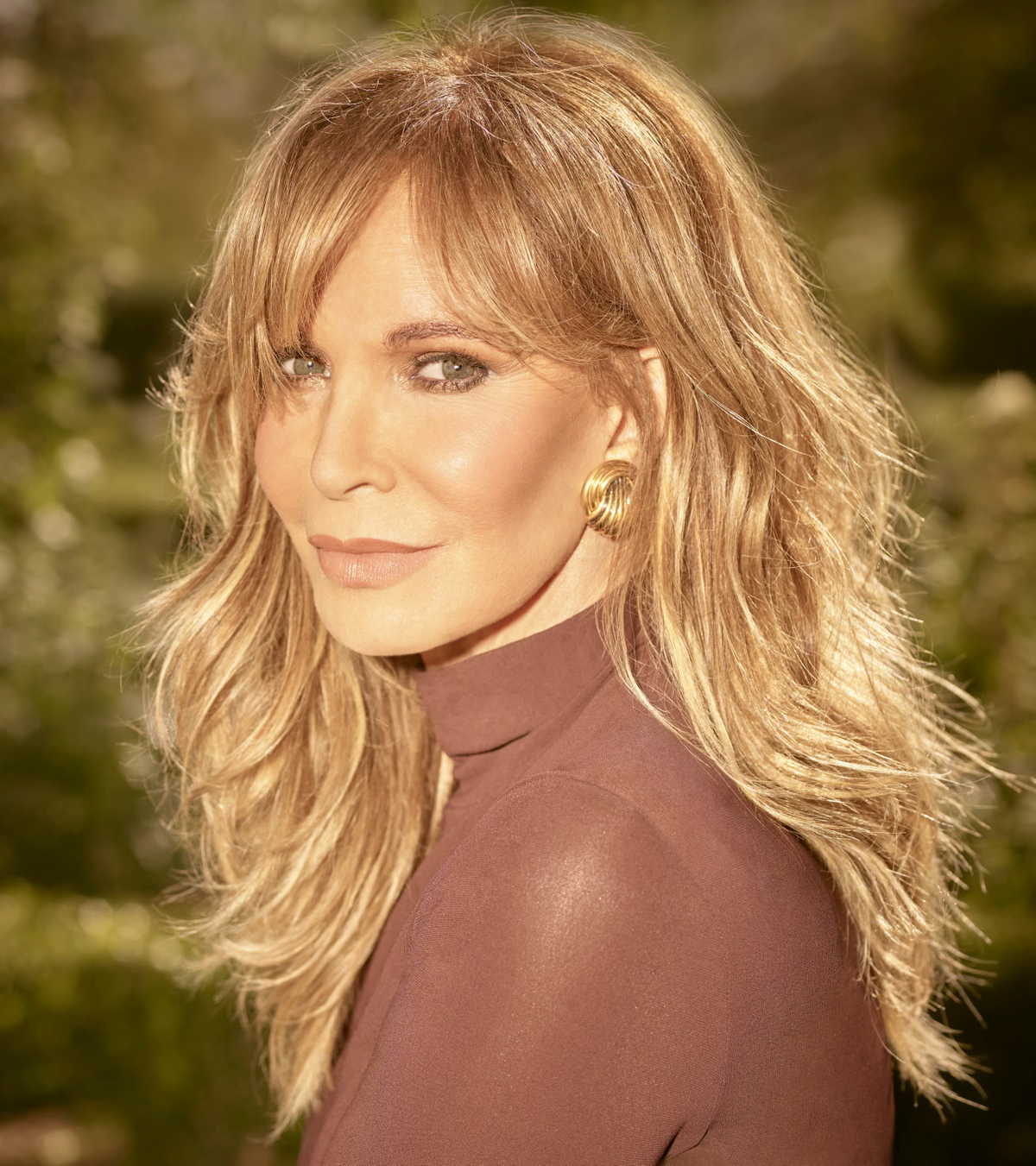
Half a century has passed since the premiere of Charlie’s Angels, yet the show remains a cultural touchstone that defies its brief five-year lifespan. Jaclyn Smith, the sole original cast member to remain with the series for its entire duration, reflects on this enduring legacy in her new memoirI Once Knew a Guy Called Charlie. At 80, she recalls that the cast never anticipated the program would remain a topic of conversation five decades later. Today, Smith projects an image of optimism and steady professionalism, reflecting on a journey marked by professional achievement and a series of personal hurdles. According to f or a TV show that only ran for five years, Charlie’s Angels packs a punch like a bikini-wearing big-hair-flicking private investigator. “We never thought we’d be talking about it 50 years later,”, Jaclyn Smith, the only original Angel to make it to the end of the show’s run. Smith, 80, has now written a memoir, I Once Knew a Guy Called Charlie – she is not, you gather, the type of actor to want to distance herself from her defining project. Her positive outlook seems to extend to the excesses of US TV in the 1970s and 80s (drug use on set only gets a brief mention); her three ex-husbands get off fairly lightly; and any difficulties – her OCD, the men who stalked her at the height of her fame – are not dwelled on. Ethics, values, smith recalls: “Whatever I am happened in that secure family they provided for me – morals. Downtime was spent at the family farm in Texas: “Two hundred acres with the San Marcos river running through it.
Smith’s foundation for this career began in Houston, where she studied dance under the tutelage of Patsy Swayze. She remembers Swayze’s young son, the future actor Patrick Swayze, as an absolute doll. Her upbringing was rooted in a stable, idyllic household supported by a dental surgeon father who instilled a rigorous work ethic, and a mother she describes as a goddess of love who consistently made those around her feel valued. This upbringing also coincided with the onset of her compulsive behavior, which she describes as a form of prayer developed to protect those she loved—a habit that evolved over the years as she navigated life’s responsibilities. And speak to her over Zoom, she comes across as sensible, hardworking and optimistic, as I read her book. Her dad was a dentist and “gave me my work ethic”; her mother was a “goddess of love – she just made you feel No 1”.
After transitioning to New York to pursue dance, Smith resided at the Barbizon hotel, an iconic residence for notable women that maintained strict social codes, such as a prohibition on wearing slacks in the lobby. While her contemporaries in the late 1960s and early 70s engaged in counterculture movements and experimentation, Smith maintained a more traditional lifestyle. She married actor Roger Davis, known for his work on the soap operaDark Shadowsand kept a distance from the more volatile aspects of the era’s bohemian scene. She notes that her early attempts to break into theater, such as auditioning forHairin a blue leotard and neat bun, often left her feeling like an outsider due to her innate Texas primness.
Her casting inCharlie’s Angelsas the composed Kelly Garrett was the final piece of the ensemble puzzle, though the financial terms were not equitable. Smith was initially offered $3,000 per episode, significantly less than Farrah Fawcett’s $5,000 and Kate Jackson’s $10,000. Asserting her value, Smith demanded parity with Fawcett. When the show debuted in 1976, it became an immediate phenomenon. Smith found excitement in the show’s departure from traditional gender roles, noting that seeing three women actively chasing danger rather than serving as passive figures rescued by men represented a notable shift for television at the time.
The trio faced criticism regarding the show’s emphasis on aesthetics and accusations of objectifying women. Smith dismisses these critiques, arguing that the characters were hard-working and courageous professionals who occupied space previously reserved for stereotypical roles like nurses or mothers. While the cast occasionally negotiated to limit the use of swimwear to scenes involving water, she maintains that their portrayal was innocent compared to modern standards, focusing on a loyal friendship rather than romantic entanglements. This bond extended off-screen, creating a lasting sisterhood that defied persistent media rumors of rivalry; Jackson eventually became the godmother to Smith’s daughter.
Fame brought substantial challenges, including the need for constant security. Smith recalls the strain of sudden celebrity and the struggle with stalkers, including one individual who bypassed security measures during a filming session. Her personal life also weathered significant storms, including a breast cancer diagnosis more than 20 years ago, which was successfully treated after early detection. She has since found stability in her marriage to heart surgeon Brad Allen, whom she has been with since 1991, noting that she spent decades striving to replicate the healthy marriage her parents shared. Agents who seem to appear from nowhere and offer her work, an early hit show, a gift for making friends and getting over heartbreak, also lucky: loving and supportive parents.
By the show’s final season in the early 1980s, the environment had shifted. The glamour demanded of the Angels intensified, and the set became increasingly shadowed by the prevalence of drug use, which Smith says she did her best to ignore. Despite the pressures of that era, she continued to work in Hollywood, even fighting to secure the role of the first lady in the 1981 biopicJacqueline Bouvier Kennedyafter producers initially resisted casting a Charlie’s Angel. Her career persisted through the challenges of finding substantial roles for women over 40, leading to later cameos in the 2000 film reboot and the 2019 follow-up.