

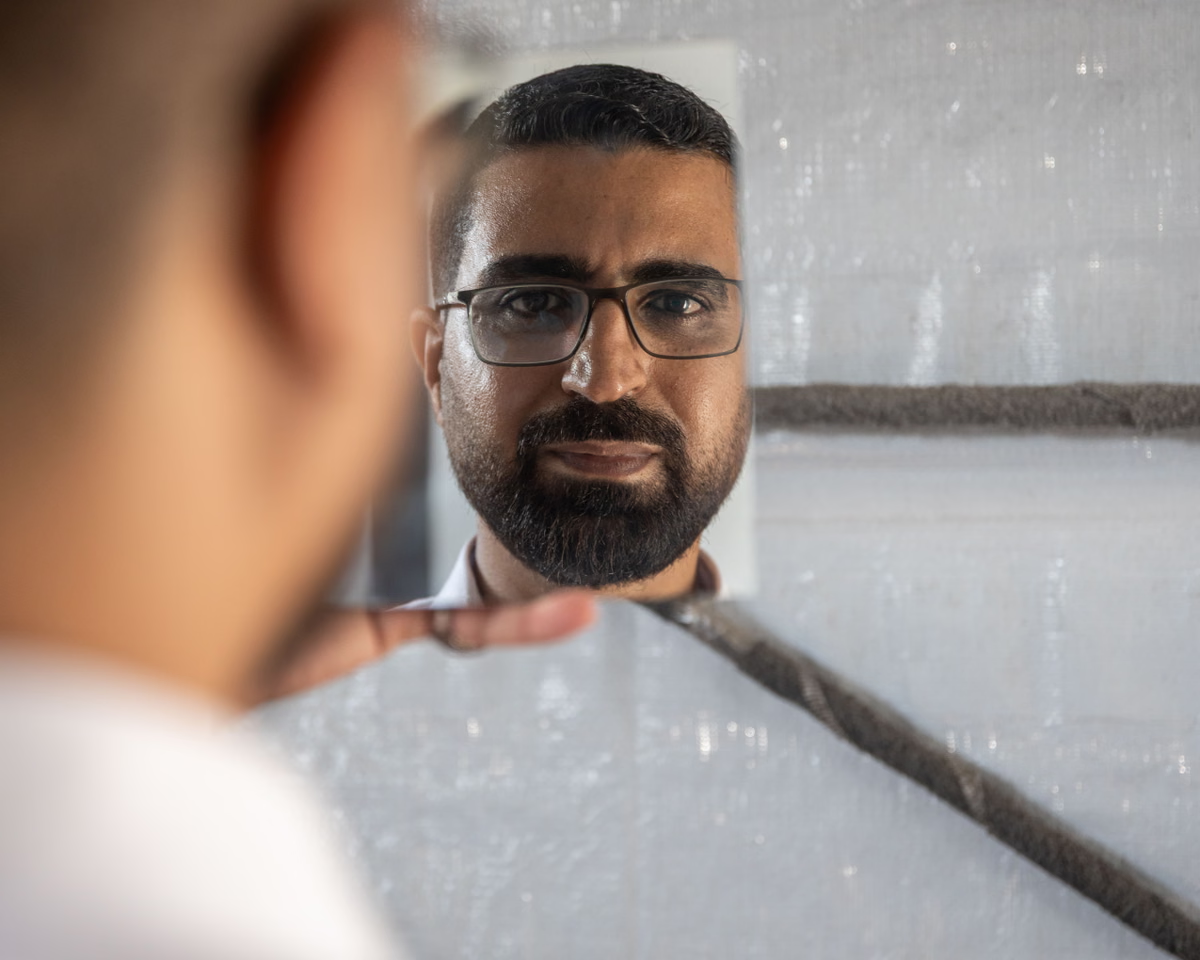
The ongoing conflict in Gaza has profoundly reshaped the lives and identities of Palestinian men, forcing them to navigate extreme loss and a diminished sense of agency. For Ahmed, 39, the war completely fractured his previous existence. Before hostilities began, he balanced a demanding schedule as a radio host, editor for a fact-checking website, and academic researcher while pursuing a PhD. He described that time as intellectually fulfilling, providing him with a sense of purpose as a family provider.
Since May 2024, Ahmed and his extended family have resided in tents after being forced to evacuate their homes. He observes that the transition to communal living, devoid of any personal space, has fostered an emotional silence between couples. He finds it impossible to express himself freely or process issues with his wife as they once did. Although he strives to reassure his children that their circumstances will improve, he privately grapples with the uncertainty of their future, noting that this struggle is the heavy cost of manhood in the face of such catastrophe.
Nidal, 40, previously managed a successful business in Gaza City, selling appliances and mobile phones on credit. His days were once defined by community interaction and a sense of stability. That world vanished after his family’s apartment block was struck by an Israeli missile, an attack that claimed the life of his sister-in-law. A subsequent airstrike on a school where they sought refuge killed his daughter, Malek.
Now sheltering under the remnants of a collapsed building, Nidal struggles to envision a path forward. He spends his days in isolation, haunted by the loss of his child, his home, and his financial stability. He feels a deep sense of humiliation over his inability to provide for his family, describing himself as a man rendered helpless rather than merely unemployed. He remarked that witnessing a father break down before his children is a burden no man should have to endure.
Hussein, 24, also faced a sudden, total loss. Before the war, he was a university student studying technology, running AI workshops, and planning his future marriage. The bombing of his home injured his father and left his sister-in-law hospitalized for six months. With his previous life erased, he began from zero, eventually finding work repairing and trading mobile phones to survive.
Though he takes pride in his adaptability, Hussein recalls the intense shame he initially felt regarding his circumstances. He now struggles with the logic of starting a family while living in a tent, insisting he must at least provide a private home with running water before considering marriage. Despite these hardships, he remains committed to the idea that his generation will eventually rebuild the land, creating something even more beautiful than what was lost.
The shift in perspective is echoed by 22-year-old medical student Hamza, who was living in Jabaliya when the fighting broke out. Rather than fleeing south, he remained in the north to volunteer as an emergency doctor, working in a hospital with only three neurosurgeons to handle the influx of patients with severe injuries. He views this period as a transformative mission that provided him with a new sense of purpose.
Hamza notes that the shared experience of extreme scarcity has tightened the bonds within his family, replacing his former focus on personal career success with a newfound appreciation for human connection. While he previously delayed marriage to secure a comfortable life abroad, the proximity to death has accelerated his desire for family life. He explains that in times of war, the instinct to reproduce becomes a powerful response to the looming threat of extinction, driven by a profound need to compensate for what has been destroyed. The report also notes that now he spends hours standing in line to fill water jugs or use the bathroom, where previously he would spend hours lost in research. The report also notes that adding: “As a man, I derived my appreciation for myself from my accomplishments in my work and my studies.”, he says war changed his sense of self and that he no longer “feels the pillar of his family”. The report also notes that each of his siblings with their family in a separate flat, ahmed had been living alongside his parents and siblings in the same building. The report also notes that “Before, the home was a private kingdom, a place to decompress at the end of the day, to speak freely. The report also notes that everyone can hear; they can’t discuss and work through issues as they used to.”. The report also notes that he says he feels a responsibility to be a source of reassurance for his family. “I have children who don’t know what walls are, what a bed is, what stairs are, as a husband and father. The report also notes that but privately wonders what new hardships the war will bring and often lapses into silence. “That is the price of manhood in the catastrophe of this war.”, he says he tries to make them feel that “everything will be OK”.