

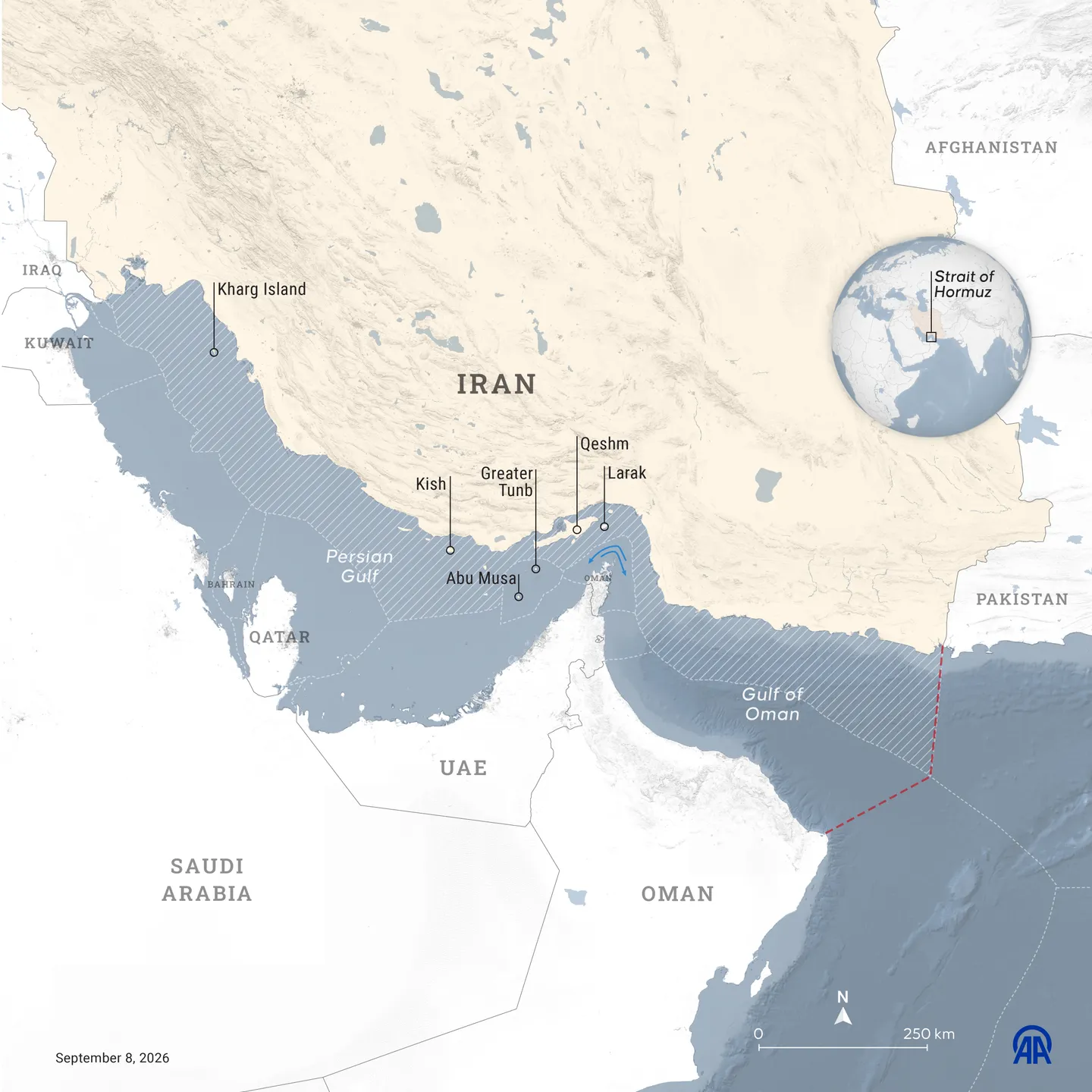
Despite repeated assertions from the Trump administration that the conflict with Iran would conclude “pretty soon,” the two nations remain locked in a persistent war of attrition. Recent declarations from Washington and Tehran have only served to deepen the divide, with the latest flashpoint centering on Iran’s proposal to establish a maritime exclusion zone that would extend from the US blockade line in the Arabian Sea across the Persian Gulf.
Mohsen Rezaei, secretary of Iran’s Supreme National Security Council, outlined the plan in a recent interview with state television. He warned that any vessel entering this designated area would be placed on an Iranian sanctions list. This measure, according to Rezaei, is a direct response to US economic warfare, framing the exclusion zone as a mirror image of the naval blockade currently imposed by the United States.
Oral Toga, an Iran expert at the Ankara-based Center for Iranian Studies, interprets this move as an attempt by Tehran to formalize a “permission-based transit regime” throughout the duration of the war. By restricting access, Iran is effectively challenging the US naval presence. Toga notes that the stated penalty for non-compliance—placement on a sanctions list—mirrors Washington’s own tactics, impacting a ship’s insurance and future passage rather than involving immediate kinetic strikes.
The proposal highlights the ongoing deadlock regarding the administration of the Strait of Hormuz, a critical maritime artery. This dispute was a primary factor in the expiration of the 60-day deadline established by the Islamabad agreement on August 17, as both sides failed to reach a consensus on traffic management. Toga suggests that Iran is moving away from a rhetoric of retaliation toward one of offense, signaling a “maximal position” that Washington is unlikely to accept, as doing so would legitimize an Iranian-controlled transit regime.
The current climate of increasing attacks and competing claims suggests the conflict is entering a more volatile phase. Ali Akbar Dareini, a Tehran-based political analyst, argues that Iran is signaling a hardening stance to increase the costs of the US naval blockade. He believes Tehran possesses both the political will and the means to escalate the situation in the coming months, aiming to convince the Trump administration that continuing the war is strategically disadvantageous.
This “prohibited zone” is viewed by analysts as a conceptual expression of a broader Iranian strategy to push the United States out of the region. This approach includes targeting commercial vessels in the Strait of Hormuz and launching attacks on American bases across the Middle East. By doing so, Tehran seeks to erode the perception among regional states that the US military can guarantee their security.
The broader context of this confrontation is influenced by domestic pressures within the United States. A recent Reuters/Ipsos poll indicated that only one-quarter of Americans view the war with Iran as “worthwhile.” With midterm elections approaching, US officials have attempted to downplay the conflict, with President Trump recently dismissing the war as “small potatoes” as his approval ratings hit record lows.
Despite these efforts to minimize the conflict’s profile, Tehran appears intent on maximizing political damage to the Republican party. The internal dynamics in Tehran remain a critical variable, with tensions persisting between reformist supporters of President Masoud Pezeshkian and hardliners like Rezaei, who prioritize national dignity and resistance to external pressure.
Meanwhile, the United States is recalibrating its regional footprint. According to recent intelligence analysis, officials are discussing a reduction in the US military presence in the Middle East. While troop levels reached approximately 250,000 during the invasion of Iraq, the current presence has been reduced to roughly 50,000 personnel.
Ultimately, the proposed maritime zone hardens the central dispute, making a diplomatic settlement increasingly difficult to achieve. As both sides seek to gain leverage, the region remains on edge, with experts warning that the unresolved questions regarding leadership and regional strategy will continue to drive the escalation curve for the foreseeable future. The report also notes that “The zone as described begins at the US Navy’s blockade line and extends into parts of the Gulf, which means Tehran is answering a naval blockade with a mirror image of one,” he tells. The report also notes that and it tells you Iran is trying to move the contest from the military domain, where it is losing, to the administrative and commercial one, where it still has a say,” he says, that is Washington’s own tool turned around. The report also notes that “The question of who administers the strait is precisely what caused the 60-day deadline of the Islamabad agreement to expire on 17 August,” as both sides failed to reach common ground on how to manage traffic through Hormuz, according to Toga. The report also notes that he adds, tehran appears to be acting on the belief that it holds leverage over the Strait. The report also notes that iran has “political will and means to do so,” he says, seeing an escalatory curve “in the days, weeks and months to come” aiming to persuade Trump that continuing war is much less advantageous for the US than bringing an end to it. According to a recent CNN analysis, American military and intelligence officials are discussing reducing Washington’s military presence in the Middle East as the US seeks to recalibrate its post-9/11 regional strategy. The report also notes that “Iranian leaders see that, weakened as the country is, the system is holding.