

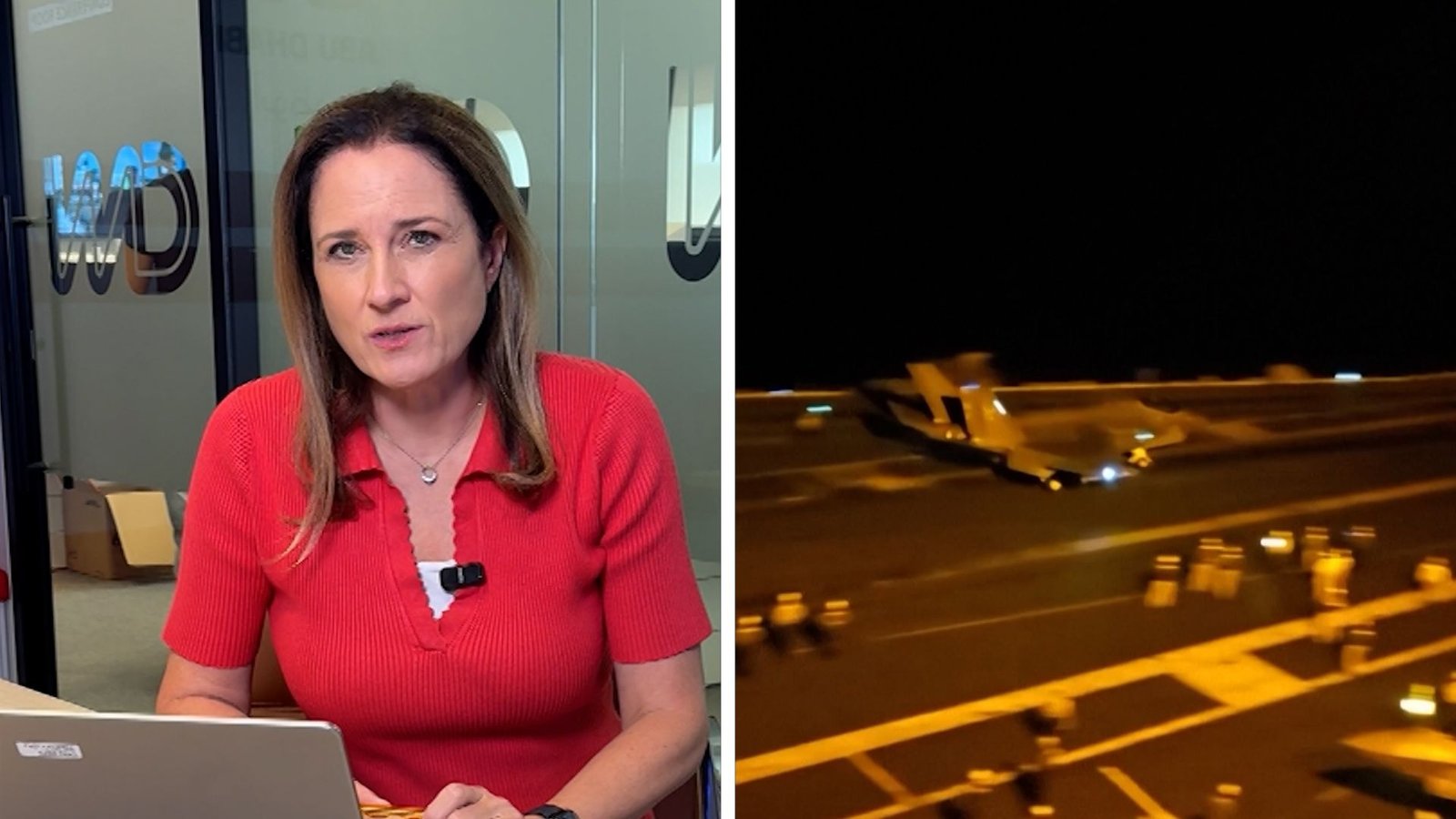
The US military conducted a new wave of strikes against Iran on Tuesday, triggering a retaliatory response from Tehran that targeted Jordan, Bahrain, and Kuwait. The escalation occurred despite a direct warning from President Donald Trump, who stated that Iran would be “hit much harder” should it choose to retaliate against what he described as a “very justified attack.”
Following the US announcement, President Trump reiterated his stance on social media, warning that Iran would face even more severe military consequences if it continued its defiance. He noted that while the current strikes were significant, a larger military option remained “waiting in the wings.” Iran responded by vowing a “crushing” counter-offensive, launching ballistic missiles toward Jordan and deploying drones against Bahrain and Kuwait, claiming these actions were directed at US military assets in the region.
Jordan’s military reported that it successfully intercepted 10 Iranian missiles, with three others landing in uninhabited, remote areas; no casualties were recorded. Meanwhile, Kuwait and Bahrain confirmed they activated their respective air defense systems to intercept incoming drones. Tehran also alleged it carried out a combined missile and drone strike against Erbil in Iraq.
The US military operation, which began at 12 p.m. on Tuesday, targeted facilities associated with Iran’s Islamic Revolutionary Guard Corps (IRGC), including radar systems, air defense sites, maritime infrastructure, mine-laying equipment, and communications hubs. US Central Command (CENTCOM) stated the strikes were a direct response to recent Iranian attempts to disrupt commercial shipping in the Strait of Hormuz and threats against American personnel stationed in the region. Since Sunday, maritime intelligence and monitoring agencies have reported that two tankers were struck by projectiles.
Amid the military exchanges, Iranian state media claimed that shrapnel from a US strike hit a wedding celebration in the country’s south, resulting in at least four deaths, including a toddler. Iranian officials reported that 68 people were wounded, including 19 children under the age of 10. CENTCOM spokesperson Capt. Timothy Hawkins denied these allegations, stating that the US military does not target civilians and that the reports originated from state-controlled outlets. A large communications tower in Kouhestak, located approximately 135 meters from the site of the alleged wedding incident, was confirmed to be severely damaged.
Additional reports from the Islamic Republic News Agency (IRNA) indicated that seven people were killed in the Khuzestan region. Further strikes were reported near the port cities of Chabahar and Konarak, Jiroft Airport, and a fishmeal factory on Qeshm Island. An explosion was also noted in the petrochemical hub of Asaluyeh.
Despite the military flare-up, President Trump signaled a shift in strategy, stating he is not attempting to force Iran to the bargaining table but is instead focused on maintaining control of the Strait of Hormuz and exerting economic pressure. Treasury Secretary Scott Bessent echoed this sentiment, asserting that the administration aims to “economically asphyxiate” the regime to force a surrender. Following the US strikes, oil futures rose above $94 per barrel. Meanwhile, diplomatic efforts continue, with Pakistani officials stating they remain engaged with both Washington and Tehran to manage the escalating violence. The report also notes that in exchanges that risked reigniting the damaging conflict after weeks of relative military calm, the latest round of tit-for-tat strikes began after the US and Iran traded attacks overnight into Monday for the first time in over a month. The report also notes that which is critical to global energy supplies, iran and the US are in a protracted battle over the narrow waterway. The report also notes that eT, and CENTCOM announced they were complete more than six hours later. The report also notes that “I like our position now much better, with almost total control of the Hormuz Strait, and their economy totally collapsing.”. The report also notes that pakistan’s Foreign Ministry “remains engaged” with Tehran and Washington, Tahir Andrabi, a spokesperson, told reporters Wednesday. The report also notes that he insisted that the strikes “should not be termed as a failure of the mediatory process.”. The report also notes that state-linked media said, and explosions were heard east of Bandar Abbas and around Qeshm Island in the Strait of Hormuz.