

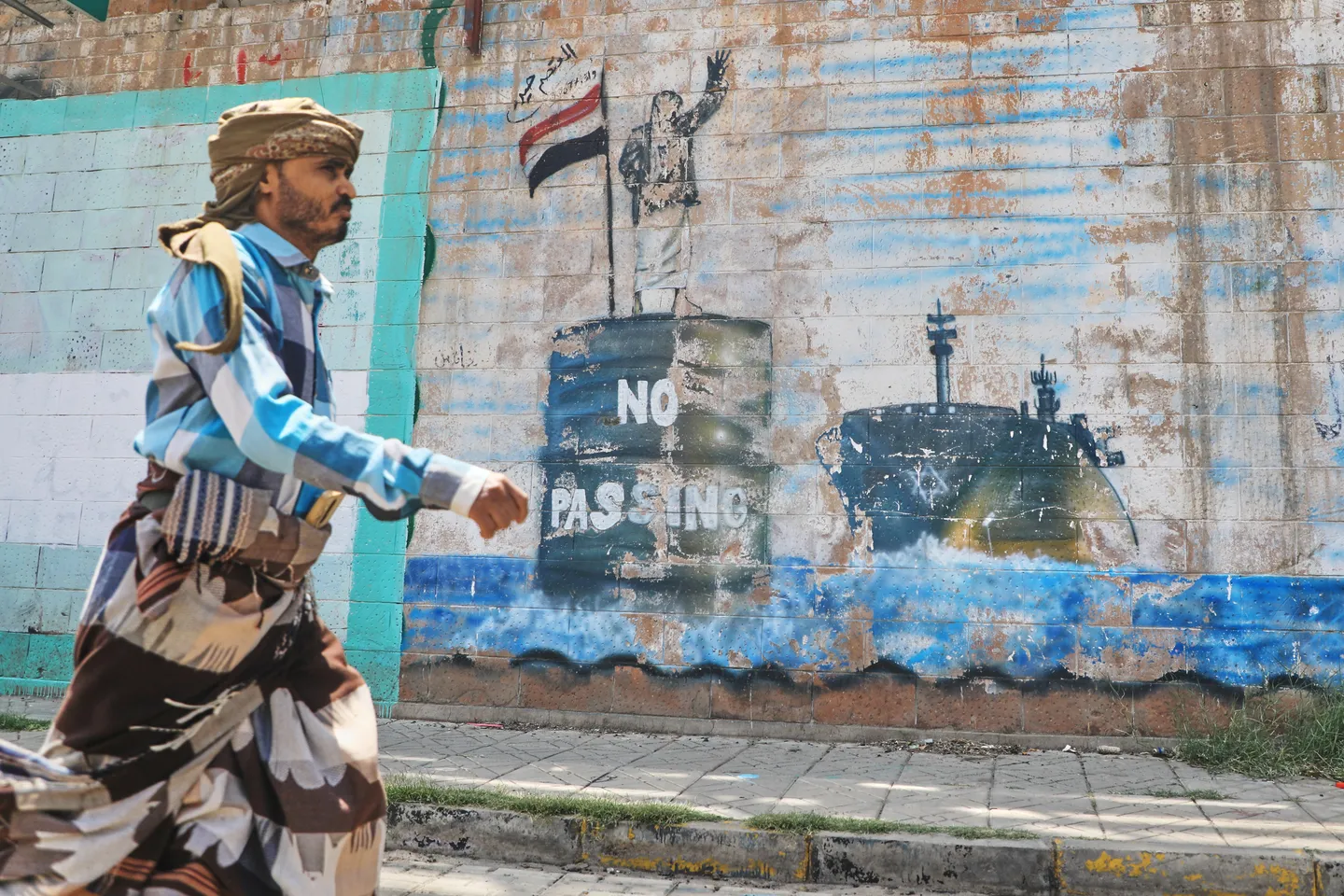
Global energy markets are facing intense pressure nearly seven months into the conflict between the United States and Israel against Iran. While prices were already volatile, a new and dangerous choke point has emerged along Yemen’s Red Sea coast. Iran-aligned Houthi forces have seized control of the critical Bab al Mandeb Strait, effectively blockading Saudi Arabia’s last viable maritime route for oil exports.
This development has paralyzed Saudi logistics, as the Strait of Hormuz has remained effectively inaccessible since maritime traffic from Gulf nations was halted in late February. Riyadh had attempted to redirect crude shipments across the Arabian Peninsula to Red Sea terminals, but the Houthis have neutralized this alternative by targeting tankers and energy infrastructure. Compounding these transport issues, drone strikes by Iraqi militias linked to Iran forced the indefinite closure of the strategic East-West pipeline, which was essential for moving oil from eastern production sites to western export points.
The cumulative impact on the kingdom’s output has been severe, with Saudi oil production dropping to its lowest point in 36 years. As global prices threaten to surge, the focus has shifted to the Organization of the Petroleum Exporting Countries and its allies, known as OPEC+, to see if they can ramp up production to stabilize the market.
Experts, however, suggest that the group’s capacity to intervene is largely theoretical. Baris Alpaslan, an economist and chief adviser at IC Holding, warns that while spare capacity exists on paper, it is misleading to view these figures as immediately available supply. He emphasizes the critical distinction between technical capacity and the actual volume of barrels that can navigate today’s hazardous security environment to reach the global market.
Sabanci University’s Istanbul Policy Center senior scholar Altay Atli agrees, noting that while Gulf producers claim unused reserves, much of that oil is geographically stranded. With the Hormuz route deemed unsafe, transporting such reserves to major buyers like China involves lengthy, costly, and precarious detours. According to Atli, Iran itself faces production limitations due to ongoing war damage and sanctions, while Russia’s output is suffering from persistent Ukrainian drone strikes against its infrastructure.
Official Saudi production figures for August fell to 6.2 million barrels per day—a decline of roughly 25 percent compared to July—due to the inability to move product through the blockaded shipping lanes. Even producers such as Iraq and Kuwait possess limited capacity to compensate for these losses in the short term, and the industry’s reliance on the ‘swing producer’ status of Saudi Arabia is currently hindered by physical infrastructure and security constraints.
Diplomatic efforts to address the crisis have yielded little relief. Reports indicate that Saudi Crown Prince Mohammed bin Salman previously sought direct US military assistance to counter the Houthi advance, but Washington declined to intervene. US President Donald Trump stated that the Houthis reached out to his administration, requesting that the United States refrain from involvement in their confrontation with Saudi Arabia.
The United States remains a primary source of additional supply, with national crude output reaching a record 13.8 million barrels per day in 2026, compared to an average of 13.7 million in 2025. Nevertheless, Alpaslan notes that the US cannot respond to energy crises like an emergency switch. While releasing more oil from strategic reserves might provide temporary relief, analysts warn that prices could exceed $120 per barrel in 2027 if Gulf flows remain restricted.
The International Energy Agency has cautioned that a full recovery of energy shipments from the Gulf may not materialize until 2027, noting that current price levels are already suppressing global demand. As market participants await further developments, experts suggest that beyond potential US assistance, marginal supply gains could come from nations like Brazil and Guyana, though these sources are unlikely to fully replace the lost volumes currently trapped by the blockade. The report also notes that considered one of Tehran’s allies, controls the country’s capital, Sanaa, and much of the north-western parts of the war-torn country, the Yemeni group. The report also notes that this means the already dangerous detour around a mostly blocked Strait of Hormuz has become a second chokepoint throttling the flow of oil from the Middle East. The report also notes that at least not in the way markets usually imagine, experts say OPEC+ can’t just turn the tap and increase supplies. The report also notes that the 12-member grouping sets production quotas for its members and regulates crude output levels to tide over oil gluts and shortages worldwide, under the de facto leadership of Saudi Arabia. The report also notes that washington has so far resisted treating the Houthi advance as another theatre of war that it must fight itself. The report also notes that OPEC+ has spent much of 2026 announcing monthly quota increases – a phased unwinding of earlier voluntary cuts – while actual barrels have yet to follow.