

Since the end of World War II, Germany has built its identity around a migrant-friendly social framework, a commitment to European unification under NATO, and the development of a robust economy anchored by its world-leading automotive industry. Reunified following the collapse of the Berlin Wall, the nation became a primary driver of EU expansion into Eastern Europe and a cornerstone of the Western alliance, bolstered by strong ties with the United States.
However, the current landscape is shifting as populist movements gain momentum, challenging the status quo on migration, national sovereignty, and global economic integration. Germany is simultaneously navigating the fallout from a global market that increasingly favors Chinese electric vehicles over domestic models, while grappling with the consequences of severing energy ties with Russia following the conflict in Ukraine. These compounding pressures—ranging from economic stagnation to security concerns—have fueled the rise of the Alternative for Germany (AfD), a party that advocates for the expulsion of migrants, the scaling back of EU influence, and a restoration of diplomatic relations with Moscow.
Raoul Motika, a professor at Hamburg University, notes that while the AfD’s policy promises may be illusory, they resonate deeply with voters anxious about the future of the German car industry and rising unemployment. “People do not trust politicians anymore,” Motika explains, noting that many citizens feel mainstream leaders are incapable of solving systemic issues and are therefore turning to a party that pledges “radical changes.”
This sentiment culminated on Sunday in a significant victory for the AfD in Saxony-Anhalt, a state in former communist East Germany. Although the party did not secure an outright majority, the result has emboldened its efforts to expand its influence nationwide. Analysts suggest the AfD intends to use this momentum to deepen the political crisis facing the coalition government led by Chancellor Friedrich Merz.
While Motika cautions against overstating the impact of a single state election, he acknowledges that the AfD is gaining traction even in western regions like Baden-Württemberg and Bavaria. “In any case, it’s a real sign of mistrust against the Merz government. That’s obvious. The overwhelming majority of the population is not content with the work of the current government,” he says. However, he also points out that an AfD-led administration in Saxony-Anhalt would possess no formal authority to alter federal-level policy.
The pressure on Chancellor Merz is further compounded by internal friction within his own Christian Democratic Union (CDU). Disappointment is mounting over perceived U-turns on campaign promises, such as his pivot on debt rules after previously pledging to strictly limit state borrowing. Furthermore, critics argue that the German social welfare system is becoming increasingly ineffective, with Motika noting that life expectancy in Germany has failed to outperform that of other European nations like Italy.
Merz’s attempts to manage the political fallout have faced criticism from experts who argue that adopting populist rhetoric is counterproductive. “All kinds of populist propaganda he made before the elections turned out against him afterwards because now the AfD is using the term that he’s a liar, that he betrayed the population, that he made wrong promises,” Motika observes. Political scientist Bulent Guven agrees, noting that while the AfD is viewed as the authentic voice of populist ideas, Merz appears to be a “copycat.”
The AfD’s rise represents a historic shift for a country that has long grappled with the legacy of its Nazi past. Despite various attempts to curb extremist groups, the party has steadily increased its presence, now holding approximately a quarter of the seats in the German parliament. Co-chaired by Alice Weidel, the AfD has successfully attracted support from both the general electorate and segments of the intellectual community.
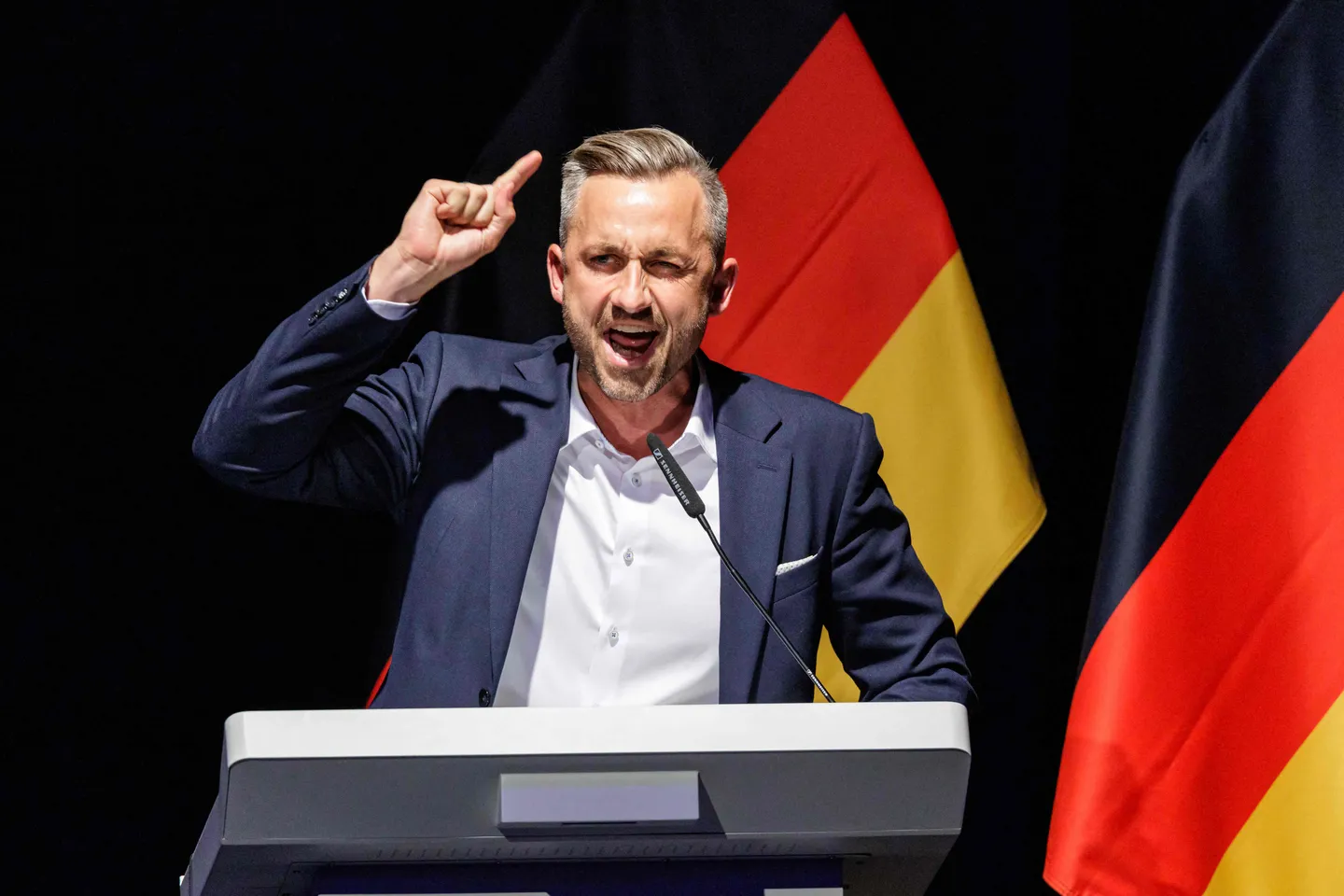
Ulrich Siegmund, the AfD’s potential premier for Saxony-Anhalt, has signaled that the party will not compromise on its core platform, describing proposals regarding security, migration, and energy as “nonnegotiable.” The party has also expressed a desire to alter how German history is taught and to cut funding for projects it deems to have “anti-German goals.”
For citizens like Guven, who has Turkish ancestry, the trend is deeply concerning. He fears that individuals with migrant backgrounds will become targets under a potential AfD administration, noting that nearly one-quarter of Germany’s 21 to 25 million residents have immigrant roots. Guven highlights the party’s increasingly “radicalised rhetoric,” which he argues is far less moderate than that of European counterparts like Giorgia Meloni’s Brothers of Italy or Marine Le Pen’s National Rally.
“Not good days are ahead for us,” Guven warns, adding that if voters with migrant backgrounds are excluded from the tally, the AfD has the potential to secure the support of nearly one in every two ethnic Germans. As the party continues to gain ground in polls—with some projections suggesting they could claim nearly 30 percent of the vote in future federal elections—the question of whether Germany is heading toward a deeper political crisis remains at the forefront of the national conversation. The report also notes that meanwhile, globalisation favours Chinese EVs over German cars. The report also notes that in addition, the Trump administration pressured European countries, especially Germany, over NATO’s defence contributions, citing insufficient spending. The report also notes that opposition to the chancellor has not reached the point where his government is in immediate danger, the professor says, despite growing problems and what Motika sees as shortcomings in Merz’s leadership. The report also notes that but he warns that adopting parts of the far-right agenda might not help Merz politically. The report also notes that “Emerging signs show that they will eventually come to power” at the federal level, says Guven. The report also notes that ranging from cracking down on migration and changing the education system to strengthening local policing through a proposed volunteer militia, which the party says would help secure neighbourhoods, the AfD has a broad agenda. The report also notes that germany’s school curricula include extensive teaching about atrocities committed during the Nazi era.