

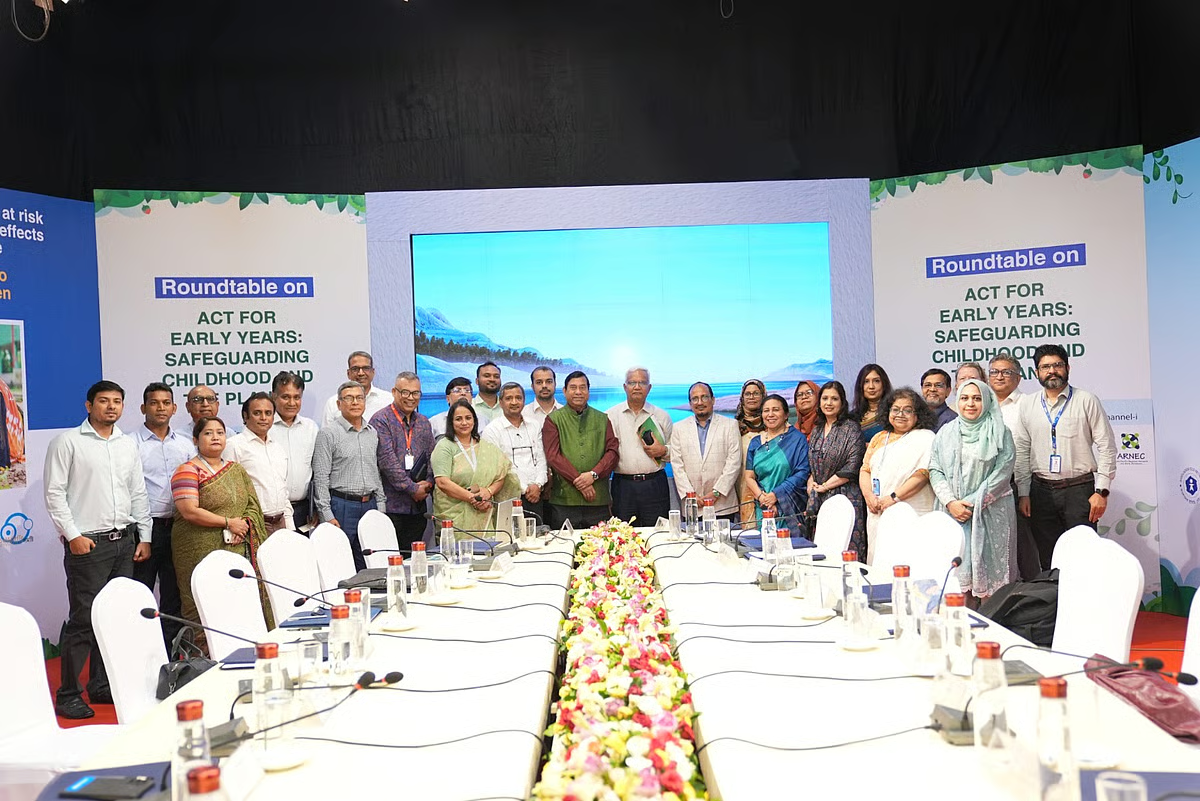
Policymakers, development experts, and civil society representatives have called for a coordinated effort among the government, development partners, media, and families to address the climate crisis while securing early childhood development. This appeal was made during a policy dialogue titled ‘Actions for Childhood: Protecting Childhood and the Earth,’ held in Dhaka on Tuesday.
Speakers at the event emphasized that ensuring a safe, development-friendly environment for children is intrinsically linked to the preservation of nature and the environment. They argued that to guarantee a secure future for children, the planet must be protected. The event was jointly organized by the Bangladesh Early Childhood Development Network (BEN) and the Nature and Life Foundation, with support from ARNEC and the Samannay Media Communication and Development Foundation, and Channel i serving as the media partner.
Minister of Women and Children Affairs A.Z.M. Zahid Hossain, serving as the chief guest, stated that investment in early childhood development is not an expense but a critical investment in the nation’s future. He stressed that tackling global challenges like climate change requires effective policy implementation, adequate funding, and collective action to ensure a safe environment for children.
Keynote speaker and BEN Vice President Mahmuda Akter highlighted that the first 1,000 days of a child’s life are the most vital for physical, mental, and intellectual growth. She urged for increased investment in healthcare, nutrition, caregiving, and primary education during this period. Nature and Life Foundation Chairman Mukit Majumdar Babu, who presided over the session, added that protecting biodiversity and the environment is essential for creating a habitable world for future generations, noting that caring for today’s children and the environment builds a more humane society.
Representatives from development agencies argued that child development must be viewed through an integrated lens covering health, nutrition, education, and psychological well-being. They highlighted the rising risks posed by climate change to children and advocated for increased investment in child-centered climate adaptation and sustainable development. The participants collectively urged the inclusion of children’s rights and environmental conservation as top priorities in national development planning.
The discussion featured contributions from several notable figures, including UNICEF Bangladesh Chief of Education Deepa Shankar, UNESCO Country Representative Susan Vize, Director of Primary Health Care Syed Kamrul Islam, Director General of the Department of Social Services Shah Mohammad Mahbub, Synergos Country Director Esha Hussain, Manusher Jonno Foundation Executive Director Shaheen Anam, Save the Children Bangladesh Deputy Country Director S.M. Rahmatullah Bhuiyan, and Plan International Bangladesh Director of Influencing, Campaign and Communication Nishat Sultana. BEN Chairperson Manzoor Ahmed also participated in the dialogue virtually.