

A rare total solar eclipse is set to traverse the Northern Hemisphere, casting a moving shadow across a path that stretches from the Arctic through Iceland and into northern Spain. During this celestial event, the Moon will align directly between the Earth and the Sun, momentarily plunging regions within the path of totality into darkness.
According to NASA, the peak of the eclipse is expected at approximately 17:46 UTC. The maximum duration of totality will reach 2 minutes and 18 seconds, occurring near 65 degrees north latitude in the North Atlantic, west of Iceland. The path of totality, which spans roughly 294 kilometres at its widest point, will cross remote sections of northern Russia, the Arctic, eastern Greenland, western and northern Iceland, the Atlantic Ocean, northern Spain, and a small portion of northeastern Portugal.
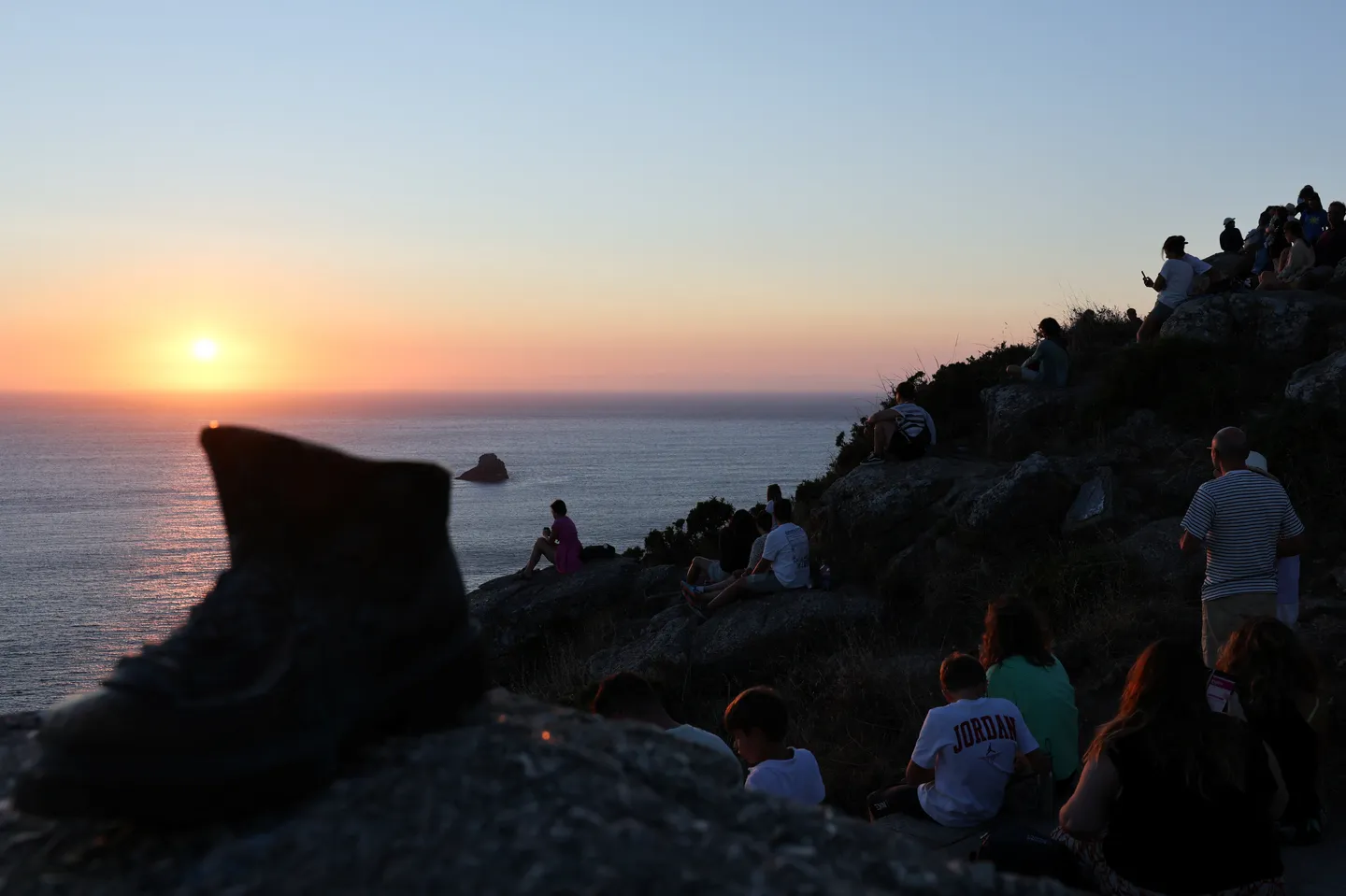
While nearly 1 billion people reside in areas where at least a partial eclipse may be visible, approximately 15 million are situated directly within the narrow band of totality. Cities such as Reykjavik, Leon, Zaragoza, Bilbao, and Valencia are among those expected to experience the full effect. In Spain, the phenomenon will occur low on the western horizon just before sunset. For much of Western Europe, coverage will exceed 90 percent, with areas near Madrid and Barcelona approaching 99 percent. This event represents the first total solar eclipse visible from mainland Europe since 1999 and the first to cross the Iberian Peninsula in over a century, while Iceland will not see another total eclipse this century.
Beyond the visual spectacle, the event provides a significant opportunity for scientific research. Total eclipses allow for the observation of the Sun’s outer atmosphere, or corona, which is typically obscured by the Sun’s intense glare. Researchers intend to utilize this alignment to investigate solar activity that influences space weather. NASA-funded teams plan to monitor the Moon’s shadow using a high-altitude research jet and scientific balloons launched from Iceland to analyze how the sudden loss of light impacts the atmosphere.
Kelly Korreck, NASA’s eclipse programme manager, noted that the unique perspective offered during a total eclipse allows scientists to study the corona in ways impossible from other locations in the solar system. She emphasized that the Sun’s influence on daily life, satellites, and astronauts makes this a vital moment for advancing scientific understanding. Researcher Amir Caspi added that each eclipse provides fresh data, noting that because the Sun is constantly changing, every event offers the potential to observe previously unseen phenomena.
Public safety remains a primary concern for officials. Experts warn that looking directly at the Sun without certified protection is dangerous, and standard sunglasses are insufficient. NASA recommends using eclipse glasses that adhere to the ISO 12312-2 international safety standard or employing indirect methods like pinhole projectors. Only during the brief window of 100 percent totality, when the Sun is entirely obscured, is it safe to remove eye protection to view the corona.
Photographers are also urged to take precautions, as pointing a smartphone or camera directly at the Sun during partial phases can permanently damage sensors. Protective solar filters must be placed over lenses throughout all partial phases, with only the total phase allowing for unfiltered photography. Telescopes and binoculars similarly require professional-grade solar filters to prevent equipment damage.
The event has spurred significant local activity, particularly in Iceland. The Iceland Eclipse festival in Hellissandur, located on the Snaefellsnes Peninsula, will feature live music and presentations from astronauts and scientists. Furthermore, tourism in the region has surged, with cruise lines scheduling specific voyages along the Iceland-Spain corridor and hotels near the path of totality reporting high occupancy rates.
Adding to the celestial significance, the eclipse coincides with the annual Perseid meteor shower, offering skywatchers an additional astronomical event to observe overnight. Partial views of the eclipse will also extend to parts of Alaska, northern and eastern Canada, and the northeastern United States.
Only during the brief window of 100 percent totality — when the Sun is completely covered — can eye protection and camera filters safely come off to capture the glowing corona.
Can you photograph the eclipse safely with your phone?
Cruise operators have scheduled voyages along the Iceland-Spain corridor, and tourism authorities have published viewing guides as hotels and rental cars near the path have filled up in recent months.