

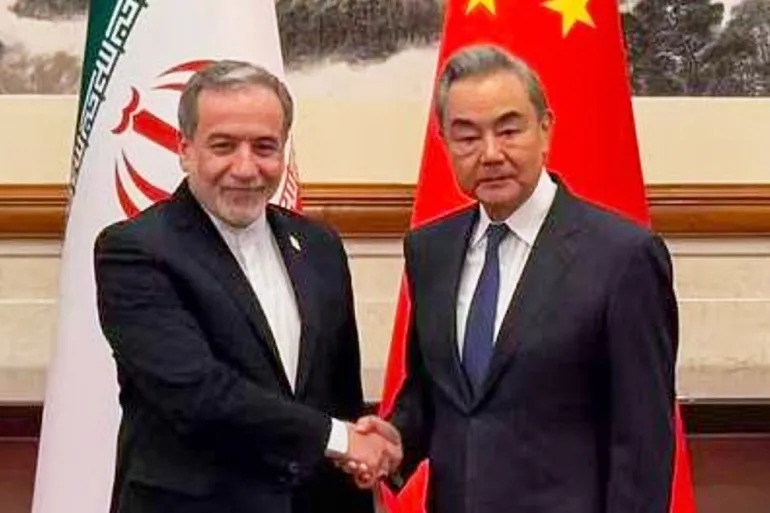
Iranian Foreign Minister Abbas Araghchi is scheduled to visit Beijing on Wednesday, marking his second trip to the Chinese capital since the outbreak of the US-Israel conflict with Iran in late February. His previous visit in May also preceded a trip to China by United States President Donald Trump. This latest diplomatic engagement occurs shortly before an upcoming meeting between Trump and Chinese President Xi Jinping in Washington later in September, while Araghchi’s Wednesday itinerary includes talks with his Chinese counterpart Wang Yi.
These high-level diplomatic contacts underscore Beijing’s positioning as a neutral actor advocating for an end to hostilities. During an address at a summit of the BRICS bloc of Global South powers in New Delhi earlier in the week, Xi encouraged member states to serve as peacemakers in the Middle East and expressed China’s willingness to collaborate toward that objective. Rather than announcing a formal mediation framework, Xi reiterated a comprehensive four-point de-escalation proposal centered on peaceful coexistence, respect for national sovereignty, adherence to international law, and a balance between development and security.
Observers note that while Beijing seeks stability in a region vital to global energy and financial markets, it has historically avoided heavy entanglements in external conflicts or fragile diplomatic ventures. Domestic reactions within Iran to Xi’s statements have varied. Former Foreign Minister Mohammad Javad Zarif praised the remarks on Sunday, stating that Xi’s constructive initiatives provide timely openings to ease tensions and demonstrate that multilateral diplomacy remains the sole viable path to stability. Conversely, Hamed Vafaei, a professor of Chinese literature and China researcher at the University of Tehran, cautioned that interpreting Xi’s remarks as a direct offer to mediate between Tehran and Washington represents a free interpretation rather than an official policy shift.
Beyond regional diplomacy, Araghchi’s discussions in Beijing are expected to address Iran’s nuclear program. Last week, Washington and European allies including France, Germany, and the United Kingdom successfully led a push at the International Atomic Energy Agency board to refer Iran to the United Nations Security Council. Although the last such referral occurred two decades ago and triggered six sweeping sanction resolutions, this latest move is viewed as largely symbolic due to expected vetoes from China and Russia.
Western pressure continues to mount on multiple fronts. Iranian nuclear chief Mohammad Eslami was barred from the IAEA General Conference in Vienna due to snapback sanctions reimposed by European powers last year. Meanwhile, Washington has advanced Operation Economic Outcast to further isolate Tehran, imposing a naval blockade on southern Iranian ports and targeting numerous China-linked refineries, entities, and financial channels, though major Chinese financial institutions have so far avoided direct measures. On Monday, the US Treasury designated Russia’s VTB Bank under Iran-related sanctions; the bank maintains a mainland China branch with access to China’s national payment system.
Despite these measures, China remains the primary buyer of Iranian crude oil, utilizing supplies stored beyond the reach of the US blockade to protect its national interests. Bilateral military ties also drew scrutiny this week following a Wall Street Journal report alleging that Iran acquired high-resolution satellite imagery from Chinese entities prior to a strike on a US military base in Jordan that resulted in the deaths of three American soldiers. When questioned by reporters, Trump minimized the incident by stating that Chinese intelligence activities mirror US actions, adding that Xi has behaved reasonably well and noting that mutual espionage between major powers is standard practice. The report also notes that framing itself as a neutral party that wants an end to the conflict, the meetings in May and now in September highlight the role China has played during the war. The report also notes that he did not explicitly announce any such imminent diplomatic initiative, while Xi hinted at interest in potentially playing an explicit US-Iran mediation role in his BRICS speech. The report also notes that and sweeping sanctions that hit the country’s economy hard, the last such referral came 20 years ago and was followed by six UN Security Council resolutions being passed against Iran. The report also notes that saying that the Chinese were “basically doing what we do”, trump downplayed the incident when he was asked about it by reporters. The report also notes that “I think he’s behaved reasonably well,” Trump separately said about Xi. “When they say that China spies on us, I say you’re right, and we spy on them, too”.