

The United Arab Emirates is increasingly defining its economic strategy through a “Quality Economy” model, where high standards of living, robust public infrastructure, and exceptional urban planning serve as the foundation for sustainable national growth. By prioritizing the human experience, the nation has effectively transformed social wellbeing into a significant competitive advantage that attracts talent and sustains long-term capital.
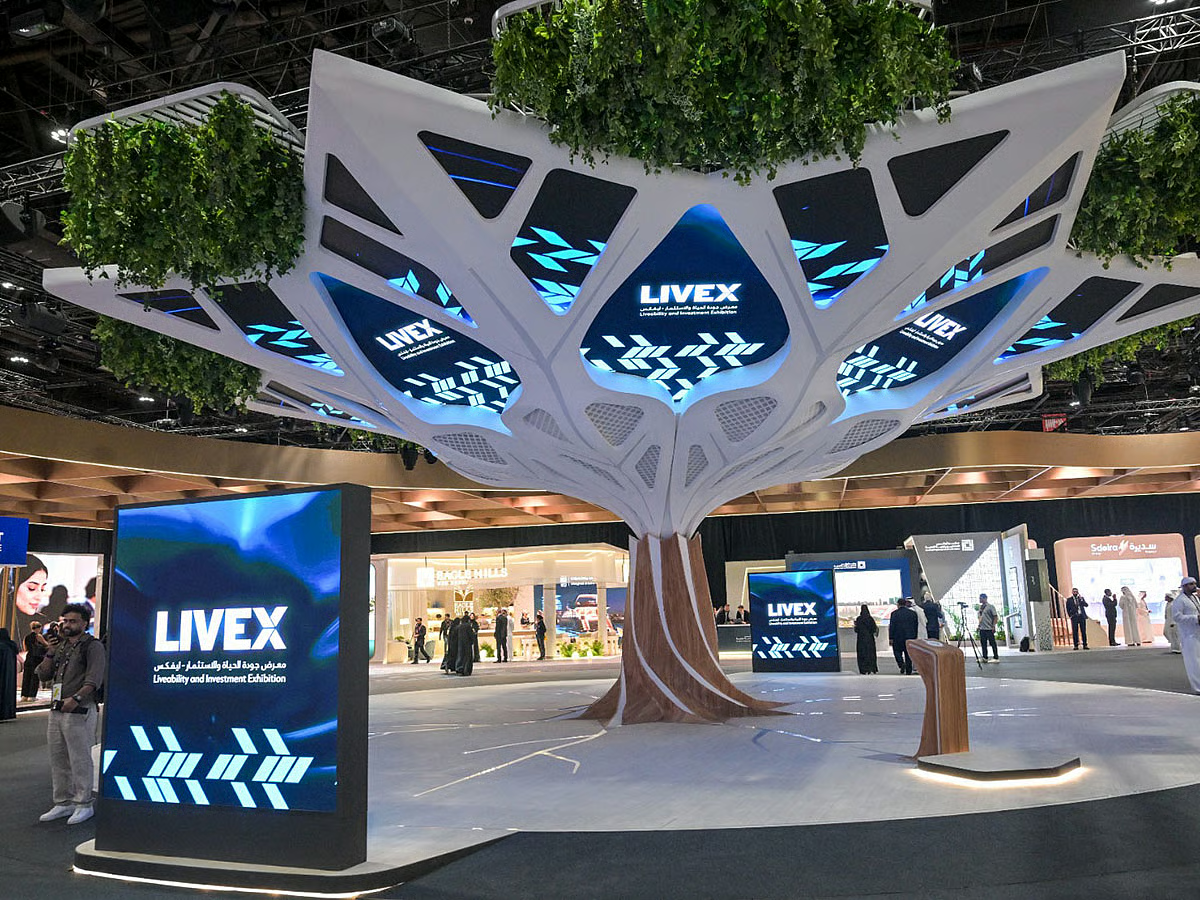
This philosophy was center stage at the inaugural Liveability and Investment Exhibition (LIVEX 2026), held in Abu Dhabi from September 29 to October 1. The event served as a major indicator of investor confidence, drawing approximately 26,500 visitors from 50 nations, including over 1,500 investors. The summit concluded with the announcement of more than 50 initiatives and agreements, representing a total value exceeding AED 150 billion, underscoring the massive scale of capital alignment with the UAE’s developmental vision. Work, grow, innovate and belong, and economic value will follow, the UAE’s most compelling investment story begins with a clear principle: create exceptional conditions for people to live. It gives people greater certainty to participate in community life and plan their futures.
Public safety remains a cornerstone of this liveability dividend. For the tenth consecutive year, Abu Dhabi has been ranked the world’s safest city by Numbeo, while nationwide data from Gallup’s latest Global Safety findings indicate that 90 percent of residents feel secure walking alone at night. This sense of security is not merely a social benefit; it acts as a catalyst for business activity, talent attraction, and the growth of long-term residency, providing families and entrepreneurs with the confidence to establish roots in the region. Safety plays a central role in this equation. According to across the UAE, Gallup’s latest Global Safety findings showed that 90 per cent of people, Feeling safe walking alone at night.
Urban development is now deeply integrated with this commitment to quality. The Department of Municipalities and Transport introduced the Livability by Design Framework in 2026, which mandates the inclusion of walkability, accessibility, and high-quality public-realm design in all developments accommodating more than 2,000 residents. These strategies have produced measurable success, with average district-completion scores rising from 67 percent in 2023 to 81 percent by 2025.
This progress has been bolstered by over 60 projects valued at Dh12 billion, encompassing the creation of more than 200 parks, 283 kilometers of cycling tracks, 120 kilometers of walking paths, 24 schools, 28 community majlises, and 21 mosques. Recognizing the success of these initiatives, an additional Dh42 billion has been allocated to further expand the strategy, ensuring that infrastructure continues to evolve alongside the growing population.
The impact of this approach is clearly reflected in the real estate sector. During the first half of 2026, the market saw Dh117 billion in total real estate transactions, marking a 112 percent year-on-year increase in value. Foreign direct investment reached Dh13.8 billion, with participation from investors of 116 different nationalities, while residential unit sales alone accounted for Dh70.4 billion. Furthermore, the emirate logged approximately 233,000 active residential lease contracts with a combined value of Dh9.3 billion.
Beyond physical construction, the UAE is fostering innovation through smarter governance and digital transformation. The Abu Dhabi Real Estate Centre has partnered with Hub71 to bridge the gap between sector-specific challenges and technology startups, encouraging pilots and solution validation in PropTech, smart mobility, and urban analytics. This synergy between government policy and private-sector innovation helps reduce regulatory friction and improves decision-making.
By cultivating an environment where high-quality healthcare, education, and government services are readily available, the UAE creates a cycle of productivity. Skilled professionals drawn to these opportunities stimulate local spending, which in turn fuels further development in retail, entertainment, and housing. As the country shifts from being a temporary investment destination to a long-term home for families and businesses, this focus on liveability ensures that communities remain resilient, attractive, and economically vibrant. Supports consumer demand, attracts talent, expands employment and reinforces demand for housing and services, longer residency strengthens communities.