

Israeli Prime Minister Benjamin Netanyahu has moved quickly to integrate an under-investigation mid-air cockpit struggle into his reelection campaign. By framing the incident as a terrorist threat that only a seasoned security-focused leader can address, the Prime Minister is seeking to bolster his image ahead of the upcoming October 27 general election. Netanyahu did not wait for the investigation to establish conclusively whether it was indeed a terrorist attack. Raising the spectre of a 9/11-like terrorist attack on Israel only four weeks before the general election, netanyahu has clearly overplayed the alleged hijacking plot. For the last three years, Israel has become an international pariah under Netanyahu’s premiership as it waged a genocidal war in Gaza, besides the on-again, off-again military offensives in Lebanon and Iran.
The incident occurred on September 30, when a flydubai flight traveling from Dubai to Tel Aviv was forced to divert to Saudi Arabia. Initial reports indicate a violent confrontation took place in the cockpit, where the co-pilot, identified by officials as an Omani national, allegedly stabbed the captain, an Indian national named Smit Machchhar. The aircraft, carrying 174 passengers—the majority of whom were Israeli citizens—experienced a rapid descent of 17,000 feet within minutes. The situation was eventually stabilized after passengers intervened to restrain the co-pilot, allowing a second pair of pilots to land the plane safely.
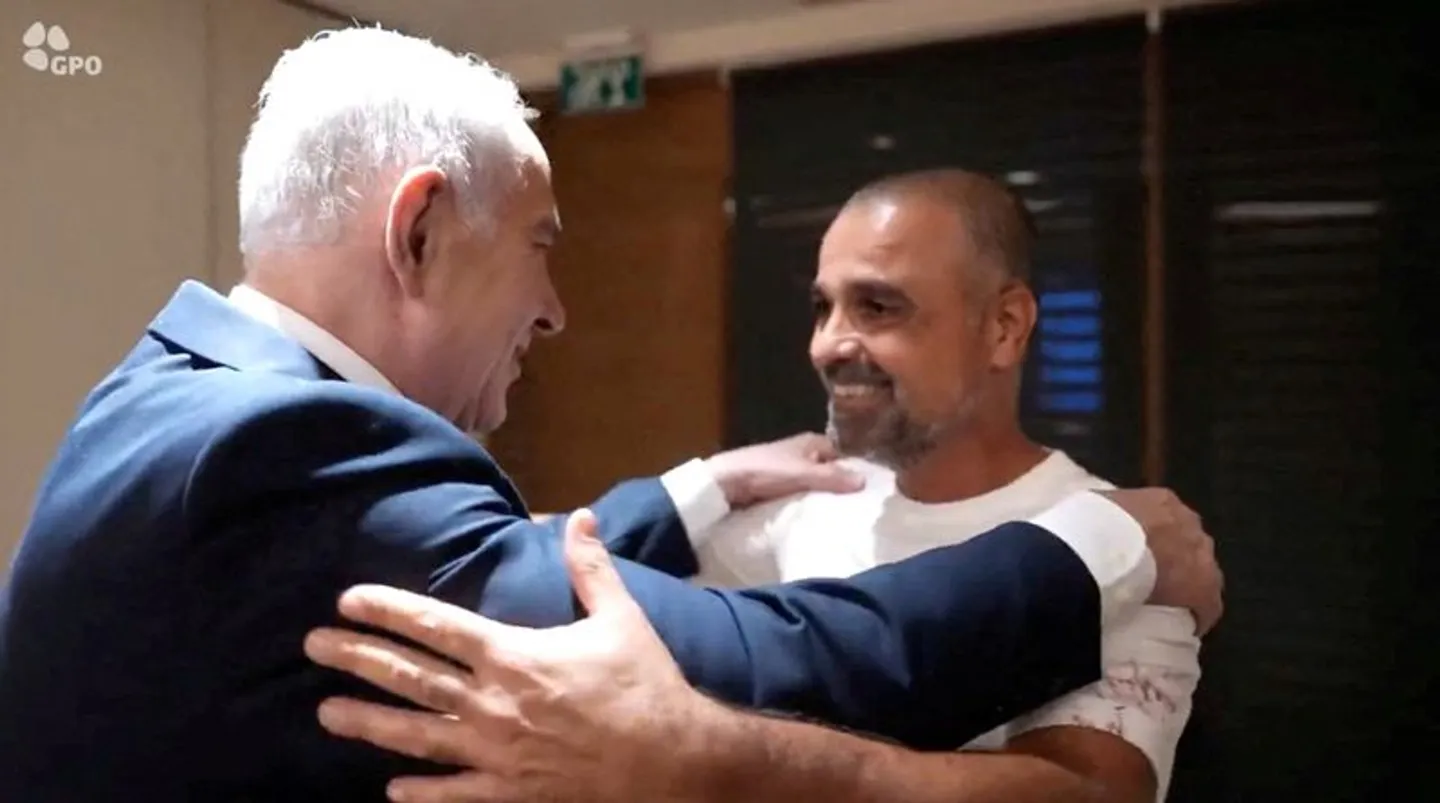
Despite the fact that authorities have not reached a final conclusion regarding the circumstances of the event, Netanyahu publicly characterized it as an attempted 9/11-style disaster, explicitly linking it to what he termed Islamist radicalization. He claimed, without providing definitive evidence, that the co-pilot had undergone specific indoctrination. Furthermore, at Ben Gurion Airport, the Prime Minister greeted one of the returning passengers, who was wearing blood-stained clothing, and publicly lauded him as a hero. Yet, Netanyahu has already described the incident as an attempted ‘9/11 disaster’ and linked it to (so-called) Islamist radicalisation,” she says. Claiming that the attacker had tried to crash the plane with the passengers on board, netanyahu immediately called the episode a “serious security incident”. He claimed that the wounded captain and the Israelis who stormed the cockpit had “managed to prevent a 9/11 disaster”.
Tugce Ersoy-Ceylan, a professor at Izmir Katip Celebi University, observed that these actions reflect a deliberate attempt by the Prime Minister to mold a security-related crisis into a political tool. According to Ersoy-Ceylan, while the investigation is incomplete, Netanyahu’s rhetoric seeks to project an aura of vigilance. However, his traditional image as ‘Mr. Security’ remains strained following the October 7, 2023, cross-border attacks, which critics argue highlighted significant failures in the state’s defense apparatus. But analysts say Netanyahu’s security credentials have taken a hit after Hamas’ cross-border blitz on October 7, 2023, helping internationalise the issue of Palestinian suffering at the hands of Israel.
The political opposition has responded sharply to these maneuvers. Former Prime Minister Yair Lapid accused the current leader of engaging in cheap political theater at the expense of national security. Meanwhile, another former premier, Naftali Bennett, criticized Netanyahu’s approach, suggesting that his rhetoric resembles the lack of accountability seen during the onset of the October 7 conflict. Bennett questioned the Prime Minister’s proactive response, noting that if there were genuine prior knowledge of a threat, he should have acted sooner.
Academic analysis suggests the incident serves as a potential remedy for a leader who has faced international isolation. Ozden Zeynep Oktav, head of the international relations department at Istanbul Medeniyet University, noted that the timing is advantageous for a leader needing to shift the narrative away from his recent reception at the UN General Assembly, where he was heavily criticized by nearly 70 nations. Some analysts have even raised questions about the sequence of events, pointing to the absence of deployed oxygen masks during the rapid descent and the limited number of injuries among passengers.
Skepticism has also emerged from international observers and regional media. Iranian state broadcaster Press TV alleged the incident was a false-flag operation designed to provoke tensions with Tehran. Meanwhile, US President Donald Trump addressed the incident with notable caution, stating he was recounting the story as it was told to him by the Israeli Prime Minister, rather than confirming the details himself.
The broader political impact remains uncertain. While the far-right bloc led by Netanyahu struggles in pre-election polls—showing little prospect of securing a 61-seat majority in the 120-member Knesset—the incident underscores the extreme polarization of the electorate. For many voters, the event may serve as a reminder of past security shortcomings rather than a showcase of current competence. As the election approaches, the incident remains a central point of contention, with Netanyahu pushing a narrative of external threats while his rivals emphasize the state’s internal vulnerabilities.