

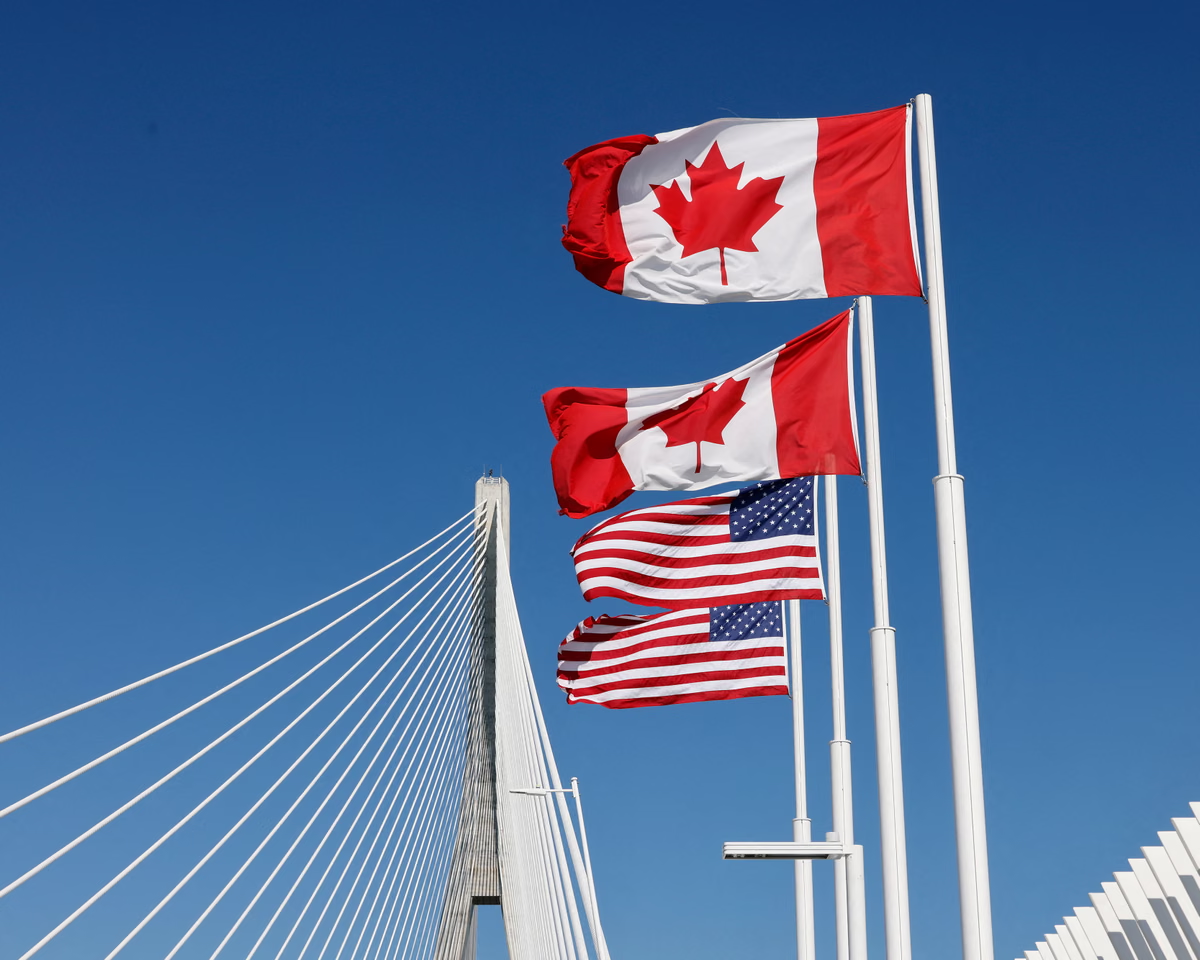
For residents of International Falls, Minnesota, and Fort Frances, Ontario, the international border is less a barrier and more a line through a shared community. Separated by the Rainy River, these two towns have long functioned as a single social unit, with families, friends, and business interests flowing freely across the toll bridge. However, the current trade war initiated by the Trump administration is testing these deep-rooted connections, leaving local leaders and business owners to navigate an increasingly hostile political climate.
Tom Reid, who operates a duty-free shop in Fort Frances, illustrates the personal toll of the current tensions. While he previously crossed the border frequently for errands—such as visiting the woman who cuts his hair in International Falls, whose sister is married to his wife’s cousin—he now limits his trips. Reid has shifted his purchasing habits, opting to buy Canadian goods whenever possible. Behind the register of his shop, where a Canadian flag hangs, he admits he has little choice but to adapt to the shifting economic reality, noting that the uncertainty surrounding the trade dispute makes long-term planning difficult for local merchants.
The economic impact is becoming increasingly visible on both sides of the river. American business owners report a decline in Canadian customers, while retailers are struggling with the unpredictable costs of tariffs on imported goods. Although Canada’s retaliatory tariffs were implemented recently, the full weight of these measures has yet to be fully realized in local pricing. Meanwhile, Ontario Premier Doug Ford has ordered the removal of American liquor from government-run stores, further signaling a push to prioritize domestic products.
Andrew Hallikas, the mayor of Fort Frances, emphasizes that while residents maintain a strong affinity for their American neighbors, there is palpable anger regarding the current political rhetoric. Hallikas expressed deep frustration over President Trump’s suggestions that Canada should become the 51st US state, calling the idea offensive. He stated clearly that Canada has no intention of such a merger, noting that the bullying of a long-standing ally has left many Canadians feeling irate. The mayor stressed that the desire for a resolution is universal, as the community fears the long-term damage this discord may inflict on their historical relationship.
International Falls Mayor Drake Dill echoes these concerns, describing the current situation as a “donnybrook” that resembles a rift between two best friends who have hunted, fished, and vacationed together for years. Dill, who previously lived in Canada for 11 years and maintains many Canadian friendships, likened the political fallout to driving a nail into a fence; even if the fence remains standing, the damage leaves a permanent mark. He acknowledged that while he cannot influence the president’s agenda, the ongoing uncertainty is deeply frustrating for those who rely on a stable cross-border economy.
The social friction is evident in daily interactions. During an interview, a Fort Frances resident interjected to express his anger, noting that he is an American living in Canada who now feels uncomfortable displaying an American flag due to the president’s actions. Similarly, local business owners like those in the craft sector report that Canadian customers are becoming more selective and cautious about their spending habits. While some residents attempt to keep politics out of their personal lives, the political climate has inevitably seeped into the local atmosphere, with fewer visitors seen wearing political gear like “Make America Great Again” hats compared to previous years.
State Senator Grant Hauschild, a Democrat representing a significant portion of Minnesota’s border region, has heard from numerous businesses suffering from the decline in cross-border commerce. He expressed hope that the relationship will eventually return to normal, though he admitted that the current chaotic period is a source of genuine fear for the region’s future. The two towns, which historically grew around the paper mill industry, remain tethered by a century-old bridge that has served as a conduit for generations of cooperation.
Despite the political strain, leaders remain committed to the friendship declared in a 2025 joint statement. However, they acknowledge that local diplomacy has limited power to mitigate the economic consequences of decisions made over a thousand miles away in Washington. For now, residents on both sides of the Rainy River are simply hoping for a swift end to the trade war, waiting for a truce that would allow their interconnected economies to recover and their long-standing community bonds to mend. The report also notes that dine, go bowling, take their kids to sports and visit each other, people cross the border frequently to shop. The report also notes that and his derogatory comments about their country, has Canadians – known for their politeness – angry, but Trump’s trade war against the US’s northern neighbor. The report also notes that and, in an unusual show of patriotism, encouraging consumers to “ buy Canadian instead ”, they’re shopping less at US businesses. The report also notes that and the leaves starting to change into yellows and oranges, the two towns are quieter, with tourist season winding down. The report also notes that it was the latest heated battle between the two countries in the last nearly two years. The report also notes that and signed a joint declaration in 2025 affirming that friendship after Trump retook the White House, the mayors of the two towns call each other friends. The report also notes that states and countries fly outside the town offices in Fort Frances, the flags of both towns. The report also notes that nothing – that a local official can do to blunt the economic effects of slipshod tariffs put in place by one man, more than a thousand miles away in Washington, but there’s only so much – and really.