

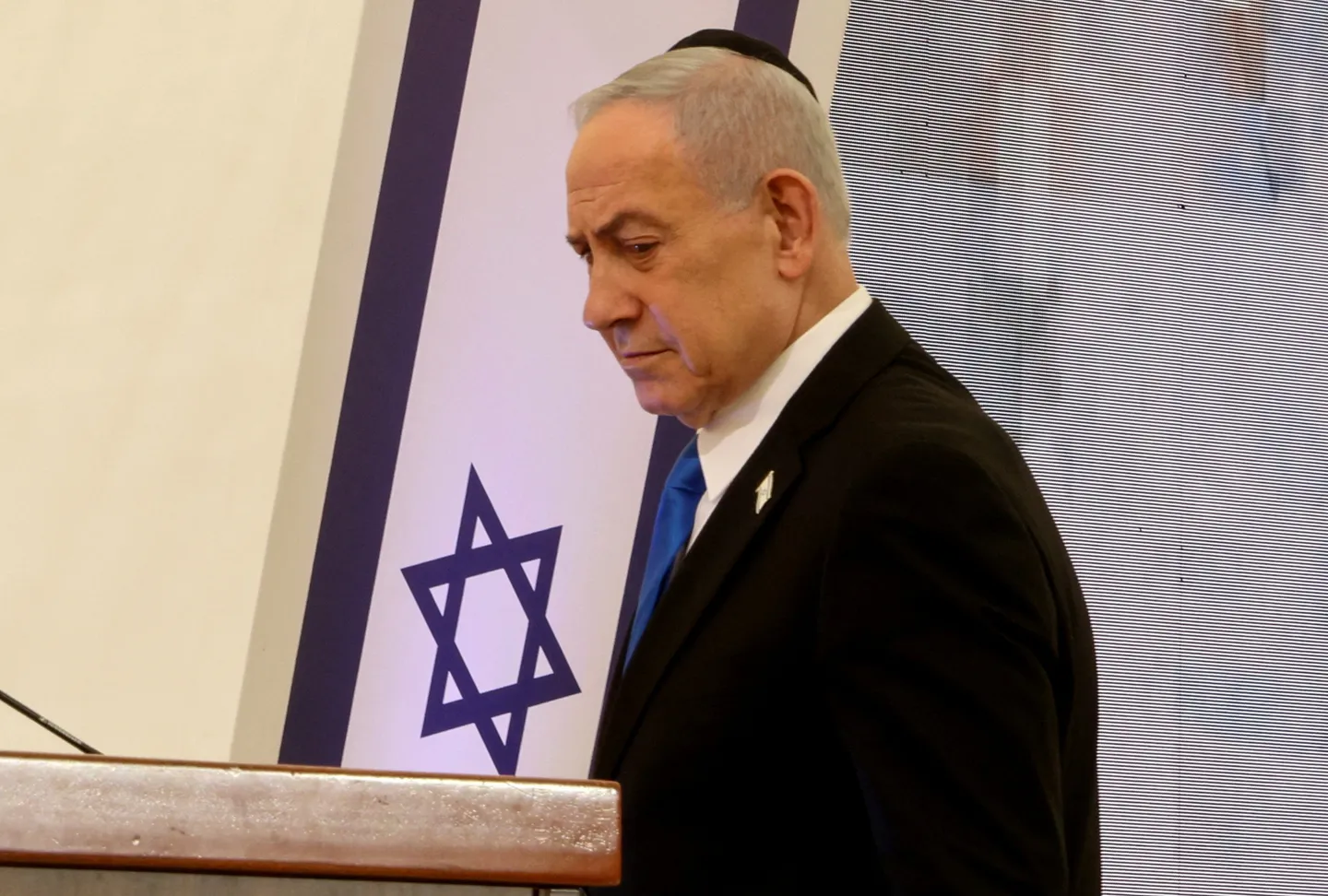
Israel is bracing for a pivotal general election next month, as current polling data points toward a significant parliamentary stalemate. Public surveys indicate that Prime Minister Benjamin Netanyahu’s ultra-right coalition is unlikely to secure the 61-seat majority required to control the 120-member Knesset. Simultaneously, the Zionist opposition, headed by former military chief Gadi Eisenkot and ex-Prime Minister Naftali Bennett, is also projected to fall short of the necessary threshold.
This mathematical reality places the spotlight on Arab parties, which represent Palestinian citizens of Israel—a group comprising one-fifth of the nation’s 10.3 million people. According to a recent Channel 12 survey, Netanyahu’s allies are tracking toward 52 seats, while the anti-Netanyahu camp is expected to reach 57. With Arab parties projected to win approximately 11 seats, they could emerge as the decisive factor in government formation, despite being historically marginalized by mainstream Zionist factions.
The Israeli electoral system operates on proportional representation, where voters select a party list rather than individual candidates. To ensure they clear the 3.25 percent vote threshold required for parliamentary entry, smaller parties often form alliances. Currently, two main Arab-majority entities are contesting the October vote: the Joint List, an alliance of Hadash, Ta’al, and Balad, and the United Arab List, or Ra’am, led by Mansour Abbas.
Analysts suggest that while these parties are essential for breaking the deadlock, their formal integration into a cabinet remains highly improbable. Gokhan Batu, an analyst at the Centre for Middle Eastern Studies in Ankara, notes that there is almost no prospect of Arab parties joining a government formally, either individually or through a joint list. While Ra’am clearly aligns with the opposition, the political climate remains hostile to such partnerships.
The reluctance is mutual and deeply rooted. Nimrod Goren, founder of the Israeli Institute for Regional Foreign Policies, observes that while Arab parties are motivated by the desire to unseat Netanyahu, they are not considering supporting his bloc. However, the Jewish-led opposition remains divided on whether to accept support or even abstentions from Arab factions to sustain a minority government. Following the October 7, 2023, attacks, the political appetite for including Arab parties in any coalition has diminished significantly.
Historical precedent adds complexity to these dynamics. Ra’am made history by joining the 2021-22 Bennett-Lapid government, but the move became a significant political liability for that administration. Netanyahu himself has previously courted Ra’am for support, illustrating that the barrier is often more about public perception and electoral base management than rigid ideological purity. Despite his previous coalition’s reliance on Ra’am, Bennett has explicitly stated that any future government he leads will be composed solely of Zionist parties, a sentiment echoed by Yisrael Beitein leader Avigdor Lieberman.
There is a common perception that Arab parties might leverage their position to demand concessions regarding Gaza or the occupied West Bank. However, experts argue this is unlikely. Abbas justified his previous coalition participation primarily through the lens of securing social, economic, and infrastructure benefits for Arab citizens. As Batu points out, a coalition supported by Ra’am would likely not produce meaningful policy shifts on the Palestinian territories, as these issues are not the central focus of the party’s platform.
Ultimately, the path forward remains fraught with tension. While some Arab politicians have expressed a willingness to do whatever is necessary to facilitate a change in leadership, the lack of consensus among Zionist parties regarding Arab cooperation ensures that the post-election period will be defined by complex negotiations rather than simple parliamentary arithmetic. The report also notes that seen as one of the most consequential in the country’s history, the numbers game has intensified in the run-up to next month’s general election in Israel. The report also notes that this shows the Arab parties – long treated by Zionist parties as radioactive – may hold the key to government formation after the October elections. The report also notes that a party winning 10 seats means the first 10 names on that party’s list will become members of the Knesset. The report also notes that sometimes, several parties make an alliance and contest polls under a “joint list”. The report also notes that the strategy helps small parties reduce the risk of falling short of the 3.25 percent vote threshold – the minimum percentage of total votes that a party must receive to enter the Knesset. The report also notes that the opposition is split on the issue,” Goren says, at the moment. The report also notes that zionist parties don’t usually treat Arab parties like ordinary coalition partners.