

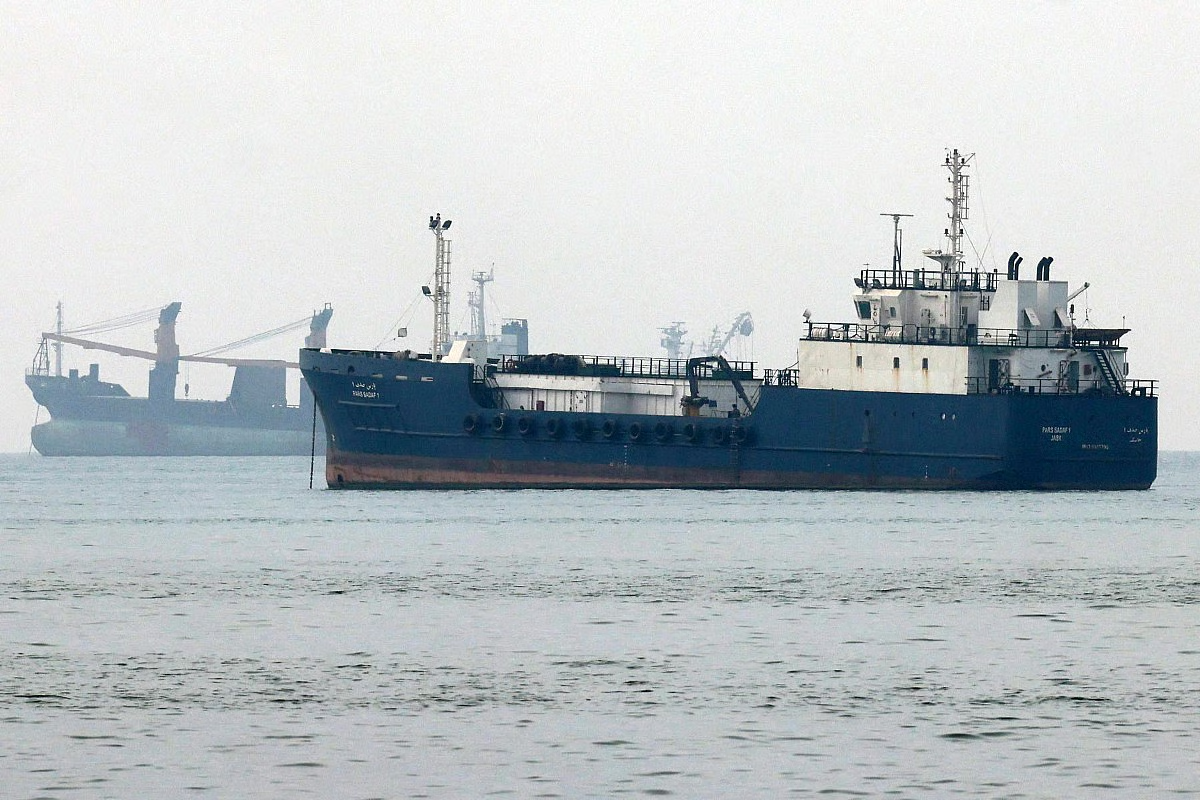
Conflict Developments as of September 9
The standoff between Washington and Tehran has reached a critical juncture. On Wednesday, September 9, US forces destroyed five Iranian crude oil tankers in response to repeated attempts by the Islamic Revolutionary Guard Corps (IRGC) to strike a US Navy warship with ballistic missiles over the preceding 48 hours. US Central Command (CENTCOM) confirmed the destruction of the vessels—identified as the Kaviz, Charminar, Horizon 1, Riesco, and Derya—stating that crews were ordered to abandon ship before the strikes. No American personnel were harmed in the earlier Iranian provocations, and CENTCOM explicitly denied claims that any US warships had been damaged.
Retaliatory Strikes and Regional Impact
In retaliation for the destruction of its tankers, the IRGC launched ballistic missiles at a base utilized by US forces near Al Azraq, Jordan. Jordanian air defenses successfully intercepted 18 of the 20 missiles fired, with the remaining two landing in unpopulated areas causing no casualties. A US official confirmed that all American personnel in the area were accounted for, characterizing the Iranian offensive as ineffective.
Maritime and Energy Market Consequences
The Strait of Hormuz has again become the focal point of the conflict, with shipping severely restricted. Preliminary data indicates that only six vessels were recorded crossing the strait with active transponders. The IRGC has threatened to expand its restricted maritime zones and warned that any further US military action would trigger a significantly more intense response. Consequently, Brent crude prices surged past $100 a barrel for the first time since late July, reaching $100.19 before fluctuating.
Regional Flashpoints and Diplomatic Stance
- Yemen ConflictThe Iran-backed Houthis reported 32 airstrikes by Saudi-led forces across four Yemeni provinces, while Saudi authorities noted 73 attacks on their energy infrastructure and southern cities.
- UAE SolidarityThe UAE has formally condemned the Houthi attacks on Saudi civilian and economic facilities, reaffirming its support for the Kingdom.
- Iranian DemandsDespite the escalation, IRGC spokesman Hossein Mohebi stated that the conflict could be resolved if Washington ends its threats, lifts the blockade on Iranian oil, and ceases interference in the region.
Flight and Travel Advisories
While the majority of flights from Dubai and Abu Dhabi continue to operate, passengers should anticipate ongoing disruptions. Selected services remain subject to delays or cancellations as airlines adjust to the volatile security environment. Specific disruptions include The report also notes that maritime security, oil prices and changing flight schedules remain among the key issues to watch this afternoon and evening, for UAE residents. The report also notes that also Read: Iran-US conflict enters dangerous new phase: How close is the region to wider war. The report also notes that iran retaliates at sea as tanker conflict escalates. The report also notes that with commercial shipping through the strategic waterway remaining severely constrained, the escalating exchange has again put maritime security around the Strait of Hormuz at the centre of the conflict. The report also notes that the latest exchange comes just as diplomatic efforts involving Iran and Oman had raised hopes of a temporary shipping corridor through the Strait of Hormuz. The report also notes that preliminary data cited by Reuters showed only six ships crossing the strait with their transponders switched on over the previous 24 hours. The report also notes that however, vessel movements have become increasingly difficult to track because many ships are making so-called “dark crossings”.
- FlydubaiCancellations on services to Bahrain.
- Air ArabiaCancellations on routes to Bahrain and Kuwait.
- Etihad AirwaysOngoing schedule adjustments.
- International CarriersSeveral global airlines continue to restrict or suspend operations into Dubai, citing a combination of regional security concerns and operational requirements.