

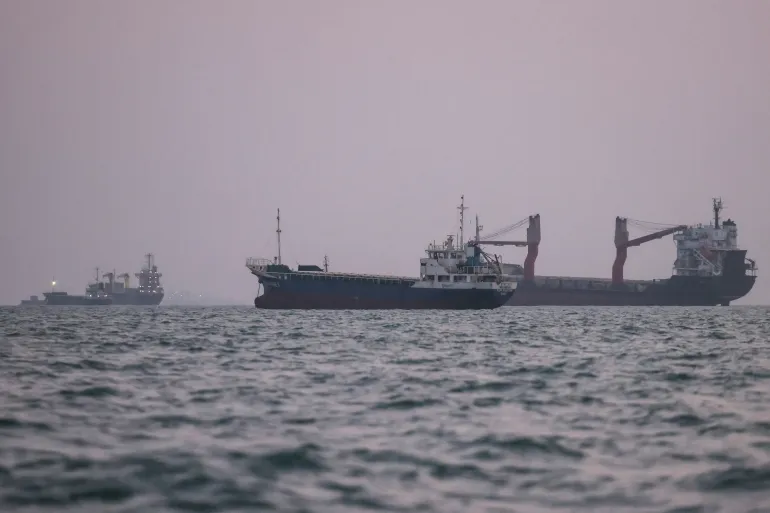
The conflict between the United States and Iran has reached a new level of intensity over the past 24 hours, characterized by a series of retaliatory strikes near the Strait of Hormuz. Washington has targeted three Iranian oil tankers, while Tehran has responded by attacking vessels and launching ballistic missiles at American warships patrolling the region.
Military analysts have described Iran’s decision to target two US aircraft carriers as a “calculated escalation.” This maritime confrontation is central to a broader struggle for dominance over the Strait of Hormuz, a critical global waterway that Tehran is increasingly using as leverage in the ongoing conflict. The fighting, which has persisted for months, shows little sign of cooling as both nations attempt to force the other into submission.
US Central Command (CENTCOM) confirmed its forces successfully struck three Iranian vessels, including a tanker located off Kharg Island—the primary hub for 90 percent of Iran’s crude exports prior to the war. Additional strikes hit a tanker near Jask and an unladen vessel in the Gulf of Oman after its crew received orders to abandon ship. These operations followed Iranian ballistic missile launches aimed at a US aircraft carrier and a navy destroyer, both of which CENTCOM reported successfully evaded the incoming fire with no personnel injuries.
Addressing the escalation, CENTCOM commander Admiral Brad Cooper issued a stern warning, stating, “If you shoot at two of our ships, we will impose an even higher economic cost — taking out three of yours.” Meanwhile, Iran’s Islamic Revolutionary Guard Corps (IRGC) justified its actions by accusing the US warships of harassing Iranian vessels and participating in an illegal naval blockade. The IRGC further warned all maritime traffic in the Gulf and near the Strait of Hormuz to avoid being “deceived” by US forces or attempting to transit unauthorized waterways, threatening that any such vessels would be targeted.
The economic stakes remain high as the US continues to enforce a naval blockade of Iranian ports, which began in April. Washington claims the Iranian tankers it struck were integral to a multibillion-dollar shadow network designed to fund the IRGC and its regional allies. Conversely, Iranian officials, including lawmaker Hassan Ghashghavi, have characterized the confrontation as an “existential war,” arguing that the US naval presence is a violation of international law.
Despite US claims that the Strait of Hormuz remains open and operational, data from the marine analytics firm Kpler indicates a significant decline in traffic. The 10-day average shows only 13 vessels crossing the strait daily, a sharp drop from the pre-war volume of 20 million barrels of oil per day. President Donald Trump has asserted that the US maintains “total control” over the strait, yet economic pressure persists as Treasury Secretary Scott Bessent implements new measures to target all of Iran’s revenue streams, including oil exports.
The ongoing disruption has triggered a surge in global energy prices. Brent crude futures reached $96.28 per barrel on Friday, the highest level since July 24. Domestically, the US is facing record-high fuel costs, with diesel prices hitting an unprecedented average of $5.85 per gallon. These economic pressures are arriving at a critical juncture for the Trump administration, as recent polling suggests that 63 percent of Americans oppose the war, and the president’s approval rating has fallen to 33 percent.
Analysts suggest the conflict is becoming a test of endurance. Ali Akbar Dareini of the Center for Strategic Studies in Tehran noted that Iran views the US attacks on its oil infrastructure as a major provocation that cannot go unanswered. He warned that Tehran is prepared to employ strategies to ensure oil prices exceed $100 per barrel, further complicating the global economic outlook as the standoff continues. The report also notes that the latest exchanges further dim hopes for a de-escalation through diplomacy as the US-Israel war on Iran has disrupted energy supplies and slowed economic growth around the world. The report also notes that so, what do we know about the latest tanker wars, and where is the conflict headed. The report also notes that “The Iranians did not only target two ordinary warships – they targeted a missile destroyer and, remarkably, an aircraft carrier … the backbone of the American campaign against Iran,” defence analyst Wolfgang Pusztai told. The report also notes that “This is a very, very significant development, and it doesn’t come as a surprise that the Americans retaliated.”. The report also notes that on Sunday, Iran claimed it struck an unmanned US vessel trying to enter the Strait of Hormuz, according to The Associated Press news agency. The report also notes that a source of revenue that has become more important since the US began blockading Iranian ports in April, iran has long relied partly on a shadow fleet to circumvent sanctions and sell oil.