

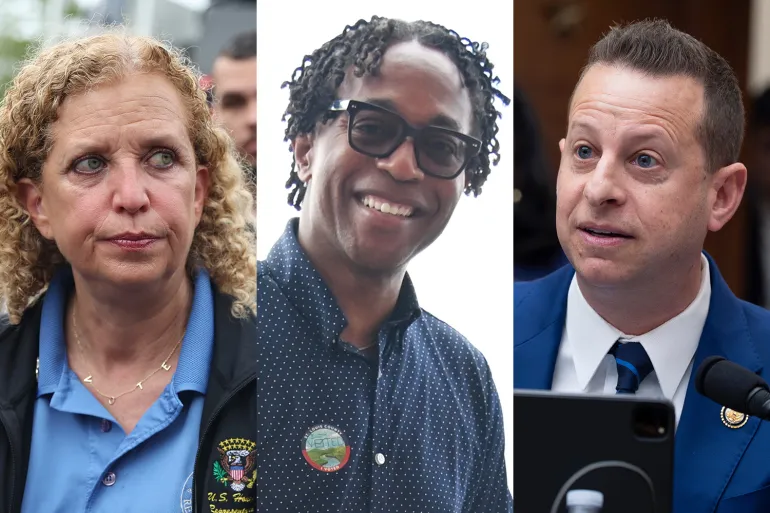
Three pro-Israel Democratic lawmakers have been appointed to significant leadership positions within the United States House Foreign Affairs Committee (HFAC). The selections, which include Representatives Jared Moskowitz of Florida, Debbie Wasserman Schultz of Florida, and Wesley Bell of Missouri, come at a time when the Democratic Party faces internal friction regarding its stance on US aid to Israel and the ongoing military campaigns in Gaza and Lebanon.
Representative Jared Moskowitz has been named the ranking Democrat on the committee’s Middle East and North Africa Subcommittee, replacing Representative Brad Sherman. Additionally, Wasserman Schultz and Bell have secured seats on the subcommittees for oversight and intelligence, and the Western Hemisphere, respectively. Notably, all three recently successfully defended their seats against progressive primary challengers who had specifically targeted their pro-Israel voting records.
The appointments have drawn sharp criticism from within the party, with detractors arguing that the leadership is out of touch with the evolving views of its base. Public opinion data appears to support this concern; a March poll from the Pew Research Center indicated that 60 percent of US adults held an unfavorable view of Israel, a significant increase from 42 percent in 2022. Furthermore, a survey conducted last month by CNN and SSRS found that 54 percent of respondents would support candidates who favor cutting aid to Israel, a figure that climbs to 70 percent among Democratic-leaning voters.
Representative Rashida Tlaib, the first Palestinian American elected to Congress, condemned the leadership’s decision in a statement. She asserted that a supermajority of Democratic voters want to end US support for what she described as Israel’s genocide in Gaza and the ongoing assault on Iran. Tlaib specifically criticized Moskowitz, labeling him a genocide denier and noting his public comments positioning himself to the right of JD Vance regarding the conflict with Iran.
Former deputy national security adviser Ben Rhodes also voiced strong opposition, characterizing the HFAC appointments as a clear signal of the party’s priorities. On social media, Rhodes argued that the leadership is disregarding voter concerns and warned that such moves leave constituents feeling ignored. The Council on American-Islamic Relations (CAIR) echoed this sentiment, with national deputy director Edward Ahmed Mitchell stating that the appointments demonstrate an intent to defy the will of the American people.
Despite the backlash, House Democratic leadership has defended the selections. Representative Gregory Meeks, who participated in the appointment process, praised the new members for their experience and expertise. In a social media post, Meeks expressed his intent to work closely with them to address national security and diplomatic challenges. He emphasized that their roles would help guide the committee’s work on regional peace and American diplomacy.
The political stakes are high as the US approaches the midterm elections, where the House majority remains contested. Should Democrats regain control of the chamber, Moskowitz would be positioned to chair the Middle East and North Africa Subcommittee. Moskowitz has consistently opposed placing conditions on military aid to Israel, stating that he intends to use his role to strengthen US-Israel relations and ensure foreign policy is grounded in what he termed security and reality. The report also notes that which is viewed in an increasingly negative light, particularly on the political left, that comes despite shifting attitudes among Americans towards Israel. The report also notes that particularly since the start of Israel’s genocidal war on Gaza in October 2023, polls have consistently suggested a decline in support for Israel among voters in the US. The report also notes that critics, including Congresswoman Rashida Tlaib of Michigan, have pointed to those numbers as evidence that the Foreign Affairs Committee appointments were misguided. The report also notes that including Senate nominee Abdul El-Sayed in Michigan, have scored upsets this year in the Democratic Party primaries, beating pro-Israel rivals, several critics of Israel. The report also notes that “Dems are counting on people not noticing how they approach governing,” Rhodes wrote on social media. The report also notes that the largest Muslim advocacy group in the US, echoed the assessment, writing that it was “deeply concerned” by the appointments, the Council on American-Islamic Relations (CAIR).