

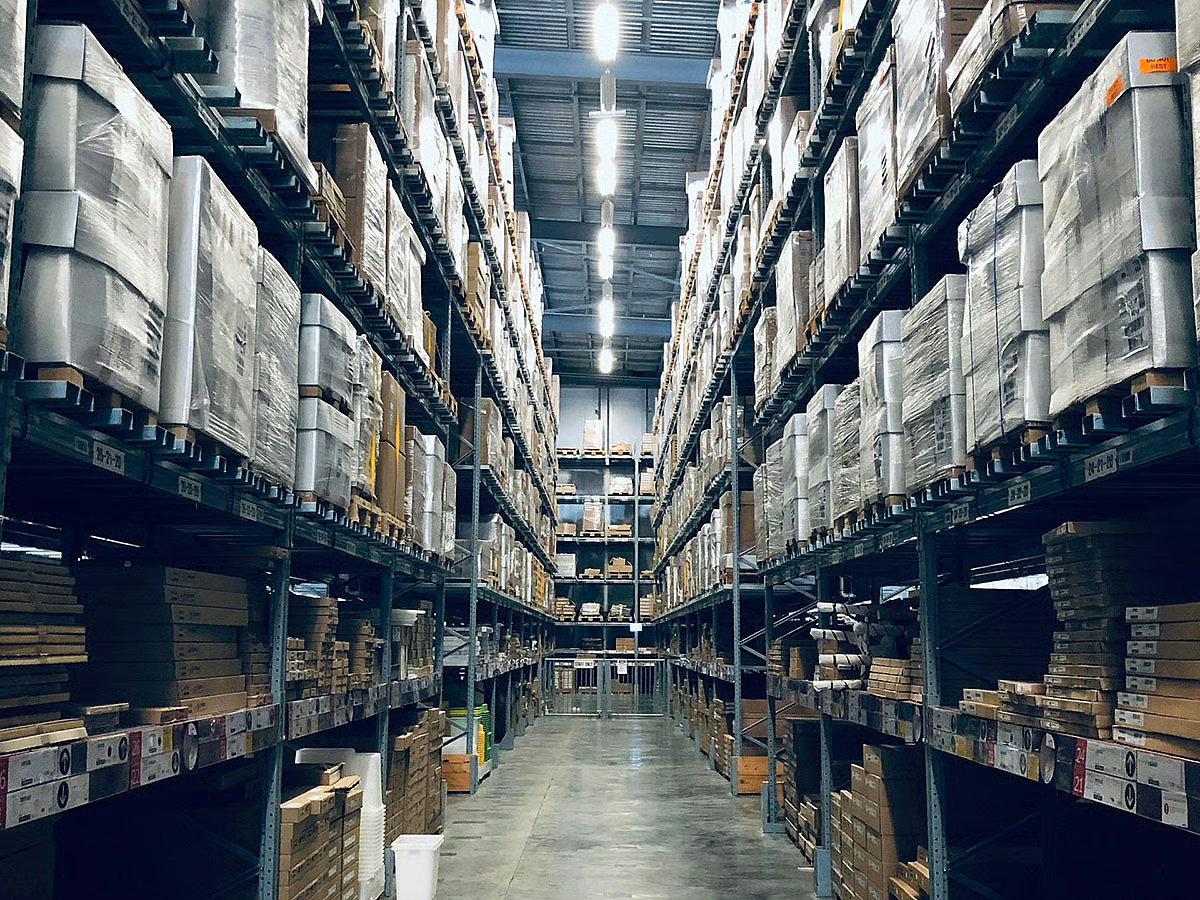
For decades, the warehouse was viewed merely as a cost center—a place to store inventory until it was needed. However, the rise of e-commerce and shifting consumer demands have transformed these facilities into the most strategic assets a business can manage. Today, the warehouse sits at the heart of customer experience, business resilience, and competitive differentiation.
The nature of logistics has shifted from moving bulk pallets to processing millions of individual, unique orders destined for specific customers. This evolution requires a fundamental rethink of warehouse design and operation. In an economy that increasingly favors regionalization, businesses are moving away from distant global distribution centers toward regional hubs that offer greater speed and reliability.
Across the Middle East, this trend is driving massive investment in logistics hubs situated near ports, airports, and free zones. These strategic locations allow companies to serve multiple markets with enhanced responsiveness. This is particularly vital as the region positions itself as a central player in the global supply chain, with the food logistics market alone projected to reach $100 billion by 2030.
In highly regulated sectors such as pharmaceuticals and healthcare, the margin for error is non-existent. Delivering the right product in the correct condition at the precise time is essential for patient safety and regulatory compliance. Consequently, speed is no longer the only metric of success; customers now evaluate brands based on the entire fulfillment journey.
While emerging technologies like artificial intelligence, robotics, and automation offer immense potential, they cannot fix weak operational foundations. Data serves as the true starting point for any successful modernization project. Organizations must ensure their customer information, operational data, and financial systems are clean and interconnected before investing in advanced digital tools.
Once these foundations are established, automation becomes a powerful enabler. It allows warehouses to handle peak seasons dynamically without the need for weeks of intensive manual recruitment and training. As these systems mature, employees can shift their focus toward high-value tasks like operations management, quality control, and exception handling.
The future of logistics will likely feature a hybrid model. Large regional distribution centers will continue to provide economies of scale, while smaller urban fulfillment facilities will grow in number to support same-day and next-day delivery expectations. This proximity to the end consumer is becoming a significant competitive advantage.
Securing the right logistics footprint has become increasingly difficult as suitable space in strategic areas grows scarce. Whether in free zones or hyperlocal urban centers, the location of a warehouse is now a critical strategic decision rather than just an operational one. Modern warehousing has become a specialized discipline that requires deep engineering expertise and sector-specific knowledge.
Ultimately, the smartest supply chains begin in the warehouse. As Fadi Azzi, Senior Global Director of Contract Logistics and Supply Chain at Aramex, notes, these facilities are no longer just places where products wait. They are the environments where customer promises are fulfilled and long-term business resilience is built.
The industry continues to evolve rapidly, with ongoing efforts to streamline cargo and trade flows. As global carriers reassess routes and insurance, and as new developments like Fujairah’s gasoline output emerge, the ability to maintain a flexible and data-driven warehouse operation will remain a defining factor for success in the modern economy. The report also notes that that view no longer reflects reality. The report also notes that customers are placing greater value on buying from authentic brands that have established local operations and can deliver quickly and reliably, while cross-border fulfillment remains important. The report also notes that also Read: Deliveries in Dubai prove resilience amid global disruptions. The report also notes that meeting these expectations requires organisations to fundamentally rethink how warehouses are designed and operated. The report also notes that even the most advanced automation projects struggle to deliver meaningful returns, without that foundation. The report also notes that where costs are concentrated and which repetitive processes genuinely benefit from automation, organisations should first understand where complexity exists. The report also notes that recruitment and training simply to accommodate temporary demand increases, today’s peak seasons often require weeks of workforce planning.