

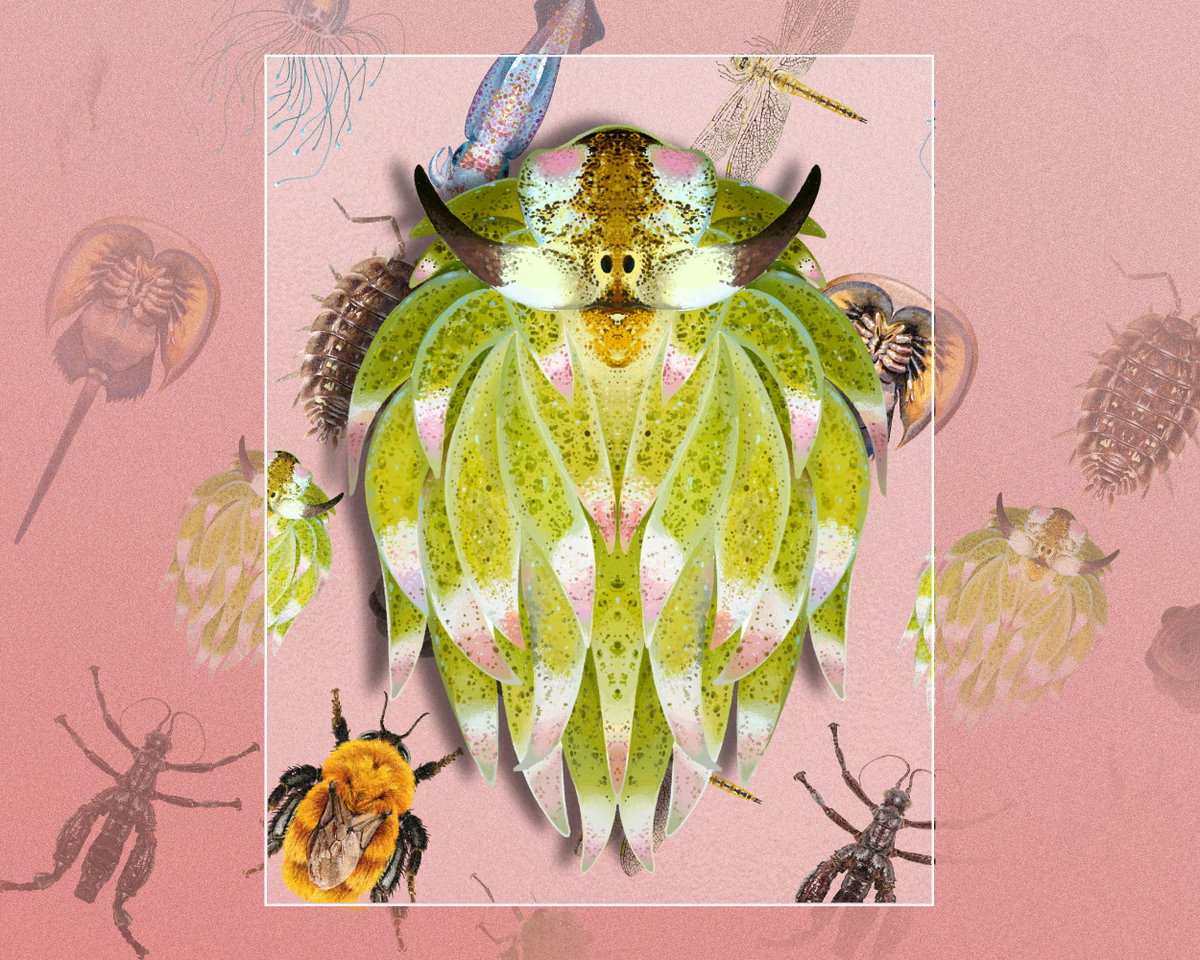
The leaf sheep, a neon green, solar-powered sea slug, has been crowned the winner of the 2026 Invertebrate of the Year competition. The creature, scientifically known as Costasiella kuroshimae, secured the top spot in a global ballot that saw hundreds of thousands of participants celebrate the diverse world of spineless animals.
Broadcaster and environmental campaigner Chris Packham announced the results, praising the slug’s unique biological traits. “It’s very, very beautiful but also very smart too,” Packham noted. “It harvests photosynthetic material from the algae it feeds upon and builds its own solar panels.”
This year’s contest was notably competitive, featuring a shortlist of 10 candidates selected from thousands of nominations submitted by readers, including scientists and children. The leaf sheep narrowly outperformed the world’s largest bumblebee, the moscardón (Bombus dahlbomii), which took second place. The bumblebee is currently facing significant threats in its native Patagonia due to the introduction of invasive species. The horseshoe crab, an ancient arthropod that pre-dates dinosaurs, claimed third place, followed by the common woodlouse.
At the other end of the spectrum, the bootlace worm—one of the longest animals on the planet—finished in 10th place, despite the historical popularity of worms in previous iterations of the contest. The competition was established three years ago to highlight the importance of invertebrates, which account for at least 1.7 million species—roughly 97% of all animal life on Earth. These creatures perform essential ecological functions, such as pollinating crops, filtering water, and recycling waste, without which human life could not be sustained.
The leaf sheep, which inhabits tropical waters near Japan, Indonesia, and the Philippines, was first described by science in 1993. Its popularity has surged in recent years, bolstered by advancements in underwater macro photography that showcase its distinct, charming appearance. The slug’s unique look has even served as inspiration for at least one character in the Pokémon franchise.
Throughout the two-week voting period, experts shared insights into the significance of various invertebrates. Entomologist Erica McAlister highlighted the beauty and necessity of flies, while photographer Dara Ojo discussed the rewards of macro photography. Additionally, Connor Butler emphasized the interconnectedness of all living systems, noting that there is no true “other” in the natural world. The report also notes that who number at least 1.7m species – about 97% of all animals – with probably millions more still to be discovered and d, the competition was launched three years ago to celebrate overlooked and often derided invertebrates. The report also notes that this year, several thousand spineless candidates nominated by Guardian readers, including everyone from scientists to children, were whittled down to a shortlist of 10. The report also notes that see the top 10 shortlist here. The report also notes that this giant ginger bumblebee is increasingly threatened in its native Patagonia because of invasive bumblebee species introduced by humans in recent decades.