

The United States is preparing a fresh round of severe economic sanctions against Iran, with officials in Washington signaling that these measures will be unprecedented in scope. Treasury Secretary Scott Bessent announced last Thursday that the administration intends to inflict significant economic damage on Tehran as early as this week. According to Bessent, the upcoming actions will involve measures that have “never been seen in the history of economic isolation on a country.”
President Donald Trump reinforced this stance on Friday, stating that Iran would face severe economic consequences. Following the expiration of a memorandum of understanding (MoU) on Monday, Trump publicly called on Tehran to raise the “white flag of surrender,” though he maintained that he is not in a hurry to conclude the ongoing conflict. Since the start of his second term in February 2025, the Treasury’s Office of Foreign Assets Control (OFAC) has already sanctioned over 1,000 individuals, vessels, and aircraft linked to Iran.
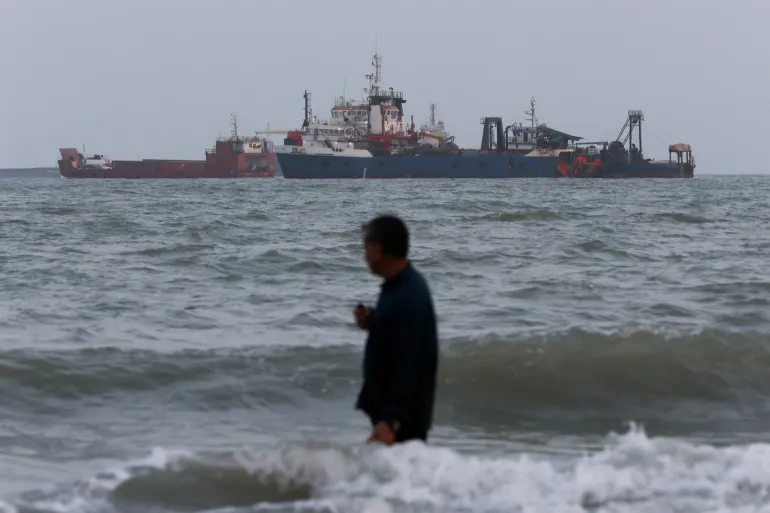
In response to the escalating pressure, Iranian authorities have remained defiant, indicating a potential shift toward offensive military operations. Tehran has also stated it is prepared to counter any potential ground invasion. Mohammad Reza Farzanegan, a professor of Middle East economics at Philipps-Universitat Marburg, noted that the current naval blockade represents a shift where traditional sanctions are now paired with military force to create physical shortages of essential goods.
Farzanegan suggested that Tehran is currently leaning toward continuing the armed conflict to break the port blockades rather than accepting terms dictated by the US. He warned that if the conflict resumes fully, the global economy will suffer due to continued disruptions in the Strait of Hormuz. While formal talks have stalled, Iran has been engaged in negotiations with Oman and other mediators regarding a potential temporary arrangement for the strait, a critical artery for global energy supplies.
Mohammad Bagher Ghalibaf, Iran’s parliament speaker and lead negotiator, stated on Tuesday that the Strait of Hormuz will remain closed until the US fulfills the conditions of the expired MoU. These demands include lifting the naval blockade, releasing frozen assets, ending oil sanctions, and ceasing military threats. Ghalibaf emphasized that the strait will not be reopened until these commitments are fully implemented.
To mitigate the impact of the blockade, the Iranian government has delegated authority to border provinces to facilitate the import of essential goods. The country has increasingly relied on land routes through Pakistan, Turkiye, Russia, and Central Asia to maintain supplies. During a brief ceasefire in June and July, the blockade was temporarily lifted, allowing Iran to export oil stored on supertankers, but exports have since halted following the collapse of the agreement.
The ongoing economic pressure has worsened Iran’s structural issues, which are rooted in long-term mismanagement and international isolation. The population of approximately 90 million is currently facing high inflation, declining purchasing power, and job insecurity. President Masoud Pezeshkian’s administration recently identified market stabilization and the protection of livelihoods as its primary goals for the next two years.
However, Mahdi Ghodsi, a senior economist at the Vienna Institute for International Economic Studies, expressed skepticism regarding the government’s ability to achieve these goals under current policies. He argued that sustainable growth requires a reduction in confrontations with the West and Israel, alongside meaningful domestic reforms to restore public trust. Without these changes, Ghodsi warned that the government is unlikely to achieve durable stability or genuine national resilience.
Looking ahead, reports suggest that Washington may target independent Chinese refineries, known as “teapots,” that process Iranian crude. While OFAC has previously sanctioned smaller entities in China and Hong Kong, it is now considering designating larger Chinese banks if they facilitate Iran-linked financial transactions. Such a move carries the risk of a retaliatory response from Beijing, particularly as the US remains concerned about its own access to critical mineral exports.
Ghodsi noted that energy remains the primary leverage for the US, especially following damage to Iran’s infrastructure from previous attacks. He explained that further constraints on energy trade—including maritime transport, insurance, and payment routes—would likely lead to deeper rationing and industrial shutdowns within Iran to preserve household energy supplies. The report also notes that asset freezes and attacks on ships as part of a naval blockade, Washington has announced a plan to enact a new wave of restrictions on Iran, targeting its economy, amid trade embargoes. The report also notes that “This is an additional burden that raises new questions for policymakers in Tehran: Should they choose a deal whose terms are dictated by the Trump administration, or should they continue the armed conflict to break the blockade of the ports. The report also notes that namely changing the behaviour of the Iranian government, it should also “open a diplomatic exit and offer it as an option”, farzanegan said that for the US to achieve its goals. The report also notes that to survive the blockade over recent months, Iran has also focused more on rerouting imports of food, consumer goods and industrial inputs through land borders with Pakistan, Turkiye and others, as well as through the Caspian Sea with Russia and Central Asia. The report also notes that and US and Israeli authorities have discussed disrupting Iran’s inland imports to ramp up the pressure, but Iran’s oil exports have stopped once again since the breakdown of the deal. The report also notes that the consequences include persistent inflation, insecure and poorly paid work, declining purchasing power and growing uncertainty about the future, for the country’s roughly 90 million people. The report also notes that however, Mahdi Ghodsi, a senior economist at the Vienna Institute for International Economic Studies, said Iran’s prolonged stagnation over most of the past 15 years suggested that government policy had not been aligned with those objectives. The report also notes that “If the blockade persists into autumn and winter, the country risks severe supply shortages.